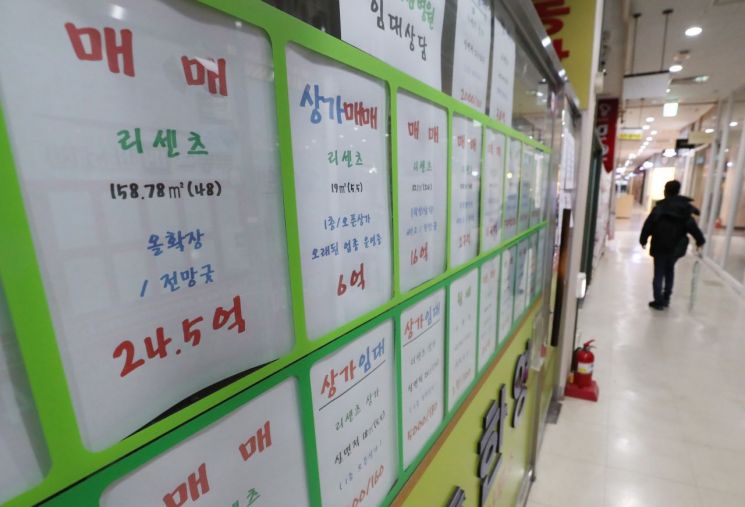
Seoul Housing Prices Rise 0.87%
Gyeonggi-do Growth Rate Stagnates at 0.46%
Switching from Jeonse to Sale in Seoul Requires 600 Million KRW
[Asia Economy Reporter Kim Min-young] Even high-priced large apartments in Seoul have joined the decline, but switching from lower-tier to higher-tier areas seems difficult. Typically, during a real estate market downturn, the price gap between expensive and less expensive homes narrows, increasing demand for moving to higher-tier areas. However, recent analyses suggest that it is practically difficult to move to higher-tier areas because the sale prices in relatively cheaper areas have fallen more sharply than in higher-tier areas.
According to KB Real Estate on the 11th, apartment prices in Gyeonggi-do rose by 0.46% from the beginning of this year to July. Incheon’s growth rate was limited to 0.33%. During the same period, Seoul apartment prices increased by 0.87%, showing a larger rise than Incheon and Gyeonggi-do. In particular, although the average in Gyeonggi-do slightly increased, many areas experienced declines. Representative examples include Anyang Dongan-gu (-2.27%), Suwon Yeongtong-gu (-2.26%), Hwaseong (-2.20%), and Uiwang (-1.28%). For real demand buyers who wanted to switch from the outskirts of Gyeonggi-do to Seoul, it is rather difficult to secure funds for moving as the prices of their current homes have dropped further.
This situation differs from past market conditions when Seoul and Pangyo areas sharply declined. In 2007, for example, the actual transaction price of the Eonma Apartment in Daechi-dong, Gangnam, fell by 12%, causing higher-tier home prices to drop more, enabling people to sell in the metropolitan area and move to Seoul or relocate from Gangbuk to Gangnam. However, experts analyze that the opposite situation has occurred this time.
Park Won-gap, Senior Expert at KB Real Estate, said, "Switching to higher-tier areas by entering Seoul from the metropolitan area may not be advantageous," adding, "Because you might end up selling your home cheaply and buying someone else’s home at a higher price."
Switching from Jeonse to sale in Seoul has also become difficult. According to KB Real Estate’s monthly housing price trends, the average apartment sale price in Seoul in June this year was 1,279.92 million KRW, and the average Jeonse price was 677.92 million KRW, making the difference between sale and Jeonse prices 602 million KRW. This means that switching from Jeonse to sale requires over 600 million KRW on average. The burden of interest has increased due to the base rate hike, and loan regulations have made it difficult for real demand buyers to obtain loans as much as they want.
The cost of switching from Jeonse to apartments in Seoul has sharply increased over the past five years due to the rapid rise in housing prices. In fact, in June 2017, the average apartment sale price in Seoul was 617.55 million KRW, and the average Jeonse price was 428.69 million KRW, making the difference between sale and Jeonse prices 188.86 million KRW.
© The Asia Business Daily(www.asiae.co.kr). All rights reserved.

















