Poison Attacks in Brazil Leave 7 Out of 10 Monkeys Dead
Spread of "Monkeypox" Fuels Growing Fear of Infection
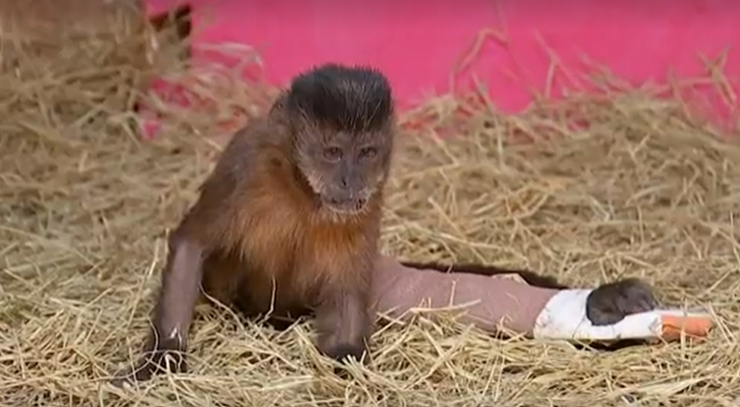 As monkeypox spreads recently in Brazil, violence against monkeys is increasing.
 Photo by Brazilian media G1 screenshot.
[Asia Economy, reporter Yoon Seulgi] As monkeypox spreads rapidly across South America, cases of abuse such as poisoning monkeys or attacking them with stones have also surged. The misconception that monkeypox is caused by monkeys appears to be fueling this violence. Previously, the World Health Organization (WHO), concerned about such situations, recommended not including the names of specific regions, people, or animals in the naming of new infectious diseases. However, since the name "monkeypox" was already established, this recommendation did not apply in this case.
According to the Brazilian media outlet G1, at least 10 monkeys have been attacked in the forests of Sao Jose do Rio Preto, Sao Paulo State, since August 3. Of these, seven have died, and the remainder are receiving treatment. Local veterinarians explained that, although the specific substance is unknown, the monkeys showed symptoms of poisoning. The police have stepped up patrols in the forest and are currently investigating the exact cause of death of the monkeys.
The media also reported that similar incidents have been observed in other cities. An official from the Brazilian wildlife authority stated, "Attacks targeting monkeys have been reported in other parts of Brazil as well," and added, "Since information about this disease became known, attacks on monkeys have increased."
Brazilian authorities believe that the fear surrounding the spread of monkeypox has led to violence against monkeys. As monkeypox cases have surged in Brazil, anxiety about monkeys possibly being infected with the disease has grown, resulting in incidents of abuse. Globally, more than 30,580 cases of monkeypox have been reported, with 12 deaths. In Brazil, there have been 1,700 cases and one death.
However, experts point out that monkeys are not related to the spread of monkeypox within Brazil. Mauricio Lacerda, a virologist at the Faculty of Medicine in Rio Preto, said, "What we are seeing in Brazil, Europe, and the United States are cases transmitted through close contact between people," and emphasized, "There is no evidence that monkeypox is circulating among monkeys in Brazil. There is no need to panic."
 As monkeypox spreads recently in Brazil, violence against monkeys is increasing.
 Photo by Brazilian media G1 screenshot.
The name "monkeypox" was given in 1958, when symptoms similar to chickenpox were observed in laboratory monkeys in Denmark. Human infection was first reported in 1970 in the Democratic Republic of Congo, and the disease became endemic in parts of Africa. Since May, monkeypox has begun spreading again, starting in Europe and then spreading to North America, Central America, and South America.
All recent cases of monkeypox have involved human-to-human transmission. Although the disease is called "monkeypox," it is not actually related to monkeys. Margaret Harris, WHO spokesperson, also emphasized to reporters on August 9 (local time), "Monkeys are not the primary transmitters of monkeypox and have nothing to do with the current outbreak." She added, "We should focus on what needs to be done to protect against human-to-human transmission, not attack animals," and warned, "Stigmatizing people or animals will only fuel the outbreak further."
In 2015, WHO recommended that names of new infectious diseases should not include the names of specific regions, people, or animals. At the time, WHO stated, "Names like 'swine flu' and 'Middle East Respiratory Syndrome' have had unintended negative impacts by stigmatizing certain communities or economic sectors
© The Asia Business Daily(www.asiae.co.kr). All rights reserved.


















