[Seoul District News] Seongdong-gu Smart Shelter Surpasses 3 Million Cumulative Users, Nearly 250,000 Users in July & Currently Operating 47 Locations in August, Serving as a Heat Relief Shelter with Air Conditioning & Emergency Bell with Real-Time Communication Records 27,817 Uses, Acting as an Emergency Evacuation Site ... Guro-gu Installs 'Stop Temporarily' Signs at Crosswalks in School Zones Without Traffic Lights ... Dongdaemun-gu Installs 76 Basic Number Plates Showing Road Names at Key Points on Jungnangcheon Bicycle Path
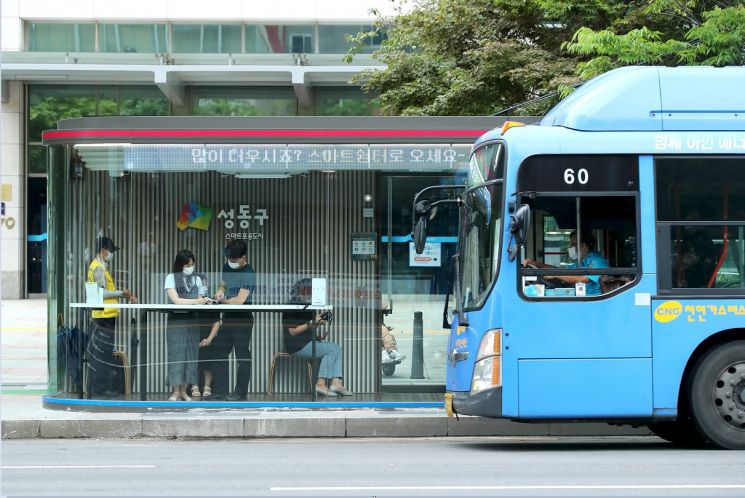
[Asia Economy Reporter Park Jong-il] The convenience of Seongdong-type Smart Shelters in Seongdong-gu (Mayor Jung Won-oh) during the summer season is shining once again.
Let's look at the numbers of users of the smart shelters, which have established themselves as a representative brand of the district's smart inclusive city policy.
Over 3 million cumulative users of smart shelters in 731 days
It has been about 2 years and 731 days since the operation of Seongdong-type Smart Shelters began on August 1, 2020. A total of 47 smart shelters are currently in operation, with 21 locations in 2020, 7 in 2021, and 19 in 2022. This is the first installation nationwide and the largest scale in the country.
During the hot and humid summer weather, when temperatures easily exceed 32℃ or during the monsoon rains, the air conditioners in the smart shelters operate 24 hours a day. Equipped with air purification functions, these shelters provide an optimal space for transportation-vulnerable individuals. Since surpassing 1 million cumulative users in August 2021, the Seongdong-type Smart Shelters have played a significant role as heat shelters protecting public transportation users from heatwaves, reaching a record of over 3 million cumulative users?nearly tripling compared to the previous year?in about one year.
YouTube video introducing smart shelters surpasses 1.4 million views
As the number of users increases, the response from residents using the smart shelters is also enthusiastic. One resident who frequently uses the smart shelter said, “On very hot days, even the short five minutes waiting for the bus can make it hard to breathe. When I enter the smart shelter, cool air blows out, so I can comfortably wait for the bus. On rainy days, it also serves as an umbrella to avoid the rain.”
Online, residents' interest and positive reviews continue unabated. A YouTube video that filmed and reported on the Seongdong-type Smart Shelters, introducing the convenience of bus stops in Korea, surpassed 1.4 million views within eight months of posting. Various videos introducing the smart shelters can be easily found.
Emergency and inconvenience communication bell cumulative usage nears 30,000 cases
The district designates and manages the Seongdong-type Smart Shelters as heat shelters during heatwave warnings to maintain an emergency work system and manage situations. To protect vulnerable groups such as the elderly and children during the summer heatwave, pre-inspections such as air conditioner filter cleaning and gas refills have been conducted since the end of June. Notices have also been posted in front of the entrance doors to clearly indicate that these are spaces to cool down and rest.
True to Seongdong-gu's vision as a “smart inclusive city,” the shelters do not simply operate air conditioning. The Seongdong-type Smart Shelters are equipped with a UV air sterilization system to prevent COVID-19 and are linked to the Smart City Integrated Control Center located on the 5th floor of Seongdong-gu Office, allowing real-time CCTV monitoring inside the shelters. During operating hours, monitoring personnel observe in real time and can respond immediately in case of emergencies.
Residents can also use a bell to communicate in real time with staff to report emergencies, adjust air conditioner temperature, or notify of inconveniences while using the shelter.
As of the end of July, the cumulative number of emergency bell uses exceeded 27,817 cases.
Additionally, with the introduction of an abnormal sound detection system, when abnormal sounds such as screams are detected, the system can respond quickly to various accidents even without pressing the emergency bell, effectively serving as a small “emergency refuge.”
According to district officials, the popularity of the smart shelters is not limited to Seongdong-gu. Foreign media such as CNN and AP News have reported on them multiple times, and recently, benchmarking and business consultation requests from other local governments to the responsible department have been continuous. Residents in those areas cite Seongdong-gu as an example and submit petitions requesting the installation of smart bus stops.
Furthermore, Seongdong-gu plans to expand the installation of 20 more smart shelters by April next year to protect transportation-vulnerable individuals using public transportation. For 177 bus stops where installing smart shelters is difficult, heated seats will be installed, further enhancing the status of the smart inclusive city as a transportation hub in the metropolitan area.
Jung Won-oh, Mayor of Seongdong-gu, said, “The Seongdong-type Smart Shelter is a representative case of life-centered administration that residents want. We will continue to actively promote administrative services essential to daily life so that residents can feel the impact directly.”
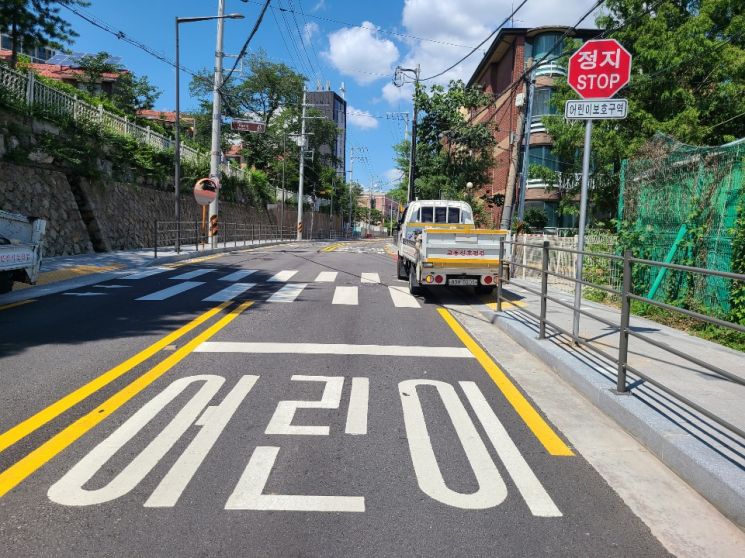
Guro-gu (Mayor Moon Heon-il) announced that it has completed the installation of stop signs in front of pedestrian crossings without traffic lights within school zones.
This is a follow-up measure following the amendment to the Road Traffic Act, which strengthens pedestrian safety and has been in effect since July 12.
According to the amendment, drivers must stop at pedestrian crossings without traffic lights within school zones regardless of whether pedestrians are crossing. After a one-month grace period ending on August 12, violators will be fined 60,000 KRW and receive 10 penalty points for passenger cars.
The district selected 262 locations for the installation of “stop” traffic safety signs after a three-week consultation with the police station and on-site inspections of school zones in the area from May 30 to June 17.
Among these, 181 locations were finally selected after a comprehensive review by the Seoul Metropolitan Police Agency, and the district completed the installation of signs where possible in front of pedestrian crossings without traffic lights within school zones.
The newly installed locations include 123 sites in 37 school zones near elementary schools and kindergartens/childcare centers such as Gaemyeong Elementary School, Gaebong Elementary School, Gosan Elementary School, Deokui Elementary School, and Hangdong Daycare Center.
For locations where sign installation is not possible due to site conditions, road surface markings will be completed by the end of August.
A Guro-gu official said, “The most important thing is to cultivate a driving habit of stopping first and looking around in front of pedestrian crossings for everyone's safety. We will continue to strive to prevent traffic accidents involving children and other vulnerable road users and create a safe walking environment.”
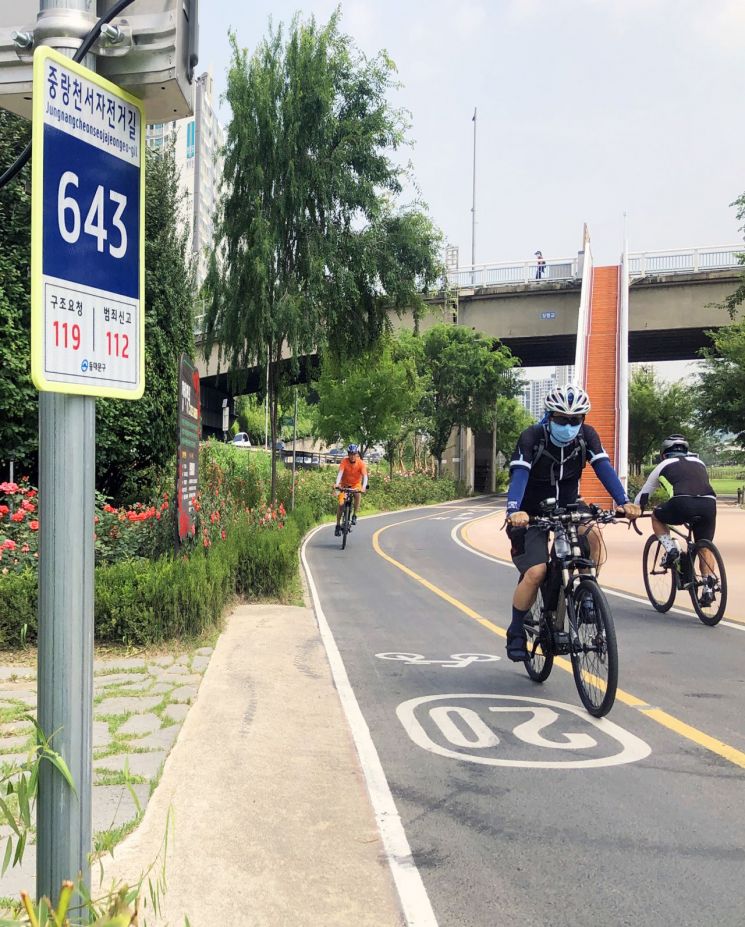
Dongdaemun-gu (Mayor Lee Pil-hyung) installed 76 basic number plates indicating road name addresses along the Jungnangcheon bicycle path to protect residents' safety through prompt response in case of accidents.
Basic numbers divide road sections at regular intervals and assign numbers to indicate locations, allowing accurate location identification even without nearby buildings.
The Jungnangcheon walking trail and bicycle path are popular places for many residents to enjoy leisure in the city, but the lack of nearby buildings or landmarks to confirm exact locations has made prompt response to safety accidents involving pedestrians and cyclists somewhat difficult, raising concerns.
To resolve this issue, the district installed 76 basic number plates at key points along the Jungnangcheon bicycle path. As a result, pedestrians and cyclists can easily confirm their current location, enabling faster and more accurate responses in case of unexpected accidents.
Kwon Jae-cheol, Director of the Real Estate Information Division, said, “With the lifting of social distancing, the number of residents using the Jungnangcheon bicycle path is increasing, raising the risk of safety accidents. We installed 76 basic number plates along the Jungnangcheon bicycle path so that anyone can easily check their location and respond quickly to safety accidents. We will continue various efforts to eliminate address blind spots, including installing basic number plates.”
© The Asia Business Daily(www.asiae.co.kr). All rights reserved.



















