Jin Sun-mi, Member of the Democratic Party in the Political Affairs Committee
Proposes the "Financial Consumer Protection Act"
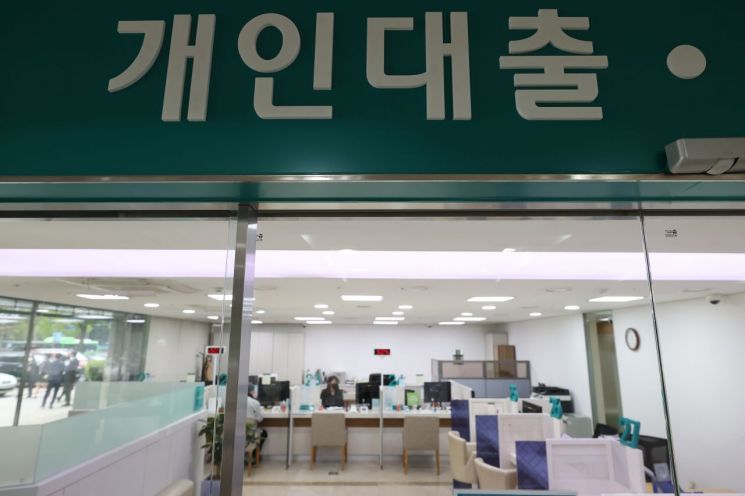
[Asia Economy Reporter Shim Nayoung] Office worker Lee Myungjin (41, pseudonym) was informed of an interest rate of 6.8% when receiving a 50 million KRW unsecured loan from a bank. Although he thought the interest was higher than expected, he accepted it as it was a high-interest period. Even after comparing with others, Lee could not shake off the suspicion that his interest rate was too high. It turned out that the bank had failed to input Lee’s annual income of 83 million KRW into their system and omitted it when notifying the interest rate. The interest rate that Lee should have originally received was 6.3%, but without his knowledge, he was paying 0.5 percentage points more in interest.
Banks Must Include Interest Calculation Process in Loan Contracts Provided to Borrowers
Prevent Excessive Charges by Avoiding Omission of Income and Collateral
A bill aimed at preventing financial consumers like Lee from suffering such damages has been proposed in the National Assembly. Jin Sunmi, a member of the Political Affairs Committee from the Democratic Party of Korea, introduced an amendment to the 'Financial Consumer Protection Act' that requires banks to specify the income and collateral information used as the basis for calculating interest in the loan contracts provided to borrowers, and to include the interest rate calculation process as well.
On the 9th, Representative Jin explained, "There have been cases where banks omitted information about borrowers’ income and collateral, which are the basis for calculating loan interest rates, resulting in the application of higher interest rates than should have been applied. There are criticisms that banks are taking excessive profits in this process, so this measure aims to prevent disputes caused by interest rate hikes and protect financial consumers."
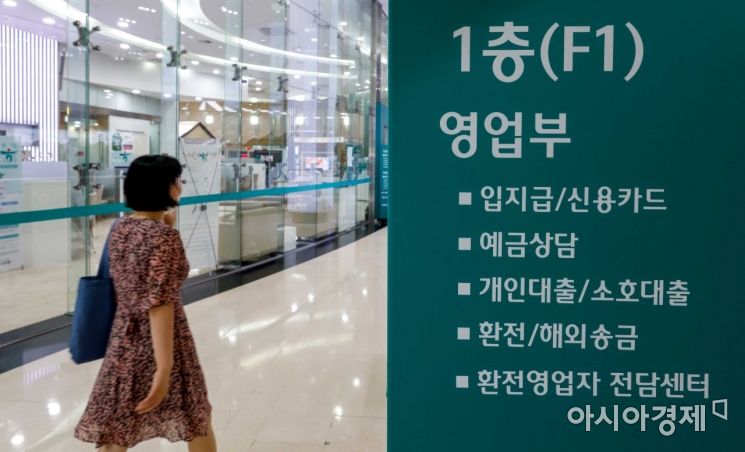 On the 7th, a scene at a bank counter in Seoul as major commercial banks continue to lower loan interest rates and raise interest rates on regular savings and installment savings products. Photo by Kang Jin-hyung aymsdream@
Currently, when receiving a loan at a bank counter, financial consumers fill out a loan consultation application form including their income and collateral. Even when applying for a loan through a bank app, they enter this information themselves. Banks obtain customer consent to verify collateral by obtaining certified copies of real estate registers and confirm income based on health insurance premium payment records. Although banks go through this process before the loan, they argue that detailing the interest calculation process in the loan contract is equivalent to disclosing trade secrets.
Commercial Banks: "Disclosing Costs Is Like Revealing Trade Secrets"
An official from a commercial bank said, "When calculating interest rates, higher interest is charged to people with poor credit ratings or a risk of default, and if such information is included in the contract, it would cause more confusion. The interest calculation procedure is like a trade secret from the bank’s perspective, so disclosing it is equivalent to revealing costs."
Meanwhile, according to the ‘Interest Rate Information Disclosure System Improvement Plan’ announced by the Financial Services Commission last month, around the 20th of this month, the Korea Federation of Banks website will publicly compare the net interest margin (the difference between deposit and loan interest rates) based on new transaction amounts. The loan interest rate calculation system will also be revised. Loan interest rates are determined by adding the bank’s margin, called the spread, to the benchmark interest rate, then subtracting preferential rates applied to financial consumers.
The benchmark interest rate is influenced by market rates such as financial bonds and COFIX, but the spread varies by bank. Since banks use different criteria such as operating costs, risk, liquidity, credit premium, capital costs, legal costs, and target profit rates, the authorities judged that transparency is lacking. Accordingly, the Financial Services Commission has required banks to apply different costs depending on the type and scale of loans. Applying a single cost rate regardless of loan type could lead to excessive cost allocation for some loans.
© The Asia Business Daily(www.asiae.co.kr). All rights reserved.
![Clutching a Stolen Dior Bag, Saying "I Hate Being Poor but Real"... The Grotesque Con of a "Human Knockoff" [Slate]](https://cwcontent.asiae.co.kr/asiaresize/183/2026021902243444107_1771435474.jpg)

















