[Asia Economy Reporter Yu Je-hoon] Rumors about the arrival of Apple's simple payment service, 'Apple Pay,' in Korea are resurfacing. While Hyundai Card, the party involved in the rumor, is actively denying it, the industry expects that even if Apple Pay actually launches its service domestically, it will take considerable time to achieve widespread usability.
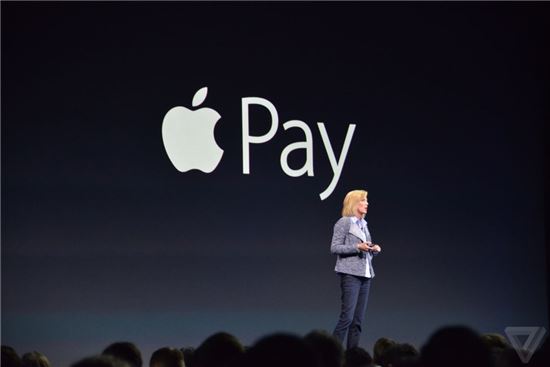
According to the financial sector on the 9th, there have been recent speculations mainly on major online communities that Apple will launch Apple Pay service in cooperation with Hyundai Card in the second half of this year. If realized, it would mark the start of domestic service eight years after Apple Pay's initial launch.
Hyundai Card, the party involved in the rumor, is actively denying it. A Hyundai Card official said, "There is no ongoing matter related to the launch of Apple Pay so far," adding, "It is probably just a rumor that leaked during the tapping process with various card companies."
The reason why rumors about Apple Pay adoption resurface every season is that Apple iPhone users have been excluded from major simple payment services. While Samsung Electronics Galaxy users could freely use about 2.8 million affiliated stores nationwide and most public transportation in the country through Samsung Pay based on Magnetic Secure Transmission (MST), iPhone users could only use some services such as QR payments.
The demand is not insignificant. According to Statcounter, a web traffic analysis site, as of the first quarter, Apple's iPhone holds about 27% of the domestic smartphone market. Although it is not comparable to the dominant Samsung Galaxy (65%), if the service is introduced, it could attract about one-third of smartphone users as customers.
Despite denials from the parties involved, the industry atmosphere is optimistic about the possibility of Apple Pay service launching in the near future. A financial sector official said, "Recently, it is understood that Apple is actively considering market entry," adding, "Not only card companies but also some fintech companies are showing interest."
However, the industry believes that even if Apple Pay starts service domestically, there is still a long way to go before it becomes widely used. One immediate challenge is the issue of public transportation usage. An official from the simple payment industry said, "The reason QR payments like Zero Pay, which saw increased demand due to various subsidies after the COVID-19 pandemic, did not become widespread was largely due to public transportation usage issues," adding, "The current transportation card system was built under the leadership of the transportation industry, so negotiations are not easy."
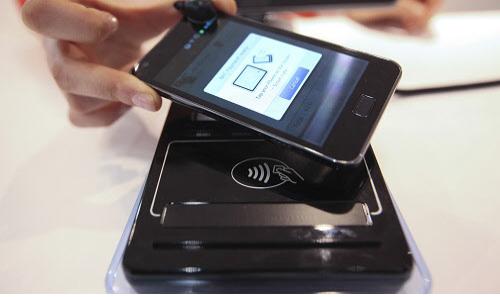 The scene of NFC payment being made through Apple Pay
Another obstacle is the underdeveloped Near Field Communication (NFC) payment network. Unlike Samsung Pay, which supports both MST and NFC technologies and can be used on existing IC card terminals, Apple Pay is based solely on NFC, requiring separate terminal installations. According to the financial sector, out of about 2.7 million credit card affiliated stores nationwide, only 60,000 to 70,000 have NFC payment terminals installed. Even among these, many are large chains or franchise stores.
To prevent Apple Pay from becoming a 'half measure,' the NFC payment network must be established nationwide, but the cost burden is a challenge. A senior official from the card industry said, "For example, if NFC payment terminals were installed at 2 million card-affiliated stores nationwide, considering the device cost, it is expected to cost more than 300 billion KRW. This is a level that no single card company can bear," adding, "Of course, the service area will gradually expand according to consumer demand, but it will take considerable time to achieve coverage comparable to Samsung Pay."
© The Asia Business Daily(www.asiae.co.kr). All rights reserved.
















