Affordable Price Around 6,000 Won Sparks Nationwide First-Come, First-Served Sellouts
Consumer Backlash Grows Amid Successive Price Hikes by Major Franchises
[Asia Economy Reporters Moon Hyewon, Jeon Jinyoung] In an era of high inflation, large supermarkets' 'ultra-low-priced chicken' priced in the 6,000 won range is gaining popularity. As chicken prices have surpassed 20,000 won and are approaching the 30,000 won mark, relatively affordable supermarket chicken is being welcomed. This is interpreted as large supermarkets gaining a windfall benefit from low-priced chicken amid strong consumer backlash against repeated price hikes by chicken franchises, with some consumers even launching boycott campaigns.
According to the supermarket industry on the 13th, Homeplus launched the 6,990 won Dangdang Chicken in June as part of its 'Price Stabilization Project.' It has gained popularity among consumers, surpassing cumulative sales of 260,000 chickens within two months of its launch. During the event on Chobok (the first of the three hottest days in summer) where 5,000 Dangdang Chickens were sold at 4,990 won on a first-come, first-served basis, most stores nationwide sold out their stock within an hour. In addition to the event quantity, 12,200 chickens were sold at the regular price, totaling 17,200 chickens sold in one day.
Emart has also been selling '5-Minute Chicken,' made with domestic No. 9 chickens, for 9,980 won since last month. Coinciding with the launch of 5-Minute Chicken, Emart's chicken sales in July increased by about 26% compared to the same period last year.
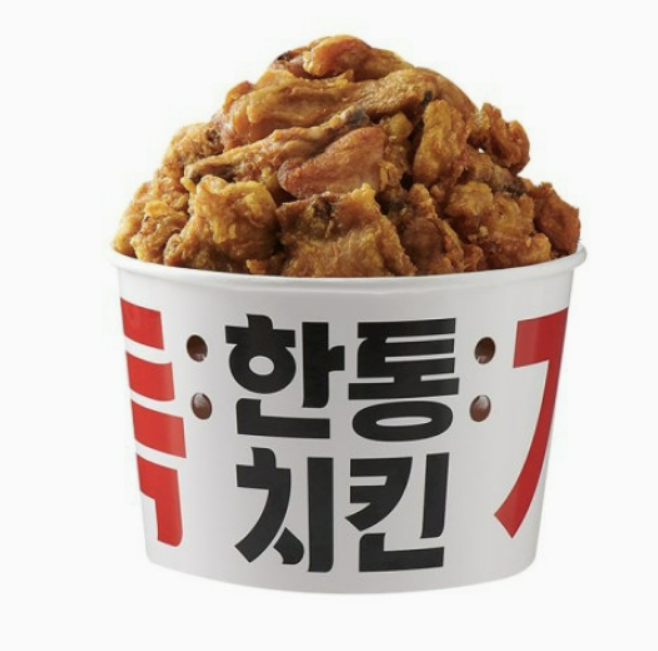
Lotte Mart is currently selling the 'New Hantong Gaaadeuk Chicken' (Hantong Chicken), which was previously priced at 15,800 won, at a 44% discount of 8,800 won for one week starting from the 11th. Hantong Chicken contains one and a half chickens and has a monthly average sales volume of 35,000 units. Lotte Mart explained that the discount event for ultra-low-priced chicken was held due to significant consumer concerns caused by high inflation and increased chicken demand during the vacation season.
This is not the first time large supermarkets have introduced ultra-low-priced chicken. Back in 2010, when franchise chicken was priced at 12,000 won per whole chicken, Lotte Mart launched 'Tongkeun Chicken' at 5,000 won, less than half the price. At that time, franchise chicken prices were being raised by 1,000 to 2,000 won, so Lotte Mart's Tongkeun Chicken was considered groundbreaking and gained huge popularity with consumers lining up to buy it immediately after its launch.
In response, franchises criticized, saying, "It threatens the survival rights of franchise store owners who are self-employed and infringes on neighborhood businesses." They declared boycotts of Lotte affiliates' beverages and filed complaints with the Fair Trade Commission accusing Lotte Mart of unfair trade practices, showing strong opposition. Politicians also pointed out that large supermarkets had crossed the line. Under this comprehensive pressure, Lotte Mart eventually decided to stop sales.
However, the situation is different this time. Recently, consumers burdened by repeated price hikes by franchises have shown such strong resistance that they have launched boycott campaigns, creating an atmosphere where relatively affordable supermarket chicken is rather welcomed.
Recently, popular franchises including Kyochon, bhc, and BBQ have raised chicken prices to 20,000 won, and with delivery fees of 4,000 to 6,000 won added, the total approaches 30,000 won. Exhausted by high inflation, consumers are turning to cheaper products. Amid continuous price hikes, online communities have shared 'No Chicken' posters parodying the 'No Japan' boycott posters, indicating signs of a boycott movement.
Various online communities and social networking services (SNS) are filled with posts certifying purchases of ultra-low-priced chicken from large supermarkets and reviews of their taste. Unlike in the past, buying affordable products is seen as a consumer choice, and the argument that it infringes on neighborhood businesses is considered groundless, reflecting a perspective targeting the franchise industry.
Professor Lee Eunhee of Inha University's Department of Consumer Studies said, "Chicken has been a delicious national snack that also supplements protein, but recent price increases have caused growing consumer dissatisfaction." She added, "The supply of affordable chicken by large supermarkets gives consumers an opportunity to realize that such affordable options exist, which is very welcome in terms of consumer choice." However, she also noted, "It would be good if this becomes a product that is sold continuously rather than a one-time promotional item like a loss leader."
© The Asia Business Daily(www.asiae.co.kr). All rights reserved.

















