Capital Region Traffic Paralysis
Subways Halted and Roads Flooded
Heaviest Rainfall in 80 Years
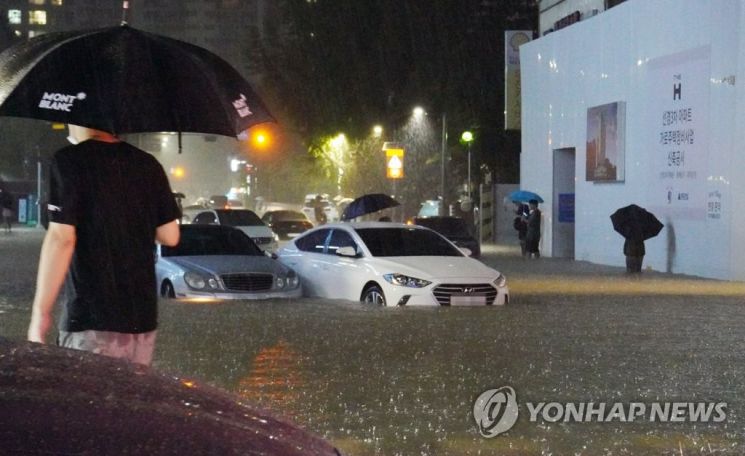 On the night of the 8th, the road and sidewalk near Eunma Apartment in Daechi-dong, Gangnam-gu, Seoul were flooded, causing inconvenience for vehicles and pedestrians. [Image source=Yonhap News]
[Asia Economy Culture Young Intern Reporter] Overnight, record-breaking heavy rain with a maximum hourly rainfall of 140mm poured over Seoul's Gangnam area and the southern part of Gyeonggi Province. Currently, heavy rain warnings have been issued for the metropolitan area and the inland and mountainous regions of Gangwon Province. The Central Disaster and Safety Countermeasures Headquarters (CDSCH) raised the crisis alert level from 'caution' to 'severe'.
The Korea Meteorological Administration announced that as of 11 p.m. on the 8th, 119mm of rain fell in Seoul alone within a day. In Dongjak-gu, where the Meteorological Administration is located, an astonishing 380mm of rain fell. This amount exceeds the highest ever daily rainfall recorded in Seoul (based on the Songwol-dong observation station) of 354.7mm on August 2, 1920. Dongjak-gu experienced 136.5mm of rain in just one hour between 8 and 9 p.m. Daily rainfall amounts were 316.5mm in Gwangmyeong, Gyeonggi, 242.5mm in Bupyeong, Incheon, 242mm in Bucheon, Gyeonggi, and 158mm in Cheorwon (Dongsong), Gangwon.
Due to the sudden heavy rain, sewage backflow occurred, flooding roads and streets, leading to road closures. The southern and Gangnam areas of Seoul experienced a situation comparable to a city paralysis overnight. The Seoul City Traffic Information Division reported that at around 9:29 p.m. on the 8th, the lower four lanes in both directions of Teheran-ro (from Samsung Station to POSCO Intersection) in Gangnam-gu were submerged and fully closed to traffic.
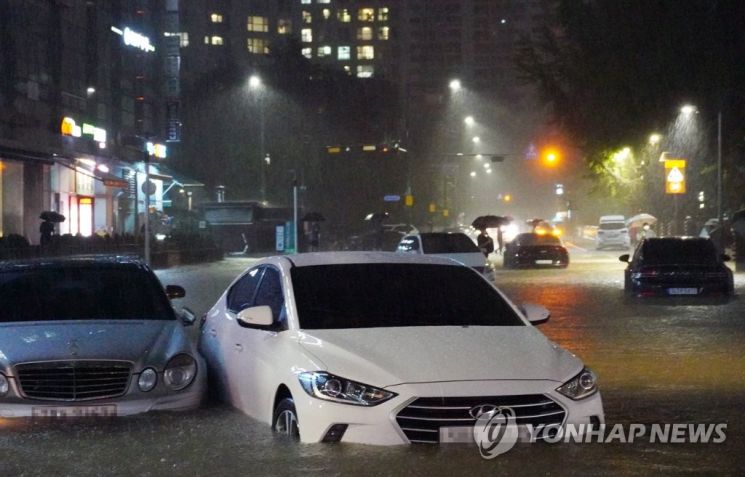 Road and sidewalk near Eunma Apartment, Daechi-dong, Gangnam-gu, Seoul, on the night of the 8th.
 [Image source=Yonhap News]
In Gangnam, more than 300mm of heavy rain fell since last night. On Seocho-daero in Seocho-gu, Seoul, nearly half of the city buses were submerged. On the Gyeongbu Expressway heading towards Seoul, the lower 3 to 4 lanes between Seocho and Banpo were flooded from around 9 p.m. on the 8th, allowing traffic on only one lane. Some sections of Nambu Beltway, Yangjae-daero, and Yeouidaebang-ro were also fully closed.
Subway operations were suspended as several subway stations were flooded. According to Seoul City on the 9th, subway operations were disrupted due to flooding at some subway stations caused by the concentrated heavy rain the previous afternoon. Flooding at Yeongdeungpo Station on Line 1 led to a complete suspension of southbound Line 1 services, and signal failures and train delays occurred at Oryu-dong Station on the Gyeongin Line and Geumcheon-gu Office Station on Line 1.
At Isu Station on Line 7, part of the ceiling collapsed, and water poured through the ceiling, causing trains in both directions to pass through Isu Station without stopping. Dongjak Station on Line 9 was also closed due to flooding. Seoul Metro announced at 9:49 p.m. on the 8th that "operations between Nodeul Station and Sapyeong Station are currently suspended."
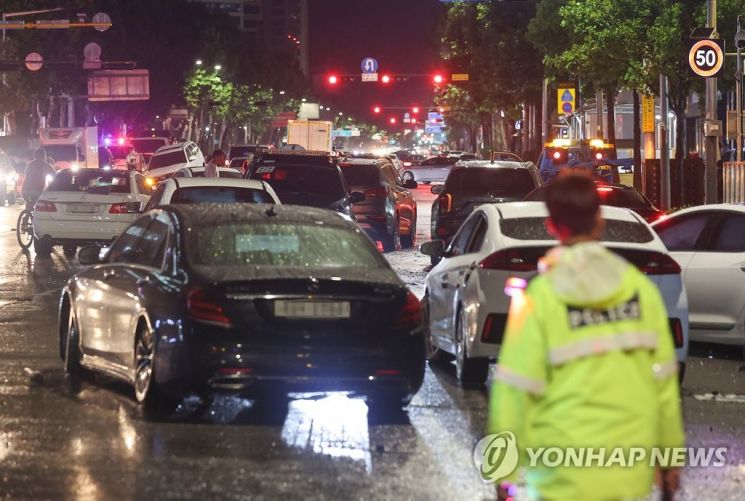 On the morning of the 9th, cars that were submerged due to heavy rain are obstructing traffic on the road near Daechi Station in Gangnam-gu, Seoul. [Image source=Yonhap News]
Currently, except for the seven stations between Nodeul Station and Sapyeong Station on Line 9, all sections of Lines 1 to 8, as well as the Ui-Sinseol Line and Sillim Line, are operating normally from the first train. Seoul Transportation Corporation immediately activated the Disaster Safety Countermeasures Headquarters and entered an emergency system upon the issuance of the heavy rain advisory the previous day. After the heavy rain warning was upgraded, they took measures to establish countermeasures to prevent subway operation suspensions.
There were also continuous casualties. Deaths and missing persons occurred, and damages such as facility flooding and displaced residents were reported one after another. According to the CDSCH as of 6 a.m. on the 9th, there were 7 deaths, 6 missing persons, and 9 injured. In Gwanak-gu, Seoul, three people trapped in a semi-basement due to flooding died around 9:07 p.m. the previous day. In Dongjak-gu, Seoul, a man in his 60s who was clearing fallen street trees caused by the heavy rain died in an accident presumed to be electric shock.
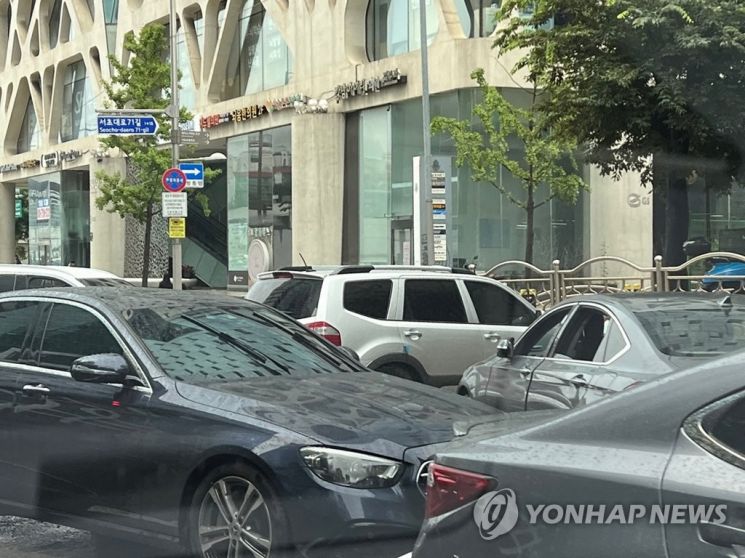 On the morning of the 9th, cars washed away by the heavy rain the previous day are placed on the road near Gangnam Station in Seocho-gu, Seoul. [Image source=Yonhap News]
In Dongjak-gu, another person died around 5:40 p.m. the same day due to house flooding. In Gwangju, Gyeonggi, one person was found dead under the debris of a collapsed bus stop, and another person died due to a landslide on a road slope. As of 6 a.m. today, there are 163 displaced persons from 107 households. Most of them are still unable to return home and are staying in nearby schools or gymnasiums used as evacuation centers.
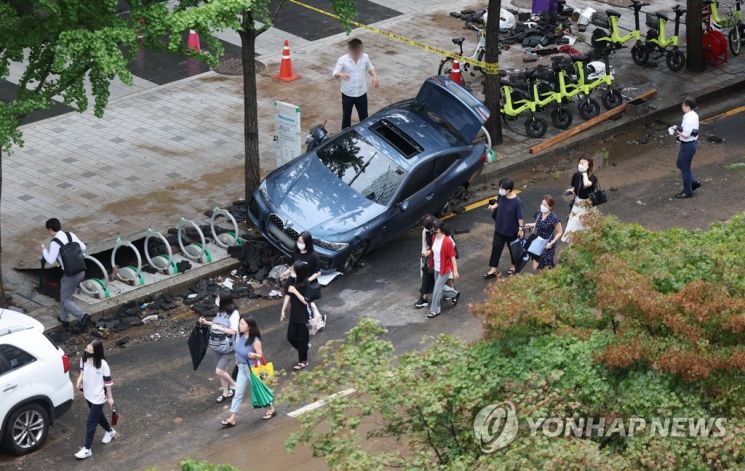 On the morning of the 9th, vehicles that were submerged due to the heavy rain the previous day have reappeared along Seocho-daero in front of Jinheung Apartment, Seocho-gu, Seoul. [Image source=Yonhap News]
Meanwhile, on Tuesday, heavy rain of up to 250mm is expected in most parts of the country. The Korea Meteorological Administration forecasted, "As the stationary front moves north and south mainly over the central region, a narrow north-south but long east-west rain cloud band is being brought in, causing very heavy rain of 50 to 80mm per hour accompanied by thunder and lightning in affected areas." Reports of vehicle damage and flooding are also increasing, so the scale of damage is expected to continue growing.
As heavy rain continues mainly in the metropolitan area, the risk of landslides has also increased. The Korea Forest Service announced that at 1 a.m. on the 9th, the landslide crisis alert for Seoul, Gyeonggi, and Incheon was raised from 'caution' to 'warning.' Gwanak-gu issued an evacuation order for some areas around 11 p.m. on the 8th, citing "landslide risk."
© The Asia Business Daily(www.asiae.co.kr). All rights reserved.
![Clutching a Stolen Dior Bag, Saying "I Hate Being Poor but Real"... The Grotesque Con of a "Human Knockoff" [Slate]](https://cwcontent.asiae.co.kr/asiaresize/183/2026021902243444107_1771435474.jpg)


















