Emergency Economic Ministers Meeting Chaired by Deputy Prime Minister Choo Kyung-ho
Labor Shortages Worsen in Shipbuilding, Agriculture, and Livestock Industries
Foreign Worker Quota Increased by at Least 15,600
Low Wages and Dual Structure Are Causes... Accelerating Labor Reform
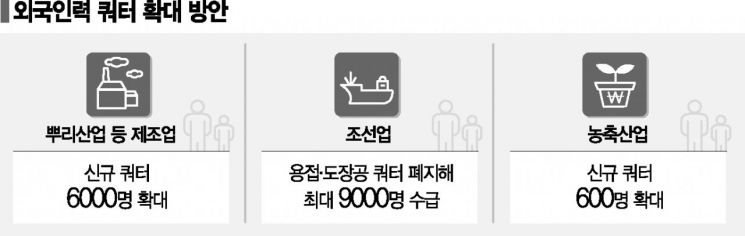
As labor shortages in key industries such as shipbuilding, services, and wholesale and retail trade become severe, the government has rolled up its sleeves to address workforce supply and demand. The government believes that the longer the labor supply is delayed, the more the momentum for economic recovery will be lost, and inflationary pressures due to wage increases may intensify. However, since it is difficult to supply the necessary workforce in the short term, the government has decided to focus first on expanding foreign workers. The plan is to normalize the entry of foreign workers, which was delayed due to the impact of COVID-19, to put out the urgent fire. For industries experiencing particularly severe labor shortages, customized support measures such as job matching services will be prepared to achieve medium- to long-term supply and demand stability.
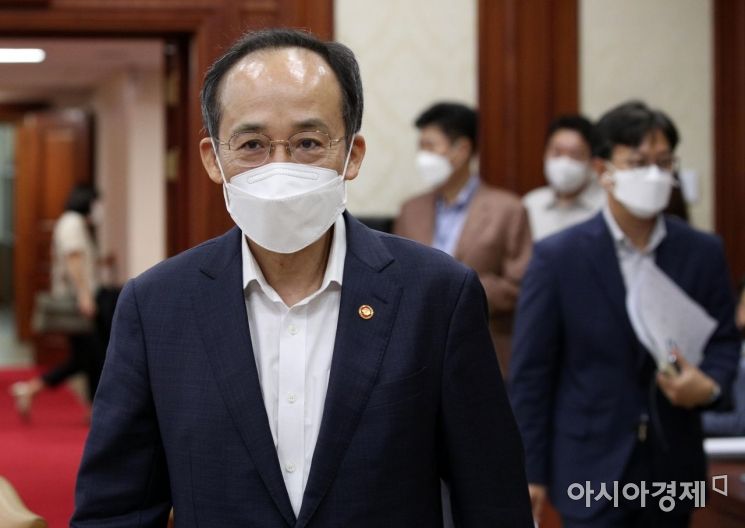 Deputy Prime Minister and Minister of Economy and Finance Choo Kyung-ho is attending the Emergency Economic Ministers' Meeting held at the Government Seoul Office in Jongno-gu, Seoul, on the 8th. Photo by Hyunmin Kim kimhyun81@
230,000 Vacant Jobs... Filled by Foreign Workers
According to the Ministry of Economy and Finance and the Ministry of Employment and Labor on the 8th, the current number of vacant jobs in the country has reached 234,000. This is the highest level in 4 years and 4 months since February 2018. The number of vacant jobs is one of the indicators of labor shortages, referring to the number of job openings currently being recruited but not yet filled. Five industries?manufacturing, wholesale and retail trade, accommodation and food services, transportation and warehousing, and health and welfare?account for 74.3% of the total vacant jobs.
The government plans to resolve this labor shortage by expanding the entry of foreign workers. Deputy Prime Minister and Minister of Economy and Finance Choo Kyung-ho emphasized on the day, "The government will actively support so that the labor shortage in industrial sites does not become an obstacle to economic recovery." To this end, the government will expand the foreign worker visa quota to secure about 15,600 more workers. The quota for manufacturing industries such as the root industry will be increased from the existing 10,480 to 16,480, and in the shipbuilding industry, the welding and painting worker quotas will be abolished and the Specific Activity (E-7) visa will be improved to bring in up to 9,000 more workers. In agriculture and livestock, the quota will be increased by 600 from 1,624.
Additionally, the government plans to allow 50,000 more foreign workers to enter the country this year, averaging about 10,000 per month. This will bring the total number of foreign workers residing in the country to approximately 264,000, approaching the pre-COVID-19 level of about 277,000. To achieve this, the government will promptly facilitate the entry of those who were issued visas between 2020 and 2022 but could not enter, as well as those scheduled to be issued visas in the second half of this year.
In the shipbuilding industry, where labor shortages are particularly severe, the government will prioritize the entry of foreign workers, bringing in 1,700 by October. For manufacturing industries such as the root industry and agriculture and livestock, an additional 37,000 and 7,000 workers will be admitted this year, respectively. The foreign worker entry process, which currently takes about 84 days, will be drastically reduced to 39 days. A new foreign worker quota without industry classification will be allocated to flexibly respond to demand fluctuations. The 'flexible allocation quota' will increase more than threefold from about 3,000 last year to 10,000+α next year.
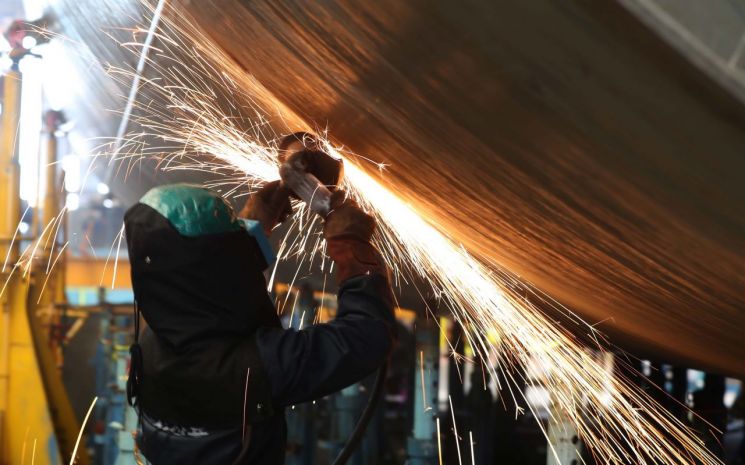 A skilled worker working at the headquarters of Daewoo Shipbuilding & Marine Engineering in Geoje-si, Gyeongnam, one of the top three shipyards in Korea [Image source=Yonhap News]
If Labor Shortage Persists, Inflation Worsens... Labor Reform Accelerates
The government will also strengthen customized policies by region and industry. A 'Rapid Employment Support Task Force (TF)' will be established at 17 employment centers in shipbuilding and root industry clusters to support metropolitan-level recruitment by securing a nationwide pool of job seekers. To increase the inflow of new workers, the 'Shipbuilding Industry Tomorrow Filling Deduction,' which helps workers build assets, will expand the eligible age from 39 to 45 and broaden the regions. Additionally, regulations will be relaxed to allow companies to more freely use special extended working hours when work volume urgently increases.
For the root industry, the government will expand the level and number of employment incentive payments and promote improvements in working conditions and welfare. In agriculture, 25 cities and counties will be selected, focusing on major production areas of key crops during the harvest season, to intensively manage labor supply and demand.
The government views the worsening labor shortage in shipbuilding and root industries as mainly caused by poor working conditions and the dual structure of the labor market, and plans to accelerate labor market reforms. Minister of Employment Lee Jung-sik said at the meeting, "Along with efforts to improve the dual structure of the labor market, such as reforming the subcontracting structure between primary and secondary contractors, wage system reform, and expanding workers' choice of working hours, we will also pursue medium- to long-term improvements for high value-added industrialization."
© The Asia Business Daily(www.asiae.co.kr). All rights reserved.
!["The Woman Who Threw Herself into the Water Clutching a Stolen Dior Bag"...A Grotesque Success Story That Shakes the Korean Psyche [Slate]](https://cwcontent.asiae.co.kr/asiaresize/183/2026021902243444107_1771435474.jpg)


















