Yoon Seok-yeol Government's First Housing Supply Plan
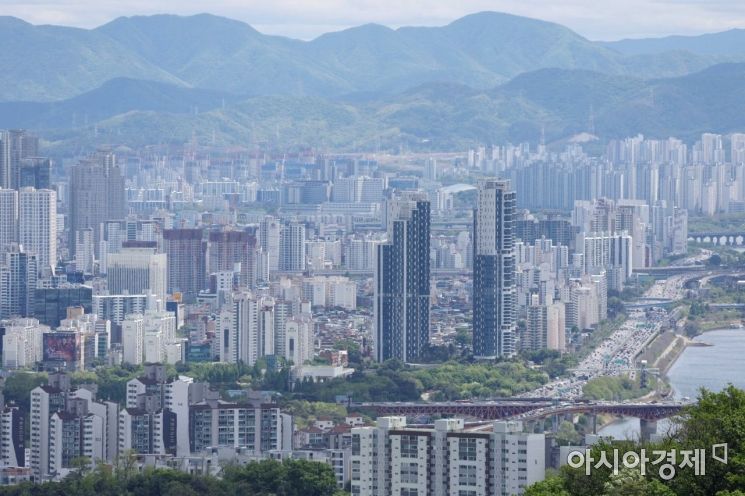
As the announcement of the Yoon Suk-yeol administration's first housing supply plan approaches, attention is focused on the level of deregulation in redevelopment projects such as the Reconstruction Excess Profit Recovery System and the locations of supply. While the previous government concentrated supply mainly on public land and new towns on the outskirts of the Seoul metropolitan area, the new administration appears to be focusing on ‘urban housing supply that meets demand.’ However, considering ongoing inflation-driven price increases due to soaring raw material costs and rising labor costs, the real estate market slump, and the feasibility of legal amendments in a divided National Assembly, the prevailing assessment is that the supply policy will be difficult to implement swiftly.
According to the government on the 8th, the government plans to announce tomorrow a ‘2.5 million housing units + alpha (α)’ supply plan, which includes deregulation of reconstruction and redevelopment, and redevelopment plans for first-generation new towns. To expand urban supply, measures such as ▲ increasing floor area ratios around subway stations to over 500%, ▲ introducing ‘integrated review’ to shorten redevelopment procedures, and ▲ implementing ‘private proposal urban complex projects’ that grant various special exceptions to private-led housing projects are expected to be included. It is also anticipated that detailed plans for youth cost-price housing, first-home housing near subway stations, and redevelopment projects for first-generation new towns, which were pledges in President Yoon Suk-yeol’s election campaign, will be disclosed.
The topic attracting the most attention is the deregulation related to reconstruction, specifically the Reconstruction Excess Profit Recovery System (Jaechohwan). Jaechohwan is a system that recovers 10 to 50% in taxes from excess profits exceeding 30 million KRW, calculated as the increase in house prices (based on official prices) during the project period (from approval of the promotion committee to completion) minus construction and development costs and average house price increases. It has been criticized for imposing excessive taxes on unrealized profits, thereby slowing project progress and housing supply.
However, there are many challenges to be resolved before the supply plan can be realized. Compared to the presidential election period, new variables such as inflation and a real estate market downturn have emerged, and for Jaechohwan, which requires legal amendments, the consent of the Democratic Party of Korea is essential. Ko Joon-seok, CEO of J-Edu Investment Advisory, said, "The extent and depth of Jaechohwan relaxation could be the key to urban supply," but added, "Since amending the Reconstruction Excess Profit Recovery Act is necessary, it faces the hurdle of passing through the National Assembly."
Some predict that the impact of the Yoon administration’s first housing supply policy will not be significant due to the effects of interest rate hikes and rising raw material costs. This reflects the severe slump in the real estate market atmosphere. The ratio of apartment construction starts to permits in the first half of the year (65.4%) has fallen to the lowest level in 12 years. This indicates that although permits have been obtained, actual groundbreaking is being delayed, showing that construction companies responsible for delivering the 2.5 million units are reluctant to start construction. Buyer sentiment to absorb large-scale supply has also sharply contracted. According to a survey by the Korea Real Estate Board, this week’s Seoul apartment sales supply-demand index is 84.6, indicating that sellers outnumber buyers, a situation that has persisted for nearly three months.
In fact, last month, two large-scale prime projects known as Sujin 1 District and Sinheung 1 District in Seongnam City failed again to select contractors. Despite raising construction costs following industry criticism that the initial bids were too low, construction companies did not participate in the bidding. Bin Jae-ik, a research fellow at the Korea Construction Industry Research Institute, said, "Inflation is not only a risk factor for the construction industry but also for project owners," adding, "It can cause cost overruns in ongoing projects or delay the progress of future construction projects."
© The Asia Business Daily(www.asiae.co.kr). All rights reserved.
![Clutching a Stolen Dior Bag, Saying "I Hate Being Poor but Real"... The Grotesque Con of a "Human Knockoff" [Slate]](https://cwcontent.asiae.co.kr/asiaresize/183/2026021902243444107_1771435474.jpg)
















