SMP Rises Again... KEPCO Profitability 'Key Indicator'
Surpasses 200 Won This Month... About 3 Months Since April
Q2 Deficit Forecasted at 5.4 Trillion Won... Financial Structure Deteriorating
Additional Electricity Rate Hike 'In Focus'... High Inflation Situation a Variable
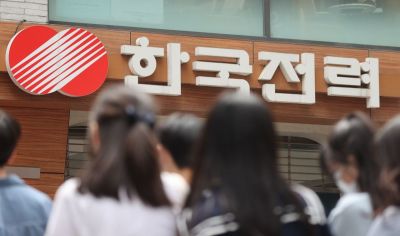
[Asia Economy Sejong=Reporter Lee Jun-hyung] The electricity wholesale price (SMP), which Korea Electric Power Corporation (KEPCO) pays to power producers for electricity, has risen again. As fuel cost burdens increase, there is no sign of improvement in KEPCO's financial structure. Analysts say an additional electricity rate hike in the fourth quarter of this year is inevitable.
According to the Korea Power Exchange on the 6th, the integrated SMP last month was 151.85 KRW per kWh, about 17% higher than the previous month (129.72 KRW). It also increased by about 8.2% compared to May (140.34 KRW). Previously, the monthly average SMP steadily declined after surpassing 200 KRW per kWh for the first time in April this year (202.11 KRW). However, SMP turned to an upward trend last month. The onshore SMP recorded 200.2 KRW per kWh on the 1st of this month, re-entering the 200 KRW range after about three months.
KEPCO Profitability at Stake... 13 Trillion KRW Deficit in First Half
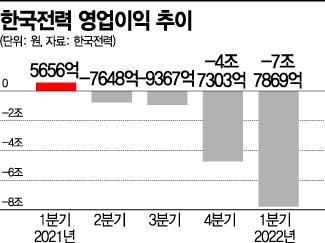
SMP is a key indicator that determines KEPCO's profitability. If electricity rates remain the same, KEPCO's performance worsens as SMP rises. In fact, due to the surge in international oil prices, SMP skyrocketed, and KEPCO's profitability deteriorated rapidly. It recorded a deficit of 7.8 trillion KRW in the first quarter alone. This amount exceeds last year's total deficit (about 5.9 trillion KRW), which was the largest operating loss on record, by about 2 trillion KRW.
The situation in the second quarter of this year is similar. According to financial information firm FnGuide, KEPCO's operating loss consensus for the second quarter was 5.3712 trillion KRW. Considering KEPCO's 7.7869 trillion KRW deficit in the first quarter, the operating loss for the first half of this year amounts to 13.1581 trillion KRW. There are also estimates that KEPCO's deficit in the second quarter exceeded 6 trillion KRW.
This is why the government raised the fuel cost adjustment unit price by 5 KRW per kWh in the third quarter. The fuel cost adjustment unit price is one of the components of electricity rates and is adjusted quarterly to reflect fluctuations in fuel costs. Earlier, the government introduced a fuel cost linkage system at the beginning of last year and limited the increase in the fuel cost adjustment unit price to a maximum of 3 KRW per quarter for price stability. However, as KEPCO's deficit ballooned due to selling electricity at a loss, the government revised the existing regulations and raised the third quarter fuel cost adjustment unit price increase to the annual maximum adjustment limit of 5 KRW.
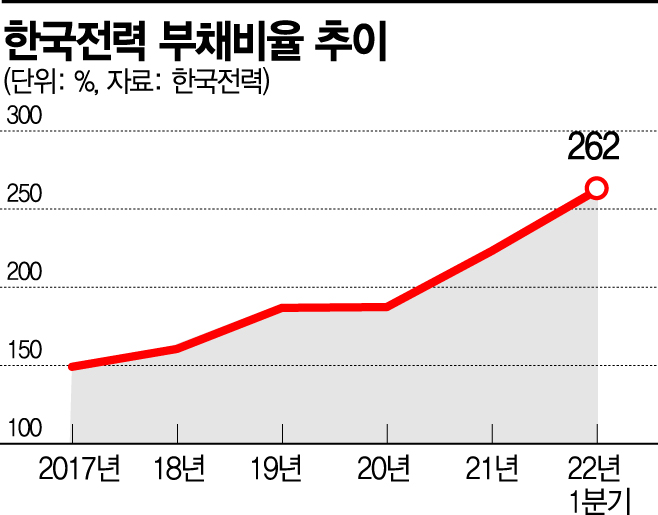
KEPCO Selling Electricity at a Loss... Accelerating Asset Sales
The problem is that KEPCO is still selling electricity at a loss. Initially, KEPCO calculated that the third quarter fuel cost adjustment unit price increase should be 33.6 KRW per kWh. This means that to avoid selling electricity at a loss amid soaring fuel costs, electricity rates in the third quarter must be raised by at least 33.6 KRW.
However, from the government's perspective, significantly raising electricity rates is practically impossible. Last month, the consumer price inflation rate reached 6.3%, the highest in about 23 years since the 1998 financial crisis, continuing a high inflation environment. If electricity rates, which are directly linked to the livelihood of ordinary citizens, are raised sharply to reduce KEPCO's deficit, it could lead to public backlash.
Therefore, the industry expects little room for KEPCO's performance to improve in the second half of this year. Hana Securities predicted last month that KEPCO's deficit this year would reach 30.2201 trillion KRW. The consensus among securities firms was also 23.0763 trillion KRW. This suggests that KEPCO is likely to incur a deficit of at least 10 trillion KRW in the second half of this year alone.
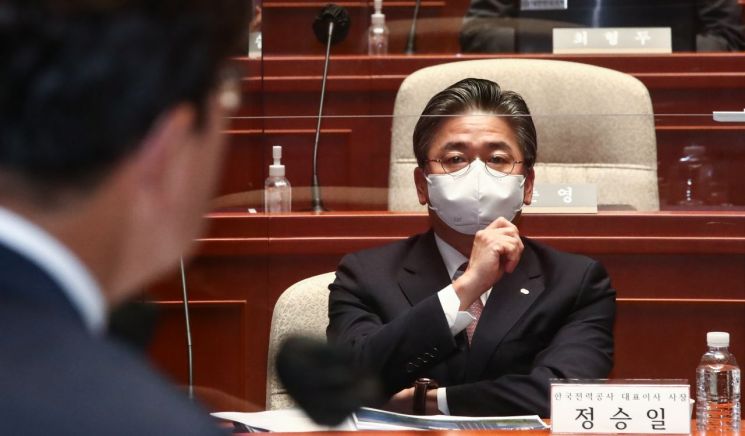 Jung Seung-il, President of Korea Electric Power Corporation, Attending the People Power Party Policy Members' Meeting
(Seoul=Yonhap News) Reporter Ha Sa-heon = Jung Seung-il, President of Korea Electric Power Corporation, attended the People Power Party Policy Members' Meeting held at the National Assembly on June 27 to give a lecture. 2022.6.27 [Photo by National Assembly Press Photographers]
toadboy@yna.co.kr
(End)
<Copyright(c) Yonhap News Agency, Unauthorized reproduction and redistribution prohibited>
Given this situation, KEPCO is accelerating asset sales. Since there is a limit to how much electricity rates can be raised, KEPCO has decided to cover deficits by selling its assets. KEPCO plans to start the sale of its stake in Korea Electric Power Technology next month. The stake KEPCO is selling is 14.77%, worth about 400 billion KRW.
There are also concerns that KEPCO's self-help measures, such as selling equity stakes, may only be a temporary fix, leading to calls for an additional increase in the fuel cost adjustment unit price in the fourth quarter. The government has already revised the existing fuel cost linkage system regulations and raised the third quarter fuel cost adjustment unit price to the annual maximum (5 KRW). However, if the government revises the related regulations again, the fuel cost adjustment unit price for the fourth quarter can be further increased.
© The Asia Business Daily(www.asiae.co.kr). All rights reserved.
![Clutching a Stolen Dior Bag, Saying "I Hate Being Poor but Real"... The Grotesque Con of a "Human Knockoff" [Slate]](https://cwcontent.asiae.co.kr/asiaresize/183/2026021902243444107_1771435474.jpg)


















