Used Widely from Building Materials to Semiconductor Raw Materials
Clear Supply Limits... China and Taiwan's 'Sand Battle' Escalates
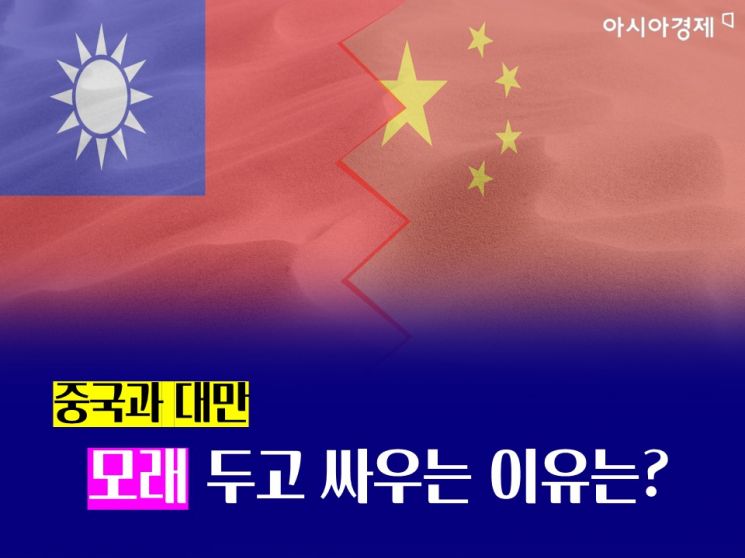 Amid escalating tensions between China and Taiwan following the visit of Nancy Pelosi, Speaker of the U.S. House of Representatives, China has decided to halt the export of 'sand' to Taiwan. / Photo by Song Hyundo, Asia Economy intern reporter
[Asia Economy Reporter Lim Juhyung, Intern Reporter Song Hyundo] Since Nancy Pelosi, Speaker of the U.S. House of Representatives, visited, China has been exerting comprehensive pressure on Taiwan, including military and economic measures. China has conducted military demonstrations near the Taiwan Strait and has suspended imports of Taiwanese fruits, fish, processed foods, and more. Among these, the ban on exports of Chinese 'natural sand' to Taiwan has attracted attention. Why has sand, of all the many traded goods between China and Taiwan, become the top sanction item?
◆China and Taiwan have clashed over sand in the past as well
This is not the first time sand has become a source of conflict between the two countries. At the end of 2006, China temporarily suspended sand exports to Taiwan citing environmental and natural resource protection reasons. According to the Korea Trade-Investment Promotion Agency (KOTRA), Taiwan's dependence on Chinese sand imports at that time was as high as 99%, and when the supply was suddenly cut off, industries using sand as a raw material suffered damage.
About two years later, in March 2008, China resumed sand exports to Taiwan, but after suffering significant damage once, Taiwan's economic authorities concentrated national efforts to reduce dependence on Chinese sand. Taiwan's Mining Bureau made efforts to secure sand domestically by dredging from rivers and reservoirs, and diversified import sources to Southeast Asia and other regions. In 2020 and 2021, Taiwan's imported sand amounted to 450,000 tons and 540,000 tons respectively, with Chinese sand accounting for 70,000 tons and 170,000 tons, reducing the share to about 15-30% of total imports.
◆From building materials to semiconductors... 'Sand' is a key raw material
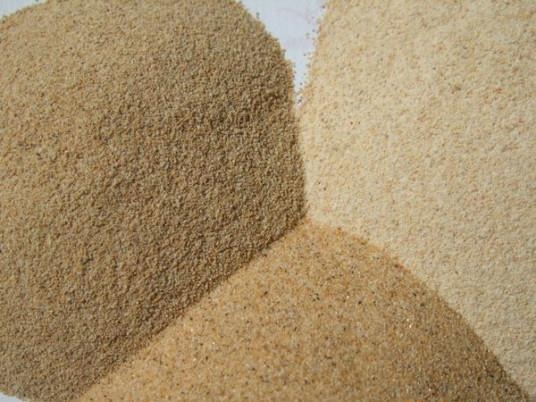
Sand, commonly found on beaches, riverbanks, and streams, is a key raw material in various manufacturing industries. It is mainly used as a component of concrete and glass, and mixed with cement to make plaster for construction.
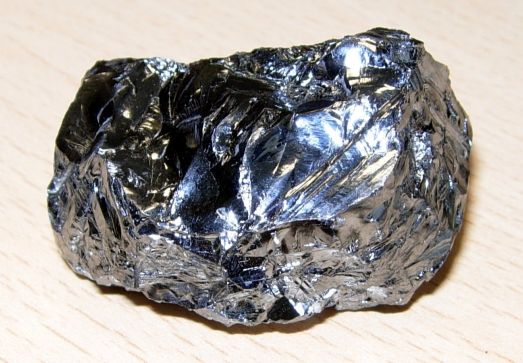 Refined silicon pieces extracted from sand. Silicon can be melted to make silicone. / Photo by Wikipedia Capture
Natural sand formed by natural weathering contains quartz, a mineral crystallized from solidified silicon dioxide. Silicon dioxide is used as a raw material in a wide range of consumer goods such as powdered processed foods, toothpaste, and desiccants. Among silicon-based industrial products, the most valuable is silicon itself. Semiconductor companies extract silicon from sand to produce silicon ingots (columns), which are then sliced thinly to manufacture wafers (semiconductor substrates).
China has selected the development of advanced semiconductor industries as a national policy goal through its 'semiconductor rise' initiative, while Taiwan is a leading semiconductor powerhouse with TSMC, the world's largest contract chip manufacturer. It is therefore somewhat expected that the two countries would engage in a tug-of-war over sand, the core raw material for semiconductors.
Although industrial demand for sand is immense, supply is limited, which is another reason conflicts arise. Even seemingly abundant sand can be depleted if tens of thousands of tons are extracted annually, causing devastating ecological damage.
For example, China's largest freshwater lake, Poyang Lake, has experienced changes in landforms and water flow due to excessive sand dredging, resulting in lowered water levels and putting over 300 species of migratory birds at risk of extinction. Eventually, the Chinese government announced in March last year that it would restrict sand extraction activities in Poyang Lake.
◆Sand battles also occur
As a result, a 'sand battle' sometimes takes place between China and Taiwan. Chinese sand dredging vessels have been 'stealing' marine sand from the Taiwan Strait.
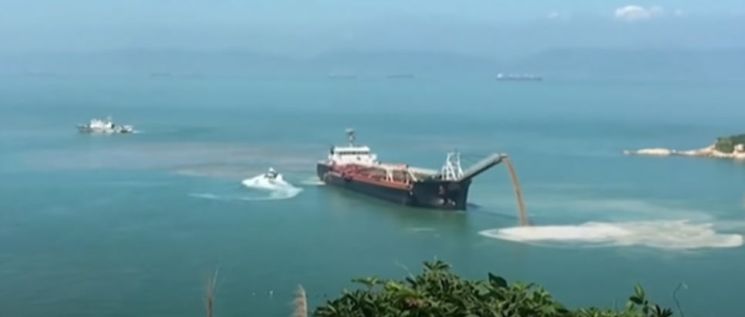 The image of a Chinese dredger illegally dredging sea sand at Mazu Island, Taiwan last year and discharging it again / Photo by YouTube Capture
China operates numerous 'sand dredgers' that suck up sand from the seabed using long pipes shaped like bent straws. Last year, several Chinese dredgers were chased away by the Taiwanese Coast Guard while illegally dredging large amounts of sand near Matsu Islands.
Li Wen, a member of Taiwan's Democratic Progressive Party, told the Japanese economic media 'Nikkei' in an interview, "(Sand dredging) is not an act of war declaration, but it is intended to harass Taiwanese citizens," adding, "It seems successful in angering the residents of Matsu Islands and causing damage to Taiwan's coastline."
© The Asia Business Daily(www.asiae.co.kr). All rights reserved.



















