"No Public Hearing... Driving the Lighting Industry to the Brink of Collapse"
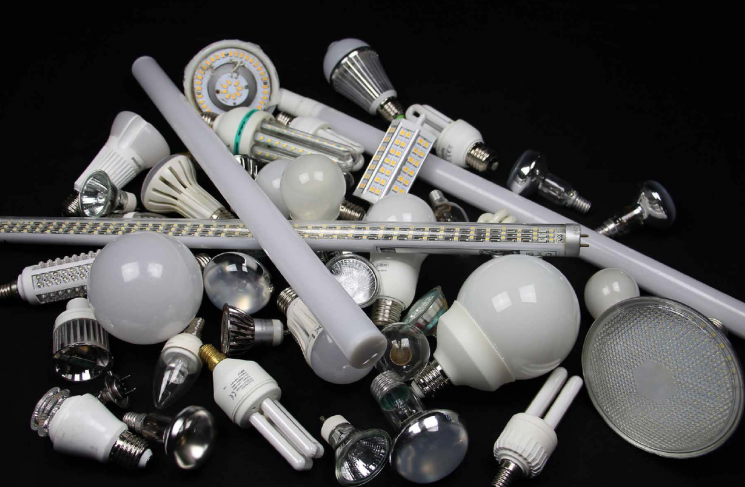
[Asia Economy Reporter Kim Jong-hwa] The lighting industry is strongly opposing the Producer Responsibility Recycling (EPR) system set to be implemented next year. The EPR system places the obligation of collecting and recycling manufactured products and packaging materials on producers. Producers responsible for collection and recycling will bear the costs (contribution fees) and provide subsidies to sorting and recycling companies.
The Korea Electric Lamp LED Industry Cooperative (Lamp Cooperative) and the lighting industry stated on the 5th that the industry's opinions were not reflected at all during the introduction of the EPR system, and that Korea is the only one among 38 OECD countries to include flat-type LED lighting in the EPR, putting the lighting industry at risk of collapse.
Kim Bok-deok, chairman of the Lamp Cooperative, said, "Despite conducting extensive work such as research since 2018 to introduce the EPR system, there was never a single public hearing to gather opinions from the lighting industry, and even after the legislative announcement, multiple meeting requests were ignored. Under these circumstances, including flat-type waste LED lighting, which has a collection rate of only 2.5%, in the EPR is driving the lighting industry to the brink of collapse," he lamented.
Once the EPR system is implemented next year, companies producing LED lighting will have to pay additional costs in the form of environmental contribution fees for the collection and recycling of waste LED lighting. According to the "Act on the Promotion of Saving and Recycling of Resources," which stipulates the implementation of the EPR system, flat-type waste LED lighting must pay a contribution fee of 600 KRW per kilogram.
The lighting industry believes it is unreasonable for the Ministry of Environment to demand a 15.7% collection rate from the industry for flat-type waste LED lighting, which had only a 2.5% collection rate during the pilot project. Flat-type waste LED lighting consists of iron, aluminum, LED packages, etc., and is a popular item in the scrap metal industry, with over 90% recyclability. Since they disappear as soon as they are noticed, achieving a 15.7% collection rate is practically impossible.
Based on the 15.7% collection rate demanded by the Ministry of Environment, the lighting industry estimates that the amount of waste LED lighting generated in 2023 will be 280,800 tons, with contribution fees reaching 26.5 billion KRW. This amount exceeds the annual net profit of about 26 billion KRW earned by approximately 3,000 lighting companies estimated by the Lamp Cooperative. Moreover, as the production share of flat-type LED lighting continues to increase, by 2030, the amount of waste LED lighting generated is expected to reach 722,800 tons, with contribution fees rising to 68.1 billion KRW, 2.6 times higher than the first year of implementation.
A lighting industry official emphasized, "This means paying contribution fees exceeding the industry's annual net profit. In the current difficult situation, most companies except for one or two will have to borrow money to pay the fees. If contribution fees increase every year after the first year of implementation, most companies will not be able to survive."
The lighting industry also raised fairness issues regarding double taxation. They argue that materials such as steel plates and plastics used in producing flat-type LED lighting already incur environmental charges, constituting double taxation. They also suggest that if flat-type waste LED lighting cannot be excluded from the EPR, it should only be included after a system capable of accurately measuring the collection rate is properly established.
In response, a Ministry of Environment official said, "Although there were aspects where the industry's objections during last year's legislative notice were not reflected, four meetings are scheduled during the remaining period to reflect the industry's position as much as possible. We will also discuss what the recycling rate should be. Since the stabilization of the system is important, we will not push it excessively," they explained.
© The Asia Business Daily(www.asiae.co.kr). All rights reserved.

















