1 in 2 Adults Feel 'Call Phobia'
Some Prepare Scripts Before Calls
Delivery Uses 'App Payment', Restaurants Use 'Kiosk'
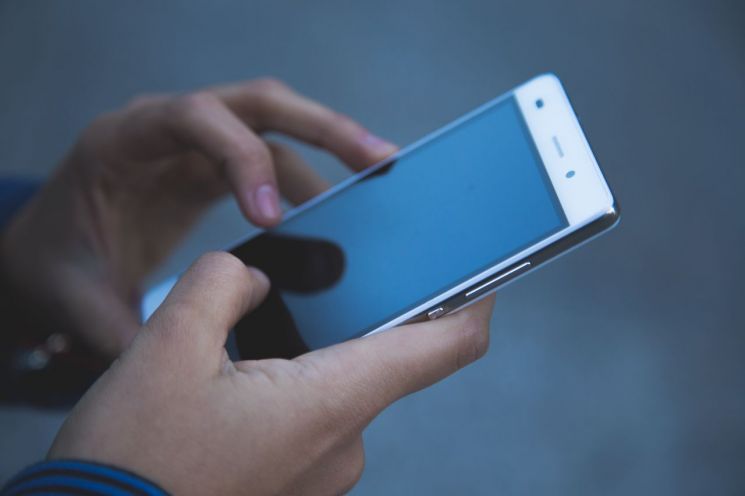 Among the 20s and 30s generations, the number of people complaining of 'call phobia' is increasing. [Image source=Pixabay]
[Asia Economy Reporter Kim Jung-wan] #. College student Choi (23) said that she tends to avoid calls from unknown numbers. Even when calls come from familiar numbers, Choi often responds automatically with a text saying "Please send a message" and does not answer the phone. She explained, "You don't know what the caller wants," adding, "When communicating through chat apps or texts, you have time to think before responding, but with phone calls, there is not enough time to think, so I tend to avoid them."
'Call phobia'?a combination of 'call' and 'phobia'?refers to the phenomenon of feeling tension, pressure, or discomfort every time one makes or receives a phone call. Recently, more people, especially in their 20s and 30s, have been feeling uncomfortable with phone calls themselves.
Some prepare what to say in advance because they find calls uncomfortable. Yoon (27), a second-year office worker, said that when he has to call clients, he organizes the content and tone in a document and reads it during the call. He said, "Due to the nature of my job, I have to make many calls, and while I can prepare when I initiate the call, I tend to feel very nervous when receiving calls," adding, "Text messages are much more comfortable." Yoon also said, "For tasks that can be handled through emails or messengers, there is no need to take separate notes," and "Even if I miss something, I feel it is more convenient for both parties to send a message rather than calling back and forth, causing confusion and waiting."
This call phobia phenomenon is experienced by more than one in two adults. According to a 2020 survey by the job portal JobKorea of 518 adult men and women, 53.1% of respondents said they experience call phobia. This is an increase of 6.6 percentage points from 46.5% in 2019.
Some even experience this when ordering food. Kim (26), who lives alone in Seoul, said, "When ordering food delivery at home, I use delivery apps and avoid places that only accept phone orders," explaining, "Because I can think about and decide on options or special requests."
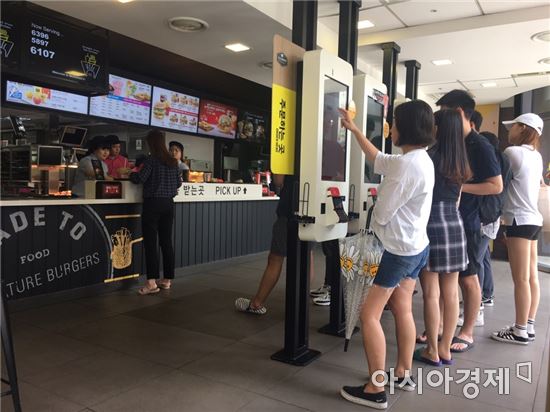 In addition to phone calls, some people prefer non-face-to-face communication over face-to-face interaction when delivering food or going to restaurants or supermarkets. The photo is not related to the specific content of the article.
The trend of becoming accustomed to non-face-to-face communication instead of face-to-face, and text instead of phone calls, is interpreted as an effect of digital technology development enabling communication through various platforms. Respondents who experience call phobia cited reasons such as "being more accustomed to non-face-to-face communication like messenger apps and texts than phone calls" (58.2%).
Since the COVID-19 pandemic, non-face-to-face and platform-based communication has become even more familiar. According to WiseApp, an app and retail analysis service, the annual payment amount for 'Baedal Minjok' and 'Yogiyo' in 2020 was 12.2008 trillion KRW, which is about a 75% increase compared to 6.9527 trillion KRW in 2019, before the pandemic.
Additionally, the familiarity with non-face-to-face payments such as kiosks and self-checkout counters is also cited as a cause. According to the 'Domestic Kiosk Distribution Status (Estimate)' report released last year by the Science, Technology, Information and Broadcasting Communications Committee, the number of kiosks increased from 189,000 units in 2019 to about 210,000 units in 2021. Office worker Lee (28) explained, "Even when I go to a restaurant, it is much more comfortable if there is a kiosk or pad at the table," adding, "Because it feels burdensome when a staff member is waiting in front of you." He also added, "At supermarkets, I mostly use self-checkout counters rather than regular checkout counters."
© The Asia Business Daily(www.asiae.co.kr). All rights reserved.
![Clutching a Stolen Dior Bag, Saying "I Hate Being Poor but Real"... The Grotesque Con of a "Human Knockoff" [Slate]](https://cwcontent.asiae.co.kr/asiaresize/183/2026021902243444107_1771435474.jpg)
















