KCTV Jeju Attempts IPTV Transition
Trial Broadcast to 2,000 Households Underway
Increasing Wi-Fi 6E-Based Demonstrations
SO and MSO Each Fend for Themselves
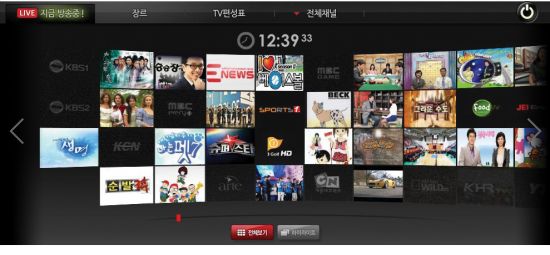
[Asia Economy Reporter Cha Min-young] The cable TV industry, which had been struggling due to competition from IPTV and over-the-top (OTT) online video services, is now dreaming of a resurgence through new technologies. They are attempting to transition to Internet Protocol (IP) network-based broadcasting or are challenging themselves with new services incorporating next-generation Wi-Fi technology. More companies are diversifying their businesses by introducing services linked with Mobile Virtual Network Operators (MVNO), rentals, and OTT.
Vice Minister Visits Jeju Island to Observe IP Network-Based Broadcasting Transmission Site
According to industry sources on the 7th, Park Yoon-kyu, Vice Minister of the Ministry of Science and ICT, plans to visit Jeju Island on the 19th to observe the IP network-based broadcasting transmission site of KCTV Jeju Broadcasting, an individual comprehensive cable TV operator (SO). KCTV Jeju Broadcasting began pilot transmission of IP network-based broadcasting to 2,000 households last month, the first cable TV operator to do so.
Vice Minister Park will also tour a demonstration site based on Wi-Fi 6E, the next-generation Wi-Fi. Wi-Fi 6E uses an unlicensed frequency band of 6 GHz, which is up to four times faster than previous bands. After the United States in October last year, it is the second next-generation wireless communication network supplied by the Ministry of Science and ICT worldwide. A consortium of seven entities, including Jeju Island and KCTV Jeju Broadcasting, showcased services such as streaming and downloading 8K-level VR content at a VR theme park. Sports broadcasts and terrestrial UHD broadcasting are also among the demonstration cases.
The government will also hold a meeting with representatives of the cable TV industry. This is the first time the government is meeting exclusively with the cable TV industry since last month’s meeting with the media industry, including IPTV and OTT. It is expected that the cable TV industry will convey their concerns about current issues to the government. Urgent tasks include the introduction of a horizontal regulatory system, fostering and supporting individual SOs, abolishing entry and ownership regulations for broadcasters, banning cash prizes for IPTV bundled products, and establishing standards for content compensation.
Widening Gap Between Cable TV and IPTV... Seeking Transformation
With the emergence of OTT following IPTV, the cable TV industry is under intense pressure. Since June 2017, when SOs were overtaken by IPTV in subscriber numbers, the gap between IPTV and SO subscribers widened to 6.33 million terminals as of the end of June last year. The current number of SO subscribers is 12.99 million terminals, a 7% decrease over four years since 2017. Not only in Korea but also in the United States, where cable TV has traditionally been strong, code-cutting (cancellation of paid broadcasting services) is increasing.
Amid growing concerns in the small and medium cable TV sector, more companies are attempting changes. This is because the government decided last year to allow cable TV operators, which had been limited to the radio frequency (RF) method, to transmit broadcasts using IP networks. The Ministry of Science and ICT permitted six small and medium cable TV companies to operate IPTV-style businesses last year. With the passage of technology neutrality bills proposed by Rep. Byun Jae-il of the Democratic Party and others this year, the transition speed is expected to accelerate.
Large-scale nationwide multiple system operators (MSOs) have diversified their businesses. SK Broadband introduced 'PlayZ,' known as the 'OTT box,' earlier this year, expanding its customer base through cooperation with OTT. Through subsidiaries, it is also actively engaged in electric vehicle charging services and data center construction. LG HelloVision is focusing on MVNO and rental services. It is also actively participating in regional channel commerce businesses introduced under regulatory sandbox exemptions.
A KCTV Jeju Broadcasting official said, "IPTV technology is not a new innovation, but it seems to signify that cable TV is transforming into IPTV," adding, "I believe more cable TV operators will switch to IPTV."
© The Asia Business Daily(www.asiae.co.kr). All rights reserved.
![Clutching a Stolen Dior Bag, Saying "I Hate Being Poor but Real"... The Grotesque Con of a "Human Knockoff" [Slate]](https://cwcontent.asiae.co.kr/asiaresize/183/2026021902243444107_1771435474.jpg)
















