‘Sweating Instead of Serving Prison Time’... Diversification of Volunteer Types Including Rice Planting and Snow Removal
Non-Payment of Fines Applicants Eligible with Monthly Income Below 3.58 Million Won for 4-Person Families
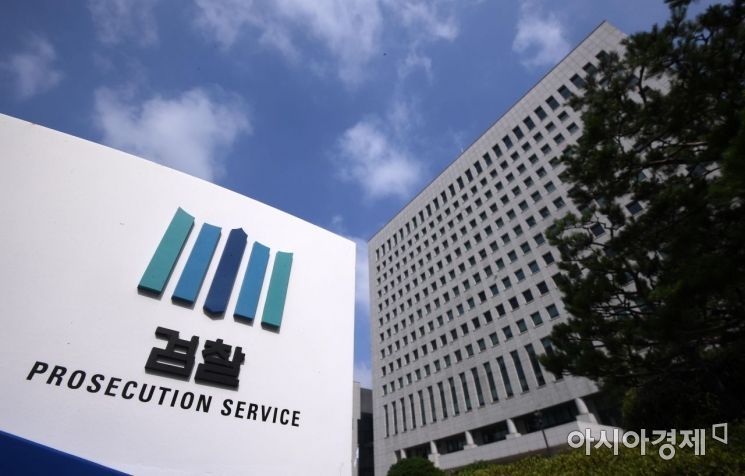
[Asia Economy Reporter Heo Kyung-jun] The enforcement system that replaces imprisonment in labor camps with community service for impoverished and vulnerable fine defaulters will be expanded.
On the 2nd, the Supreme Prosecutors' Office announced an improvement plan for the enforcement system for impoverished and vulnerable fine defaulters titled "Sweat Instead of Imprisonment."
The Supreme Prosecutors' Office stated, "When impoverished and vulnerable citizens who cannot pay fines are detained in labor camps, their family relationships and livelihood activities are severed. Incarceration in correctional facilities also causes stigmatization and the adverse effect of crime learning," adding, "This leads to a vicious cycle where basic livelihood security designation is canceled, depriving them of their economic foundation."
Currently, among all those detained in labor camps, about 93% have fines of 5 million won or less, and about 60% have fines of 1 million won or less. The proportion of inmates serving labor sentences among correctional facility detainees has reached 2.8% over the past five years. In Japan, it is about 0.6%.
In particular, relatively light sentences that do not require detention have been converted into imprisonment, turning property penalties into physical freedom penalties. Due to the prolonged COVID-19 situation and increased economic burdens, the number of unpaid fines under 5 million won has sharply increased: approximately 138,000 cases in 2019, about 142,000 in 2020, and about 199,000 last year.
Ultimately, the prosecution has prepared a plan to expand the scope of subjects who can substitute community service for detention in labor camps for fine defaulters.
Under the current system, those who cannot pay fines of 5 million won or less due to economic difficulties can have their fines substituted with community service upon the prosecutor's request and court approval, but the applicant's income level must be 50% or less of the median income.
The prosecution plans to broaden this criterion to 70% or less of the median income. For a four-person household, this expands the monthly income threshold from 2,560,540 won or less to 3,585,756 won or less.
Additionally, the prosecution plans to relax the community service application criteria by considering various economic circumstances of fine defaulters beyond income level.
The types of community service available to fine defaulters will also be expanded to various areas such as agricultural and fishing village support like rice planting or snow crab net repair, support for marginalized groups like bathing services for elderly living alone, snow removal work, mural painting, and residential environment improvement such as wallpapering for multicultural families.
Moreover, the start time of community service can be adjusted considering the applicant's livelihood, studies, or illness, and those who have already paid part of the fine or are subject to installment payments or payment deferrals can also apply for community service for the remaining amount.
© The Asia Business Daily(www.asiae.co.kr). All rights reserved.

















