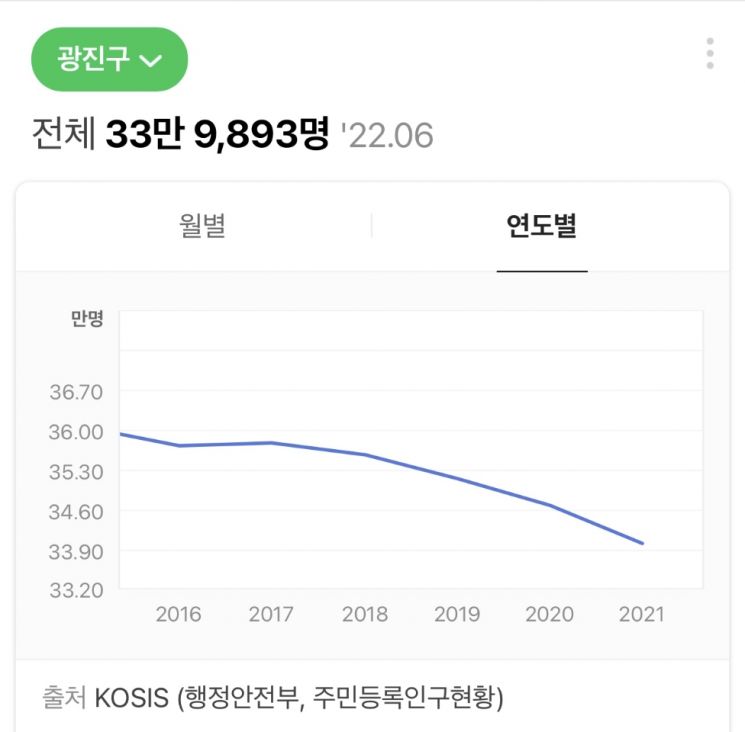
Gwangjin-gu Has Flourished Greatly Compared to Former Seongdong-gu but Now Falls Behind Seongdong-gu and Jungnang-gu, Residents Strongly Desire Development... Recently, Kim Kyung-ho, Gwangjin-gu Mayor, Initiates Expansion of Commercial Area on the Northern End of Yeongdong-daero
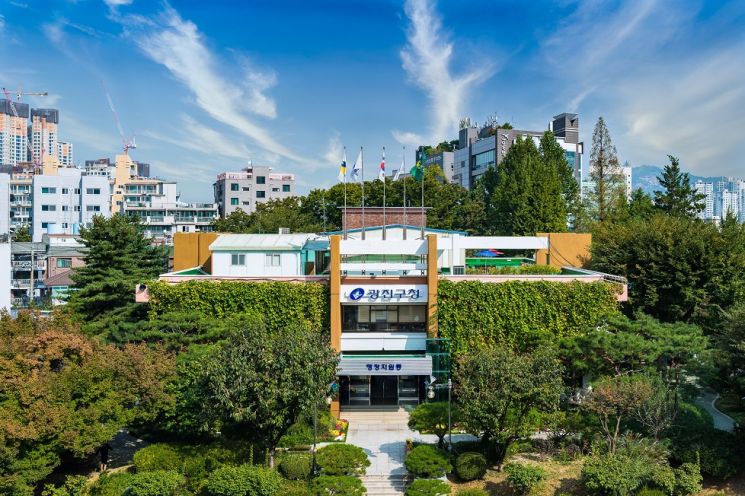 The current Gwangjin District Office main building is the former Republican Party training center building, which was constructed over 70 years ago.
[Asia Economy Reporter Park Jong-il] “How did Gwangjin-gu (development) end up like this?”
This is a lament from an executive A at Gwangjin-gu Office.
Gwangjin-gu was a representative upscale city in Gangbuk-gu where you could see the Han River from the north. There were large-scale apartments around Dongseoul Terminal, the Walkerhill Hotel in Gwangjang-dong, and the most luxurious residential-commercial complexes near Konkuk University Station.
However, the once thriving Gwangjin-gu lost its development momentum and fell into a backward area of Gangbuk-gu. Junggok-dong and Hwayang-dong still look like the 1980s and 1990s.
When it was part of Seongdong-gu in March 1995 and then separated into Gwangjin-gu, there was a strong tendency among employees not to go to Seongdong-gu.
However, since the 4th local government term, Gwangjin-gu’s development has lagged behind neighboring Seongdong-gu, and now it is considerably behind Seongdong-gu.
It has not even been able to join the so-called Han River-side representative residential area ‘Mayongseong’ (Mapo-Yongsan-Seongdong-gu).
Yongsan-gu has become a hot area to the extent that the dominant view is that “the Gangnam era is over and the Yongsan era is coming,” due to the relocation of the Presidential Office under the Yoon Seok-yeol administration, the development of Yongsan National Park, and Mayor Oh Se-hoon’s announcement of the international business district development.
Mapo-gu is still regarded as a good residential area due to its accessibility to downtown and Yeouido.
Seongdong-gu has emerged as the top upscale residential area in northern Seoul with the creation of Seoul Forest and the introduction of luxury residential-commercial complexes such as Hanwha Foret, Daelim Acro River, and Doosan Trimage in Seongsu-dong. Moreover, due to its accessibility to Gangnam, many small and medium-sized enterprises have relocated their headquarters there, making it a rising area.
If the relocation of Sampyo Remicon in Seongsu-dong and the ongoing Han River-side development in Seongsu-dong are completed, Seongsu-dong is expected to transform into a top-tier residential area comparable to Apgujeong-dong across the river.
But what about Gwangjin-gu?
The Gwangjin-gu Office building (photo) is also an old 70-year-old Republican Party training center building, seemingly showing the stagnation of local development. Of course, a new office building is planned to be constructed in the Guui Station area within four years.
Because of this, local residents unanimously say they are relatively far behind. Resident B of Gwangjin-gu lamented, “In the past, Seongdong-gu was no match, but now we even envy Jungnang-gu.”
Due to this backwardness, both the Gap and Eul constituencies’ members of the National Assembly belong to the Democratic Party. Even Mayor Oh Se-hoon ran twice in Gwangjin Eul and was defeated by Assembly members Chu Mi-ae and Ko Min-jung.
The district mayor has also been from the Democratic Party from the 5th to the 7th local government terms.
Because of this, Mayor Oh prepared special measures to revive Gwangjin-gu.
He recruited current district mayor Kim Kyung-ho, a first-class official from Seoul City, who narrowly won by about 3,000 votes in the local election held after President Yoon Seok-yeol took office.
This means the political soil is not favorable for the People Power Party.
Accordingly, Mayor Kim Kyung-ho set the election catchphrase as “Promoting Gwangjin development together with Mayor Oh Se-hoon.”
Mayor Kim started local development by expanding commercial areas from the northern end of Yeongdong Bridge to 50 Hwayang-dong (Dongil-ro district), holding public viewing and opinion hearings on the “Urban Management Plan Decision and Strategic Environmental Impact Assessment” until August 11, and planning to foster the area as an economic center close to workplaces and residences by supporting youth startups and introducing business and commercial hub functions. (photo)
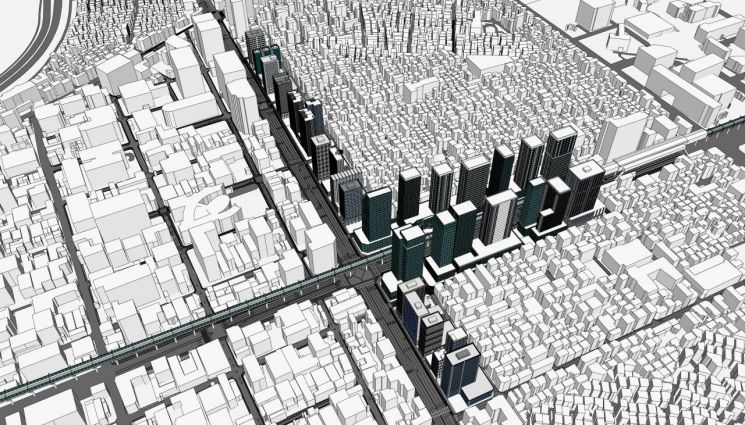
Large-scale redevelopment of deteriorated areas such as Jayang-dong is also expected to be promoted.
A Gwangjin-gu official C said, “During Mayor Kim Kyung-ho’s term, we need to coordinate with Mayor Oh Se-hoon for local development; otherwise, we don’t know how much more backward it will become.”
The development of Gwangjin-gu, which is facing its greatest opportunity for local development, is drawing attention.
© The Asia Business Daily(www.asiae.co.kr). All rights reserved.



















