Cicada Chirping Noise Level Comparable to Car Noise
Diurnal Insect Crying During Day and Stopping at Night
Recently Due to Artificial Lighting... Crying Even at Night
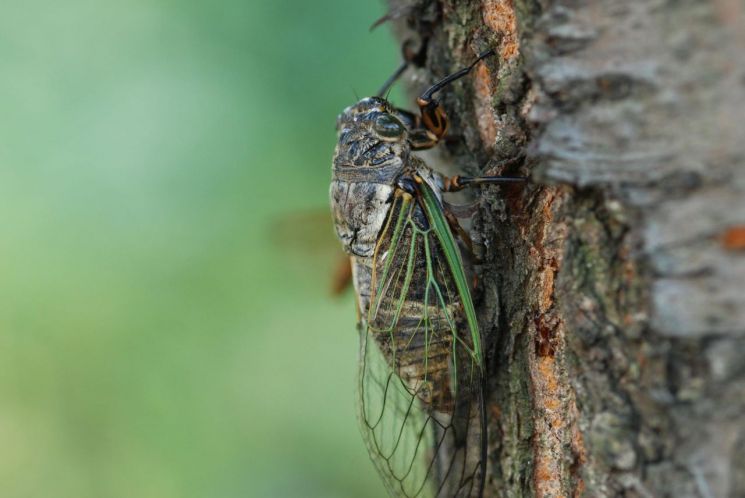
[Asia Economy Reporter Seunggon Han] # A, a college student in their 20s, has recently been unable to sleep. The hot and humid weather is a problem, but the real factor disturbing A's sleep is none other than cicadas. A said, "Were cicadas always this loud?" and expressed frustration, saying, "It's so noisy that I can't even think about sleeping." They raised their voice, adding, "They keep crying day and night, to the point that it really feels like noise pollution."
Cicadas are diurnal insects that sing during the day and not at night. However, cicadas in the city uniquely continue to sing late into the night. Not only in A's case, but recently there have been many complaints such as "I can't sleep because of cicadas singing at night." B, a worker in their 30s, said, "After work, I want to rest and sleep, but these days I am under great stress because of cicadas singing at night."
Cicadas usually live underground as larvae for 3 to 7 years, then emerge, reproduce for about a month, and die. For this reason, cicada sounds have been somewhat excused. The consensus was that since they have endured for a long time, "we can understand that much."
However, recently cicadas have become a nuisance disturbing deep sleep during summer. The average sound level of cicadas during their active (mating) period is 72.7 decibels (dB), which is higher than car noise (67.8 dB). Ultimately, the loud car noise is happening late at night, right next to the residential area where I live. This is why citizens have recently expressed frustration over cicada sounds.
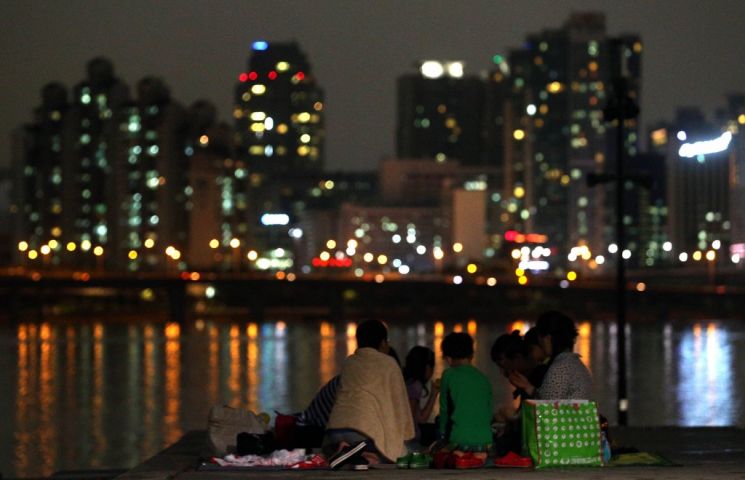
However, this situation is related to environments created by humans. It is analyzed that cicadas also cannot sleep and keep singing due to artificial lighting in cities.
According to a study by the Seoul Metropolitan Government Health and Environment Research Institute on cicada sounds from July to September last year, cicada sounds became louder at night when temperatures were high or surrounding lights were bright.
Cicadas usually start singing around 5 a.m. and stop their singing activity around 8 p.m. However, due to the influence of nighttime lighting, it was found that the Malmaemi cicada, which usually sings during the day, sang 3 to 4 hours longer in bright areas.
The research institute conducted noise surveys on cicada sounds at five locations including commercial facilities and urban parks. The results showed that cicada sounds were loud enough to exceed the noise standards equivalent to loudspeaker levels. Noise from cicadas during their active period increased by 2.0 to 31.8% compared to usual noise levels.
In fact, when measuring illuminance near cicada sound measurement points in an apartment in Gangnam-gu and a commercial area at Jamsil Station intersection, it was found that in excessively bright places due to nighttime lighting, a chorus of true cicadas created noise.
Summarizing the situation, it is ultimately due to environments created by humans that cicadas are showing abnormal behavior. The researchers who conducted this study stated, "We will seek ways for citizens and insects to coexist, such as creating and expanding green spaces, through continuous research in the future."
© The Asia Business Daily(www.asiae.co.kr). All rights reserved.


















