Increase of 26 Trillion KRW in Deposits and Savings at 5 Major Banks from 1st to 21st This Month
Interest in High-Interest Products like 3% Deposits and 6% Savings Rising
Stock Market Funds at Annual Low... Investor Deposits Return to Pre-Corona Levels
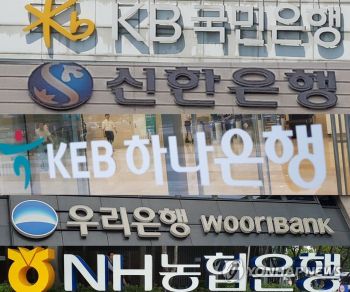
[Asia Economy Reporter Minwoo Lee] As the interest rate hike period begins, nearly 20 trillion won is flowing daily into savings and installment savings accounts at the five major commercial banks: KB Kookmin, Shinhan, Hana, Woori, and NH Nonghyup. This contrasts with the stock market funds, which have been declining day by day. Many deposit products at major commercial banks offer annual interest rates in the 3% range, and installment savings products offer rates approaching 6%, leading investment sentiment to shift toward savings and installment savings. Since the interest rate hike period is expected to continue for the time being, this trend is likely to persist.
According to the financial sector on the 25th, as of the 21st, the balance of fixed savings and installment savings at the five major commercial banks totaled 748.7201 trillion won. This is an increase of 26.1599 trillion won compared to the end of June this year. Since the beginning of this month, on business days, an average of 1.744 trillion won has flowed daily into bank savings and installment savings. Nearly half of the increase in savings and installment savings at the five major commercial banks in the first half of this year (58.6835 trillion won) was injected this month alone.
In particular, deposits have increased significantly. From the beginning of this month to the 21st, the increase in deposit balances alone reached 25.6609 trillion won. The increase in installment savings was only 499 billion won. This is interpreted as fixed deposits being products where a large sum is deposited at once to manage a lump sum, while fixed installment savings involve depositing a predetermined amount monthly to accumulate a lump sum.
The Bank of Korea, after implementing the 'Big Step' (a 0.5 percentage point increase in the base interest rate at once) for the first time in history, has also signaled further rate hikes. As banks expand high-interest products in response to the Bank of Korea's base rate hikes, this trend is expected to continue. According to the Korea Federation of Banks, all five major commercial banks have introduced deposit products with annual interest rates in the 3% range. Woori Bank's 'First Transaction Preferential Fixed Deposit' offers up to 3.60% interest (based on 12 months). Hana Bank's 'Hana Fixed Deposit (up to 3.30%)' provides interest in the 3% range annually without any special conditions. Shinhan Bank's 'Beautiful Courage Fixed Deposit' also offers a basic interest rate of 3.25% (based on 12 months).
Installment savings products with rates in the 5-6% range have also appeared. NH Nonghyup Bank's 'NH Walking Korea Installment Savings' can offer up to 6.35% interest annually if preferential conditions are met. Jeonbuk Bank has introduced the 'JB Card Financial Technology Installment Savings,' which offers a 6% interest rate based on 12 months. Hana Bank's 'Double Up for Home Purchase Installment Savings' also reaches a maximum interest rate of 5.5% annually.
Meanwhile, funds are continuously flowing out of the sluggish stock market. According to the Korea Financial Investment Association, investor deposit funds, which are waiting to be used for stock purchases, hit an annual low of 53.4922 trillion won as of the 20th. Compared to the early-year level of around 75 trillion won, about 22 trillion won has exited the stock market. The stock trading volume, which indicates stock market vitality, has also significantly decreased. The average daily trading volume of the KOSPI this month (from the 1st to the 22nd) was 7.0918 trillion won, about 4 trillion won less than in January (11.2827 trillion won). This is the lowest since January 2020 (6.4346 trillion won), before the COVID-19 pandemic.
© The Asia Business Daily(www.asiae.co.kr). All rights reserved.
![Clutching a Stolen Dior Bag, Saying "I Hate Being Poor but Real"... The Grotesque Con of a "Human Knockoff" [Slate]](https://cwcontent.asiae.co.kr/asiaresize/183/2026021902243444107_1771435474.jpg)
















