[Asia Economy Reporter Choi Seok-jin, Legal Affairs Specialist] Former JSTINA CEO Kim Ki-seok, who was prosecuted on charges of insider trading by disposing of treasury stocks before disclosing a sharp decline in operating profit compared to the previous year, has been acquitted.
The court reasoned that information related to the disposal of treasury stocks or the deterioration of business performance cannot be conclusively deemed as adverse information that would typically cause a stock price decline if disclosed.
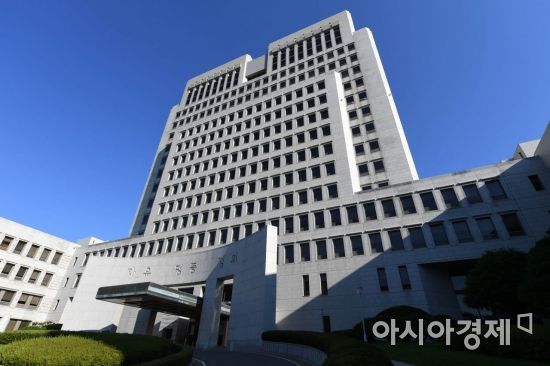
The Supreme Court's 3rd Division (Presiding Justice Noh Jeong-hee) announced on the 25th that it upheld the lower court's acquittal ruling in the appeal trial of former CEO Kim and others, who were indicted for violating the Capital Markets Act.
The court stated, "There is no error in the lower court's judgment that violates the rules of logic and experience or exceeds the limits of free evaluation of evidence, nor is there a misinterpretation of the legal principles regarding the establishment of the offense under Article 174(1) of the Capital Markets Act (Prohibition of Use of Unpublished Important Information)."
Kim and A, the executive director in charge of finance, along with the company corporation, were prosecuted in 2019 on charges of trading stocks using undisclosed information.
At that time, JSTINA's duty-free store sales sharply declined due to China's 'Korean Wave ban' following the THAAD (Terminal High Altitude Area Defense) incident, resulting in significant decreases in sales and operating profit from the third quarter of 2018.
In the January 2019 management reporting meeting, Kim and A confirmed that the 2018 operating profit had decreased by about 66% compared to the previous year and decided to dispose of some of the treasury stocks held by the company through a block deal (large volume trading outside regular hours).
Subsequently, from January 28 to February 11, 2019, Kim, his spouse, and children sold stocks, avoiding losses of approximately 310 million KRW, and were charged with trading stocks using undisclosed information related to the disposal of treasury stocks.
Additionally, A was charged with causing the chairman B's children to sell stocks under their names to avoid losses of about 230 million KRW and disposing of stocks under his own name to avoid losses of about 6.8 million KRW.
Furthermore, both were accused of using undisclosed information about deteriorating business performance to sell 800,000 treasury shares and 200,000 company shares under Kim's name, thereby avoiding losses of approximately 1.336 billion KRW.
On February 12, 2019, the last day of Kim's large-scale stock sales, after the market closed, JSTINA disclosed that its annual operating loss had increased about 18 times to 860 million KRW compared to the previous year. Subsequently, the company's stock price plunged about 40% within approximately one month.
The prosecution indicted Kim, viewing the company's intention to dispose of treasury stocks and the deterioration of business performance as undisclosed information he used.
However, the first and second trials acquitted him, stating that information such as the increase in operating loss cannot be conclusively classified as 'adverse important information' nor that he used such information.
The lower courts found it difficult to conclude that the disclosure of treasury stock disposal was adverse information affecting stock price decline. They cited that JSTINA had disposed of treasury stocks several times in the past, during which the stock price either slightly declined or even rose.
Moreover, the lower courts rejected the prosecution's claim that Kim used internal management reporting materials to anticipate the performance deterioration and disposed of stocks in advance.
The Supreme Court confirmed the acquittal ruling, finding no legal errors in the second trial's judgment.
© The Asia Business Daily(www.asiae.co.kr). All rights reserved.

















