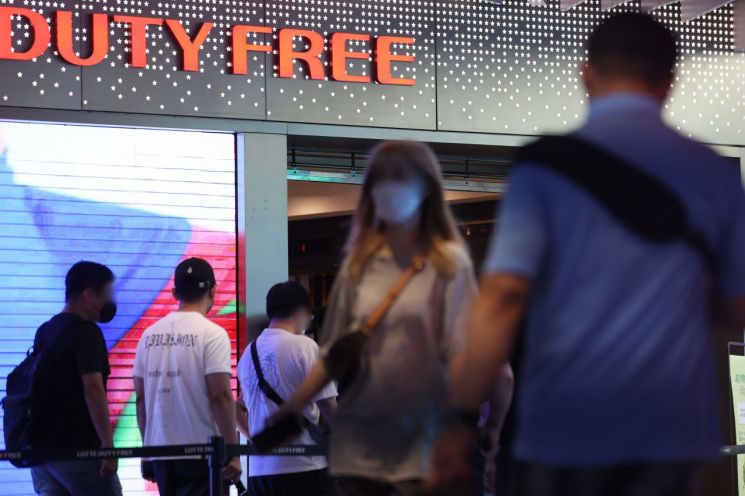
[Asia Economy Reporter Jeon Jinyoung] The amount of alcohol that overseas travelers can bring into the country duty-free will increase from 1 bottle to 2 bottles. The duty-free limit will also be raised from the existing $600 to $800.
According to the Ministry of Economy and Finance on the 22nd, this decision is included in the '2022 Tax Reform Plan' and was made considering economic changes such as the worsening business conditions of the duty-free industry due to COVID-19 and the increase in national income.
Currently, the basic duty-free limit for travelers' carry-on items is $600. Separate duty-free limits apply to alcohol, tobacco, and perfume. Alcohol is limited to 1 bottle (1ℓ, under $400), tobacco to 200 cigarettes (1 carton), and perfume to 60ml. The government plans to maintain the limits for tobacco and perfume but increase the quantity and limit for alcohol to 2 bottles and 2ℓ. The value limit will remain under $400. When bringing in items exceeding the duty-free scope, travelers must declare them to customs and pay customs duties and value-added tax. This increase in the alcohol duty-free limit to 2 bottles is the first in nearly 30 years.
The government stated, "Most travelers purchase alcoholic beverages priced around $200, but the alcohol duty-free limit was restricted to 1 bottle, so the duty-free alcohol limit was not fully utilized. Considering international agreements and overseas cases, we decided to expand the alcohol duty-free limit to 2 bottles."
The basic duty-free limit will also be raised from $600 to $800 for the first time in 8 years. The duty-free limit was last increased in 2014, and this change reflects that the per capita income level last year increased by about 30% compared to 2014. It also aims to support the tourism industry, including duty-free shops, which saw a sharp decline in sales due to COVID-19.
Earlier, the government abolished the purchase limit for domestic residents at duty-free shops starting March 18, but since the duty-free limit was not changed, there were criticisms that the effect on consumption activation was limited.
© The Asia Business Daily(www.asiae.co.kr). All rights reserved.
![Clutching a Stolen Dior Bag, Saying "I Hate Being Poor but Real"... The Grotesque Con of a "Human Knockoff" [Slate]](https://cwcontent.asiae.co.kr/asiaresize/183/2026021902243444107_1771435474.jpg)
















