'Woo Young-woo' Production Cost About 20 Billion Won
Drama Airing Possible Without Advertising Pressure
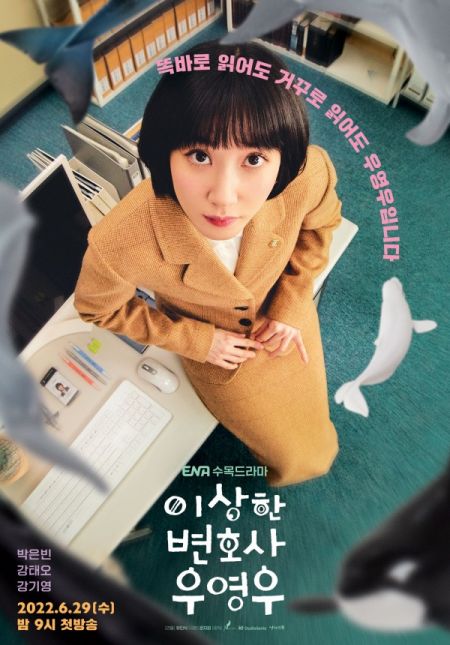 In ENA's Wednesday-Thursday drama 'Extraordinary Attorney Woo,' it is difficult to find PPL. Photo by ENA
[Asia Economy Intern Reporter Kim Gun-chan] #. The protagonist A of a legal drama is a lawyer at a large law firm. At work, they apply multi-balm to their face for skincare and hand out red ginseng sticks to colleagues to cheer them up. Lunch is a quick meal at a franchise sandwich shop, and after work, they drink a can of beer while wearing an LED mask at home.
This is a typical scene featuring product placement (PPL) in dramas. However, in the recently popular ENA Wednesday-Thursday drama "Extraordinary Attorney Woo" (Woo Young-woo), such PPL is hard to find. Even the gimbap Woo Young-woo eats daily and the headset worn during commuting have no PPL. Common PPL items like multi-balm and red ginseng sticks seen in other dramas do not appear. Online, viewers of Woo Young-woo have even created a virtual "PPL version Woo Young-woo," which has become a hot topic.
PPL refers to advertising that directly or indirectly promotes products or brands by exposing them within content such as movies or dramas. Production companies receive funding from advertisers to cover production costs, and advertisers benefit from advertising effects through the program.
According to the Enforcement Decree of the Broadcasting Act, PPL should not disrupt the viewer's watching flow. However, there are no clear standards related to this, so violations of this regulation have been frequent. In the past, some dramas were criticized by viewers for excessive PPL that did not fit the situation.
The tnN drama "Jirisan" is a representative example. Characters appearing as mountain rescue team members were criticized for eating a specific brand of sandwich in the Jirisan shelter office. The SBS drama "The King: Eternal Monarch" featured about 10 PPLs in one episode, drawing criticism from viewers.
Pop culture critic Kim Heon-sik explained the excessive PPL in dramas: "As proven in the drama Jirisan, no matter how well a star writer writes, if production costs are composed through sponsorship, the quality of the work declines," adding, "Artificial placement of products according to the sponsor's intentions makes it rather unnatural."
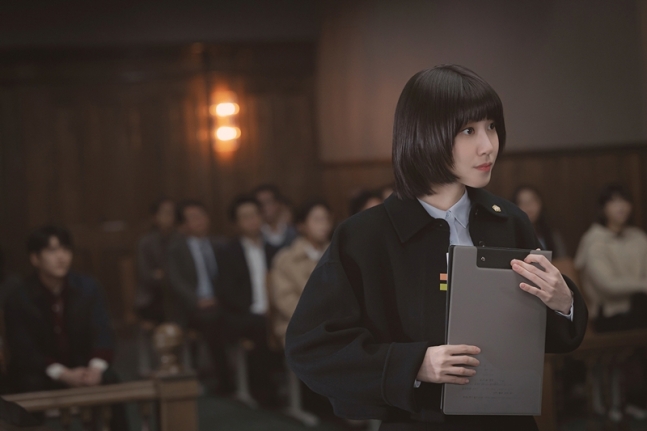 Wooyoung-woo is currently airing on the ENA channel operated by skyTV, a subsidiary of the KT Group, rather than on terrestrial or general programming channels. Photo by Netflix
Unlike existing dramas with excessive PPL, the reason PPL is hard to find in Woo Young-woo is related to the characteristics of the broadcasting channel. Woo Young-woo is aired on the ENA channel operated by skyTV, a KT Group affiliate, rather than terrestrial or comprehensive programming channels.
Thanks to KT's investment announced last April to strengthen content production, Woo Young-woo reportedly secured higher production costs than typical dramas. According to a report published in April last year by the Korea Eximbank Institute for Overseas Economic Studies, the production cost for a 16-episode drama by broadcasters is about 10 to 13 billion KRW. Woo Young-woo's production cost is known to be about 20 billion KRW, higher than this. This means it is an environment where the drama can be aired without advertising pressure.
Critic Kim evaluated Woo Young-woo's 'NO PPL' strategy: "As shown in Squid Game, Netflix prepaid production costs, so there was no reason to place PPL," and added, "Because sponsorship was not accepted and the work was produced purely as the work itself to allow viewers to immerse naturally, Woo Young-woo has gained great popularity."
There is also an interpretation that Woo Young-woo's production company Ace Story learned a lesson from the drama Jirisan produced last year. Despite spending about 30 billion KRW and starring famous actors like Jun Ji-hyun, Jirisan recorded low ratings and failed commercially. It is analyzed that Ace Story, criticized for excessive PPL in Jirisan, adopted a 'NO PPL' strategy in Woo Young-woo.
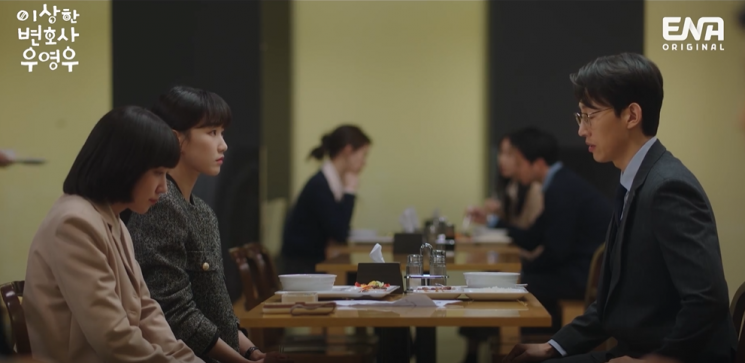 The gimbap Woo Young-woo eats every day and the headset she wears during her commute have no product placement (PPL). Even commonly seen PPL items in traditional dramas, such as multi-balm and red ginseng sticks, do not appear. Photo by ENA capture
Experts point out the paradoxical structure where more PPL appears in so-called blockbuster content. They emphasize the importance of actualizing production costs to address this.
Critic Kim said, "There is a paradoxical structure where blockbusters receive more sponsorship," and analyzed, "Despite recruiting famous actors, star writers, and star PDs and investing huge production costs, failures are occurring." He added, "Rather than blockbusters or scale, it is important whether the work can be made purely without sponsorship," and suggested, "A plan should be made to cover production costs through selling rights rather than the current form of PPL by actualizing production costs."
© The Asia Business Daily(www.asiae.co.kr). All rights reserved.
!["I'd Rather Live as a Glamorous Fake Than as a Poor Real Me"...A Grotesque Success Story Shaking the Korean Psyche [Slate]](https://cwcontent.asiae.co.kr/asiaresize/183/2026021902243444107_1771435474.jpg)


















