Soaring Prices... Sharp Increase in Sales of Refurbished and Used Products
Sales of Near-Expiration Foods Also Rising
"The Atmosphere of Buying and Proudly Showing Off What You Want Has Decreased"
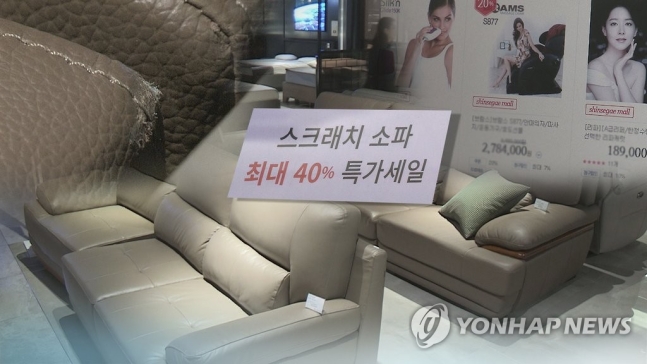 Consumers are increasingly seeking relatively affordable refurbished and used products amid soaring prices.
 [Image source=Yonhap News]
[Asia Economy Reporter Kim Jung-wan] #. Mr. Jang, a man in his 30s who works in an office, recently purchased a refurbished fan to cope with the heatwave. Although he considered buying a new fan, he opted for a relatively inexpensive refurbished product to save money amid soaring prices. Refurbished products, which are either returned due to a change of mind or repackaged display items, do not guarantee top quality but offer the advantage of being purchased at a relatively low price without significant performance differences. Mr. Jang said, "Living costs like food prices have risen so much that I look for cheaper options whenever I buy something," adding, "If the product has no major issues, buying refurbished items is much more helpful."
As prices continue to soar daily, more consumers are seeking relatively affordable refurbished or secondhand products. With the burden of essential expenses such as food increasing, people are tightening their belts on non-essential spending. Additionally, consumers are exploring various self-help measures, such as using convenience stores’ services that sell food nearing its expiration date at discounted prices. It can be said that 'Flex' (showing off consumption) is being replaced by 'Jjantech' (a combination of 'jjantteun,' meaning frugal, and 'jaetech,' meaning financial technology or smart money management).
The recent inflation situation has been rising continuously. According to Statistics Korea, the consumer price index in June rose 6.0% compared to the same month last year, marking the highest increase since November 1998 (6.8%) during the foreign exchange crisis. The consumer price inflation rate was in the 3% range from October last year to February this year, then entered the 4% range in March (4.1%) and April (4.8%), rose to the 5% range in May (5.4%), and reached the 6% range in June.
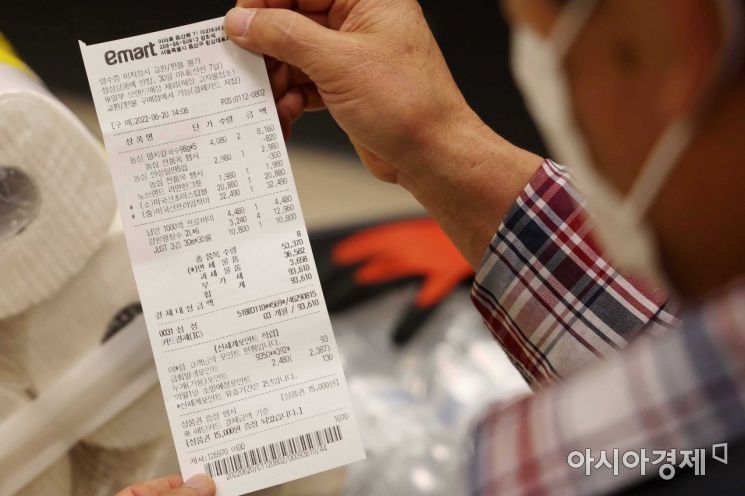 On June 20th, a citizen who shopped at a large supermarket in downtown Seoul is looking over the receipt. Photo by Mun Ho-nam munonam@
The burden of fixed expenses such as food costs has also increased. According to the Korea Consumer Agency’s price information portal 'Chamgagyeok' on the 18th, the average prices of eight representative dining-out items in Seoul in June rose by more than 8% compared to January. Jajangmyeon (black bean noodles) increased by 8.5% from the beginning of the year to 6,262 won, and Kalguksu (hand-cut noodle soup) rose by 6.4% to 8,269 won. Other items also increased: gimbap (6.3%) to 2,946 won, naengmyeon (cold noodles) (4.7%) to 10,269 won, samgyeopsal (pork belly, 200g basis) (4.7%) to 17,783 won, kimchi jjigae set meal (4.4%) to 7,385 won, samgyetang (ginseng chicken soup) (4.0%) to 14,885 won, and bibimbap (3.8%) to 9,538 won.
With prices rising across the board, more consumers are trying to minimize spending on non-essential items. According to sales trend data from the Ministry of Trade, Industry and Energy for major retailers, offline sales in the electronics and culture sectors decreased by 9.7% in June.
In particular, sales of electronics and cultural products at large supermarkets have consistently recorded negative growth this year, except for a 0.5% increase in February. At one large supermarket, sales sharply declined from the 1st of last month to the 14th of this month. TV sales dropped by 12.2%, refrigerators by 2.4%, and kitchen appliances such as electric rice cookers and microwaves by 4.6%.
Meanwhile, sales of affordable products such as refurbished and secondhand items have surged. On the 17th, Lotte Home Shopping announced that sales of products nearing expiration and refurbished items in the second quarter increased significantly compared to the first quarter. The average daily order volume of refurbished products, which are returned due to a change of mind or repackaged display items, rose by 10% in the second quarter compared to the first. Summer season items like fans and circulators, as well as electronics such as laptops, were popular. Food and health products with high discount rates due to approaching expiration dates also saw a 30% increase in average daily orders in the second quarter.
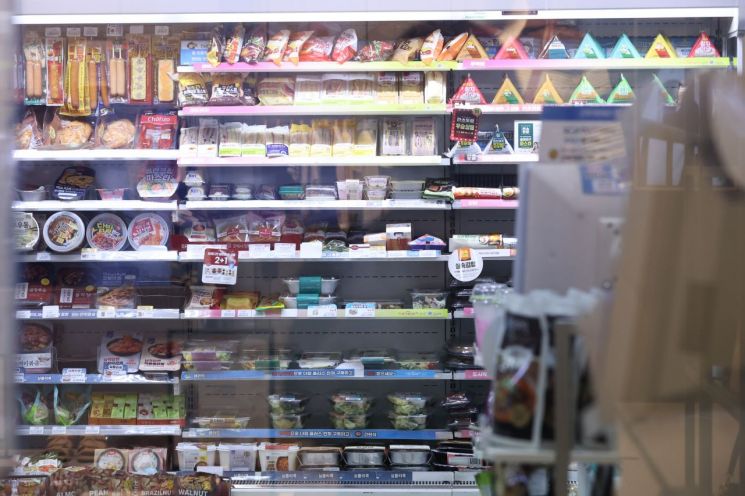 According to the convenience store industry, sales of products nearing their expiration date have also increased noticeably.
 [Image source=Yonhap News]
At convenience stores, the number of consumers buying food nearing its expiration date at discounted prices has noticeably increased. Seven Eleven reported that sales of 'Last Order,' a discount service for products such as lunch boxes and dairy products nearing expiration, rose by 30% from January 1 to 13 compared to the same period last year. About 60% of Last Order users were young people in their 20s and 30s.
Mr. Yang, a 29-year-old office worker in Seoul with three years of experience, said, "I started looking for ways to save money and ended up buying products nearing their expiration date." He added, "Since I live alone, I’m not too worried about buying products close to expiration as long as I check them carefully before eating." He also said, "Because everyone is struggling with rising prices, the atmosphere of buying things just to show off and feel satisfied seems to be fading."
Experts analyze that the sense of solidarity among consumers experiencing economic hardship has changed compared to the past. Professor Eun-hee Lee of Inha University’s Department of Consumer Studies said, "In the past, people gained sympathy by posting about flexing, but now it’s harder to form such a consensus," explaining, "With rising prices and a poor economy, it’s not the time for conspicuous consumption." She added, "There seems to be a sense of belonging in sharing information to wisely overcome difficult economic times."
© The Asia Business Daily(www.asiae.co.kr). All rights reserved.
![Clutching a Stolen Dior Bag, Saying "I Hate Being Poor but Real"... The Grotesque Con of a "Human Knockoff" [Slate]](https://cwcontent.asiae.co.kr/asiaresize/183/2026021902243444107_1771435474.jpg)


















