Korean Architectural History Society Deemed 'Qualified' in Research Service Bid
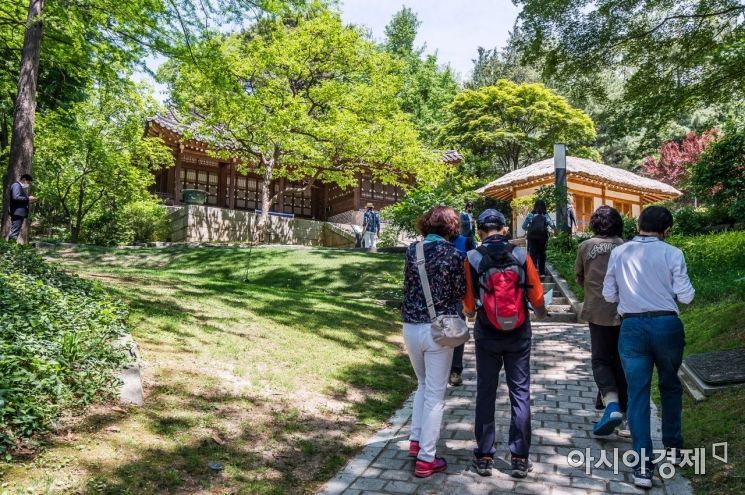 On the afternoon of the 10th, the inauguration day of the 20th President Yoon Suk-yeol, citizens participating in the Cheong Wa Dae opening event in Jongno-gu, Seoul, are touring Chimryugak, a cultural heritage site within the Cheong Wa Dae grounds. Photo by the Transition Committee Press Corps
A preliminary survey to understand the historical and cultural value of the Blue House is set to begin. According to the cultural heritage sector on the 18th, the Cultural Heritage Administration's Palace and Royal Tombs Division commissioned the 'Gyeongbokgung Palace Rear Garden Basic Survey Research Service' last month. This is a preliminary task to review preservation and utilization plans for the rear garden of Gyeongbokgung Palace. It is the first time this has been conducted at the Blue House. Although there was a study on the rear garden of Gyeongbokgung Palace in the 2000s, the Blue House was excluded. Now that the Blue House has been opened to the public, the scope of the survey will be expanded to establish preservation and management plans.
During the Goryeo Dynasty, Kings Munjong and Sukjong built a secondary palace (Nangyeong Igung) on the site of the Blue House. King Sejong of the Joseon Dynasty created the rear garden of Gyeongbokgung Palace. Structures built at that time, such as Seohyeonjeong, Chwirojeong, Gwanjeojeon, and Chungsundang, were destroyed during the Japanese invasions of Korea (Imjin War). King Gojong restored the garden modeled after Changdeokgung Palace's rear garden. He built Yungmundang and Yungmudang near Sangchunjae and Nokjiwon, which were used as military examination halls. Near the State Guest House, he created Paldobaemi, rice paddies and fields to pray for a bountiful harvest, and Gyeongnongjae, a study hall.
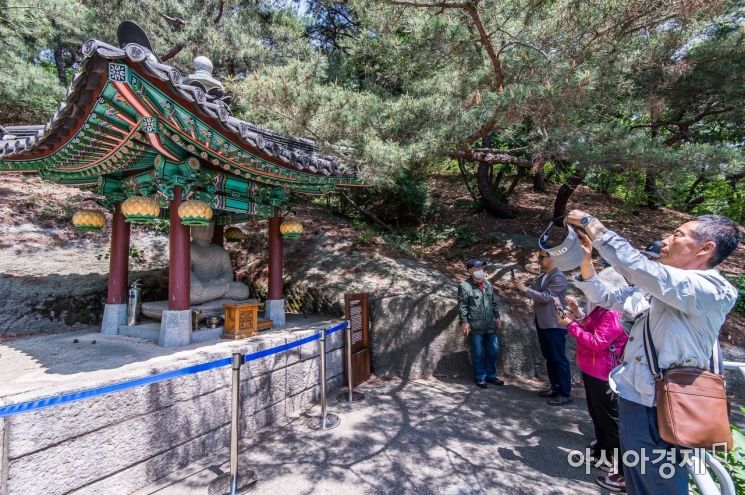 On the afternoon of the 10th, the inauguration day of the 20th President Yoon Suk-yeol, citizens participating in the Cheongwadae opening event in Jongno-gu, Seoul, are gathered around the Seokjo Yeorae Jwasang, a cultural heritage site within the Cheongwadae premises. Photo by the Transition Committee Press Corps
The core of this research is the investigation and analysis of various facilities, landscapes, and cultural heritage throughout the Gyeongbokgung Palace rear garden area. The Cultural Heritage Administration outlined the research contents for about four months, including ▲Analysis of the current status of the Gyeongbokgung Palace rear garden area ▲Historical review of the Gyeongbokgung Palace rear garden area ▲Detailed surface survey and establishment of a current status database (DB) ▲Investigation and analysis of cultural heritage value. Only the Korean Architectural History Society participated in the research service bidding. On the 14th, the Cultural Heritage Administration evaluated the proposal submitted by the society and gave it a 'qualified' rating. They are currently reviewing a private contract.
© The Asia Business Daily(www.asiae.co.kr). All rights reserved.


















