[Seoul Autonomous District News] Tackling Social Issue of 'Godoksa' in Seongdong-gu with Local Residents; 9th Seongdong-gu Community Security Council Launch Event 'Let's Share Bibimbap DAY' Held at District Office Auditorium on 13th Morning... Cancer Patient's Generous Donation to Seodaemun-gu Neighbors Inspires Deep Emotion... Hanssem Establishes Study Rooms for Vulnerable Children in Mapo-gu... Seongbuk-gu Opens Jangwiseok Health Center Psychological Support Center to Comfort Local Residents... Dongdaemun-gu Completes 2nd Phase Inspection of e-Child Happiness Support Project by End of June
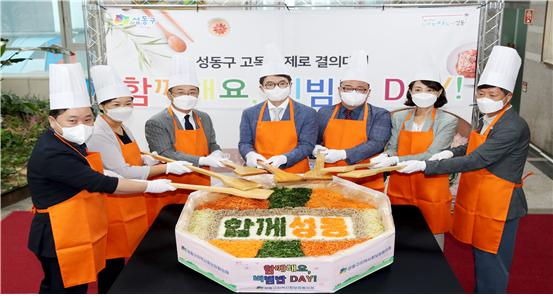
[Asia Economy Reporter Park Jong-il] Seongdong-gu (Mayor Jung Won-oh) declared "Zero Solitary Death" on the 13th to take the lead in creating an inclusive city where no one is left behind, coinciding with the launch of the 9th Community Social Security Council.
The district announced that the event was planned to seek organic cooperation among the four councils within the Community Social Security Council: the Representative Council, the Working Council, the Dong (neighborhood) Council, and the Working Subcommittee.
The event proceeded with the launch ceremony of the 9th Seongdong-gu Community Social Security Council, reading of the Zero Solitary Death resolution, solitary death prevention education, Zero Solitary Death pledge map ceremony, and "Let's Share Bibimbap DAY."
Recently, solitary deaths have been accelerating due to the world's highest elderly poverty rate and the increasing trend of single-person households, and Seongdong-gu regards this as a serious social problem.
Through this resolution, the four councils united their will to create a "Seongdong-gu without solitary deaths" and discussed activities each council could undertake. They also completed the "Seongdong-gu Zero Solitary Death Pledge Map," pledging to work together across various sectors.
Additionally, through the "Let's Share Bibimbap DAY" event, participants made a large bibimbap, symbolizing how different ingredients come together to become one, just as the councils scattered across each neighborhood harmonize to form one community.
Since January this year, Seongdong-gu has established a comprehensive plan to prevent solitary deaths, including ▲identifying and investigating households at risk of solitary death ▲providing customized services and resource linkage ▲conducting solitary death prevention education and promotional activities to strengthen continuous identification of socially isolated households and welfare checks for high-risk groups.
To this end, the district has deployed dedicated mid-aged care personnel, established a reward system for discovering at-risk households, installed smart plugs in homes to monitor electricity usage in real time and check living responses, and is implementing various policies.
Moreover, local residents appointed as honorary social welfare officers, neighborhood caregivers, and community care groups are working together to watch over isolated neighbors and build a seamless welfare safety net.
In addition, memorandums of understanding (MOUs) have been signed with organizations such as daycare center associations, religious groups including churches and cathedrals, and workers in daily life industries like supermarkets and goshiwon (boarding houses) to continuously identify at-risk households in welfare blind spots. A full survey of single-person households aged mid-aged and above is also being conducted.
Jung Won-oh, Mayor of Seongdong-gu, said, "The stories of recent solitary deaths could be about people around us, our neighbors. I ask council members to look around once more and show interest, and we will strive to create a warm, inclusive city of Seongdong-gu where no one is left out."
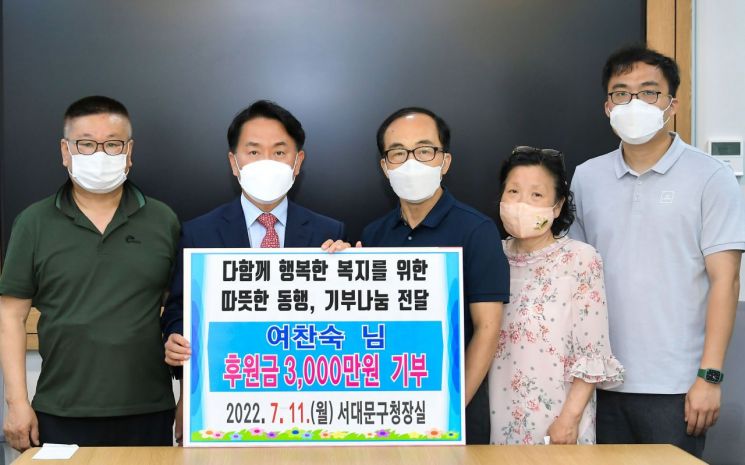 Yeochansuk (74), a resident of Cheonyeon-dong, Seodaemun-gu, is setting an example by donating money to the local community center and district office. Relatives and acquaintances of the donor, who is battling cancer, presented the donation to Lee Seongheon, the mayor of Seodaemun-gu (second from the left), and took a commemorative photo.
Seodaemun-gu (Mayor Lee Seong-heon) announced on the 14th that a resident living in Cheonyeon-dong within the district has been inspiring those around by donating funds for neighbors in need to the Dong Community Center and the district office despite being ill.
The protagonist of this heartwarming story is 74-year-old Yeo Chan-sook, who donated 10 million won to the Cheonyeon-dong Community Center and 30 million won to Seodaemun-gu.
On the 7th of this month, she handed over the donation to the Cheonyeon-dong chief who visited her home, but her condition worsened, leading to hospitalization. Therefore, her nephew and other relatives attended the handover ceremony held at the district office on the 11th on her behalf.
Born and raised in Cheonyeon-dong, the donor has been recognized with a commendation from the Seoul Mayor for her consistent volunteer work such as sharing side dishes and supporting activities for the disabled.
Six months ago, her husband passed away, and around the same time, she was diagnosed with terminal lung cancer. She has no children.
The donor said, "My late father was visually impaired, so whenever I encountered vulnerable disabled people and neighbors in difficulty, I wanted to give them even a little courage and hope."
She also shared her donation sentiment, saying, "My husband and I often talked about using the rest of our lives to help neighbors who are more disadvantaged than us, and I am glad to be able to fulfill that wish."
Lee Seong-heon, Mayor of Seodaemun-gu, expressed gratitude to the donor and wished her a speedy recovery. He said, "The welfare keyword for the 8th term of Seodaemun-gu is 'Life Care,' which provides tailored support according to the age and characteristics of welfare recipients from birth to old age. Starting this with such a precious donation has strengthened our resolve."
The donated funds will be delivered to residents in need within Seodaemun-gu through the Community Chest of Korea, according to the donor's wishes.
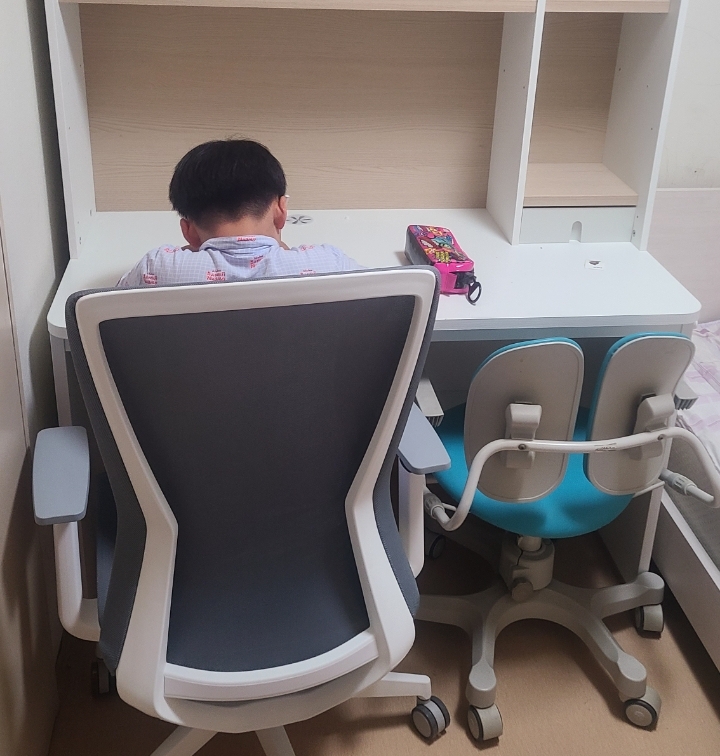
"Seeing the room that was once piled with stuff now organized and decorated with beautiful furniture feels like a dream."
This is part of a thank-you letter sent by Ji Yun-seo (pseudonym), a child who received furniture support from Mapo-gu and Hanssem, to the Mapo-gu Dream Start team.
The letter included a message saying, "It was uncomfortable to spread the table and do homework before, but sitting at a neat desk makes me want to study harder," along with a drawing of her room.
Mapo-gu (Mayor Park Kang-soo) announced that it will carry out a project in the third quarter to create study rooms for vulnerable children in Mapo-gu in partnership with Hanssem (CEO Kim Jin-tae), a well-known domestic furniture company.
Park Kang-soo, Mayor of Mapo-gu, who centers welfare policies on socially vulnerable groups, said, "I thank Hanssem for their efforts to improve children's academic achievement. We will generously support education and welfare to make Mapo a good place to live where no child is left behind."
The study room project selects three children monthly from among the integrated case management targets of Mapo Dream Start, and Hanssem supports each household with furniture worth up to 1.2 million won, including ▲desk ▲chair ▲bookshelf ▲bed.
Hanssem has been conducting a "Community Housing Improvement Project" as a social contribution since 2015. It started the study room project with Mapo Dream Start in February this year, and the scale of the fourth-quarter project is currently under discussion.
Mapo Dream Start provides customized integrated services to vulnerable children under 12 years old to support their healthy growth and development. By ensuring equal starting opportunities, it operates various programs such as ▲health checkups ▲learning support ▲individual psychological therapy ▲family counseling to help children grow into excellent members of society.
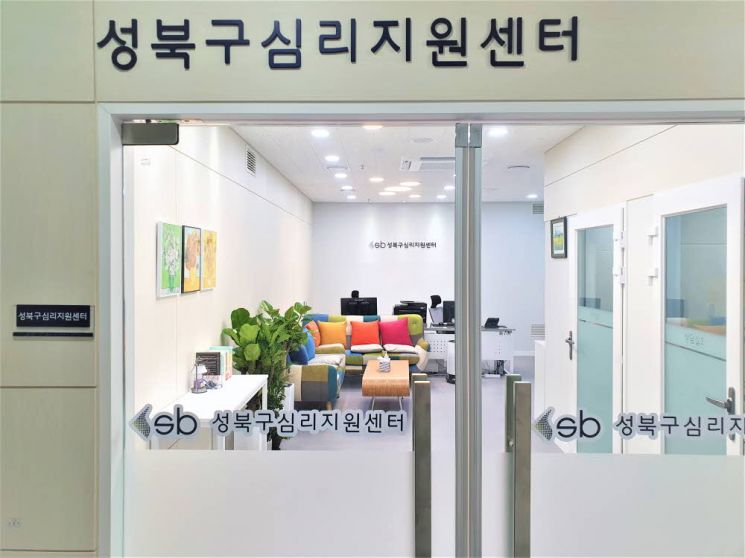
Seongbuk-gu (Mayor Lee Seung-ro) opened a Psychological Support Center on the basement first floor of Jangwi Seokgwan Health Center (568 Hancheon-ro, Seongbuk-gu) on the 12th to assist residents in need of psychological and emotional support.
The center is available to any resident aged 18 or older who requires psychological counseling for issues such as depression, anxiety, anger, interpersonal relationships, family relationships, and workplace stress, and operates by appointment only.
During the initial consultation, a basic psychological test is conducted to assess the client's current psychological state. Additional tests may be performed based on the counselor's judgment. Intensive counseling is provided in eight sessions, limiting daily appointments to 5-6 people.
Seongbuk-gu recognized the need for community-level management to promote residents' mental health alongside managing post-COVID-19 aftereffects, given the increasing prevalence of depressive symptoms. Since October last year, the district has made concerted efforts to establish and operate the Psychological Support Center, hiring a professional clinical psychologist in time for the opening of Jangwi Seokgwan Health Center.
Residents wishing to receive counseling can make reservations by phone or visit and undergo psychological counseling and various tests free of charge. Up to 8-10 counseling and testing sessions per person are provided. Based on counseling evaluations, risk levels are classified for case management, referral to specialized institutions for high-risk groups, and continuous care.
Additionally, residents can receive up to three free mental health checkups and counseling sessions at local mental health medical institutions. For more details, contact the Seongbuk-gu Psychological Support Center.
Mayor Lee Seung-ro said, "I hope the Seongbuk-gu Psychological Support Center becomes a comfort and a mental resting place for residents exhausted by the prolonged COVID-19 pandemic and serves as a catalyst for reducing depression prevalence and promoting mental health in the community."
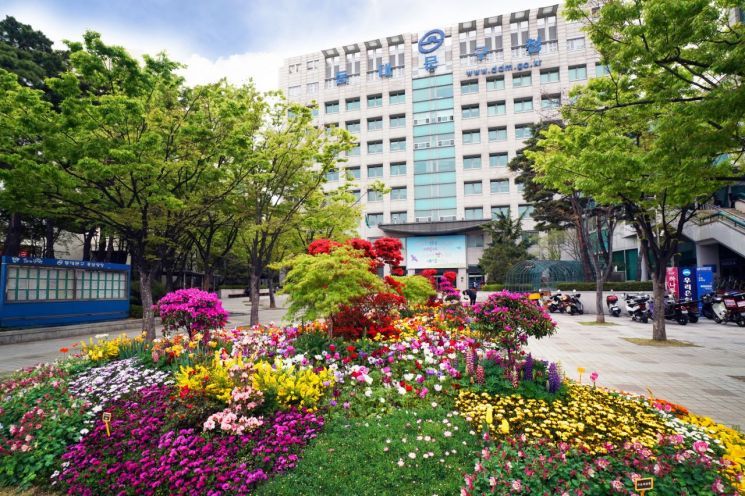
Dongdaemun-gu (Mayor Lee Pil-hyung), which conducts the e-Child Happiness Support Project to predict and discover children in crisis who are in welfare blind spots and connect them to necessary welfare services, completed home visits for 53 children targeted in the second inspection by the end of June and linked welfare services to those in need.
The e-Child Happiness Support Project has been conducted since 2018 under the Ministry of Health and Welfare, utilizing various social security big data to identify children in crisis.
Four times a year, local government officials from the Dong Community Center visit children's homes to check for households at risk of abuse. When such households are found, welfare services are linked or referrals are made to child protection agencies. In urgent cases, referrals to investigative agencies may be made.
Among the 53 children targeted in Dongdaemun-gu's second inspection, 44 were concluded on-site after home visits, while 9 children were linked to necessary welfare services through initial counseling. The district plans to conduct the third inspection from July to September.
Mayor Lee Pil-hyung of Dongdaemun-gu stated, "With the recent rise in child abuse issues, interest in child protection within the community has increased. Through home visits, we aim to connect each household with necessary welfare services to protect and prevent children exposed to abuse risks."
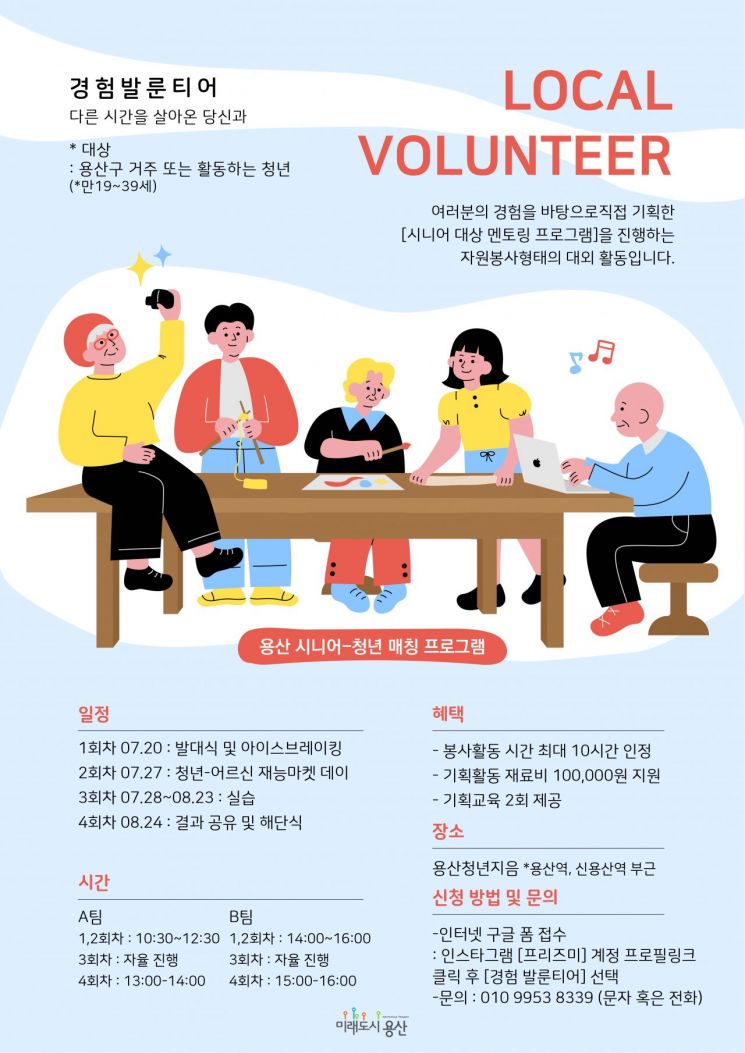
Yongsan-gu (Mayor Park Hee-young) is recruiting participants for the "Youth & Senior Mentoring Program" until the 19th.
The "Youth & Senior Mentoring Program" is a generational integration project where youths and seniors form one-on-one pairs to share experiences, become friends beyond generations, and communicate and understand each other.
The recruitment targets are 20 youths aged 19 to 39 and 20 seniors aged 65 or older residing or active in Yongsan. Youths can apply online via Google Forms, and seniors can apply by phone to the Regional Policy and Youth Policy Team.
The district will divide the participants into two groups (A and B), each with 10 youths and 10 seniors, and conduct the program at Yongsan Youth Jium (17 Seobinggo-ro) and other locations.
The schedule is ▲1st session: Launch ceremony and ice-breaking (July 20) ▲2nd session: Discovering each other's talents (July 27) ▲3rd session: Group planning activities (one session between July 28 and August 23) ▲4th session: Sharing results (August 10), Upcycling crafts (August 24).
In the first session, youths and seniors will engage in art activities using paint to get to know each other. In the second session, youth-senior pairs will explore each other's talents and plan activities together.
The third session involves freely conducting the prepared programs for about two hours per youth-senior pair. The district will provide 100,000 won in materials costs to the youths and require them to submit an implementation report including photos of the program.
In the fourth session, 20 youths (August 10) will share the outcomes of their planning activities, and 20 seniors (August 24) will learn sock yarn crafts and write letters containing messages of encouragement to the youths they worked with.
Mayor Park Hee-young said, "Generational gaps stem from lack of communication. The Youth & Senior Mentoring Program will be an opportunity for communication that transcends time and helps mutual understanding."
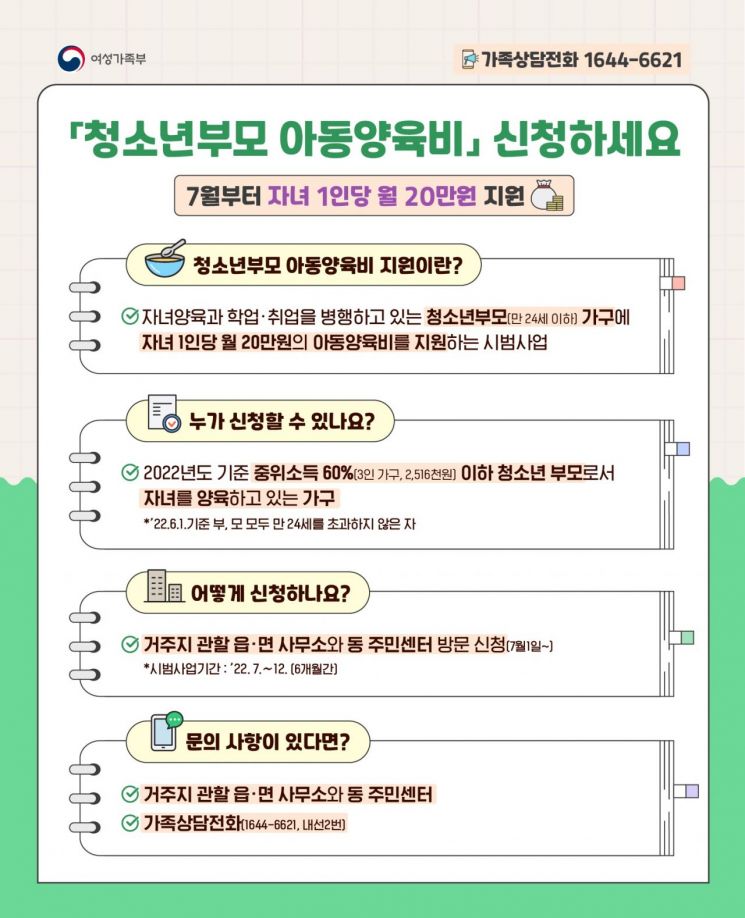
Geumcheon-gu (Mayor Yoo Sung-hoon) is launching a pilot project this month to reduce the childcare burden on teenage parents raising children, called the "Teenage Parent Childcare Support Pilot Project."
This project, a pilot by the Ministry of Gender Equality and Family, provides 200,000 won per child monthly for six months starting from the month of application to households where both parents are teenagers raising children.
To be eligible, both parents raising the child must be born after June 1, 1997 (aged 24 or younger), be raising at least one child, and maintain a legal marriage or common-law marriage relationship.
Additionally, applicants must meet the income criteria of 60% or less of the median income. The 60% median income corresponds to 2,516,821 won per month for a three-person household and 3,072,648 won for a four-person household. However, those receiving welfare benefits under the Single-Parent Family Support Act are not eligible for duplicate support.
Teenage parents wishing to apply can prepare identification, income proof documents, resident registration certificate, family relation certificate, and bankbook copy and apply at the community center of their residential area.
Mayor Yoo Sung-hoon of Geumcheon-gu said, "We will actively support teenage parents who must balance childcare with studies and work to help them achieve personal growth and family stability."
For more information, contact the Women's and Family Division of Geumcheon-gu Office.
© The Asia Business Daily(www.asiae.co.kr). All rights reserved.
![Clutching a Stolen Dior Bag, Saying "I Hate Being Poor but Real"... The Grotesque Con of a "Human Knockoff" [Slate]](https://cwcontent.asiae.co.kr/asiaresize/183/2026021902243444107_1771435474.jpg)


















