[Seoul District News] Gwangjin-gu Plants 30,000+ Four-Season Roses of 30 Varieties in Junggok 3-dong Area along Jungnangcheon; Rotunda and Trellis Installed on Gwangjin Symbolic Boat Sculpture for Photo Zone... Guro-gu Maintains Park Lighting and Children's Play Facilities... Seongbuk-gu Holds Evaluation Meeting to Select Kimchi Co-Purchasing Company for School Meals... Songpa-gu Operates Voluntary Animal Registration Period
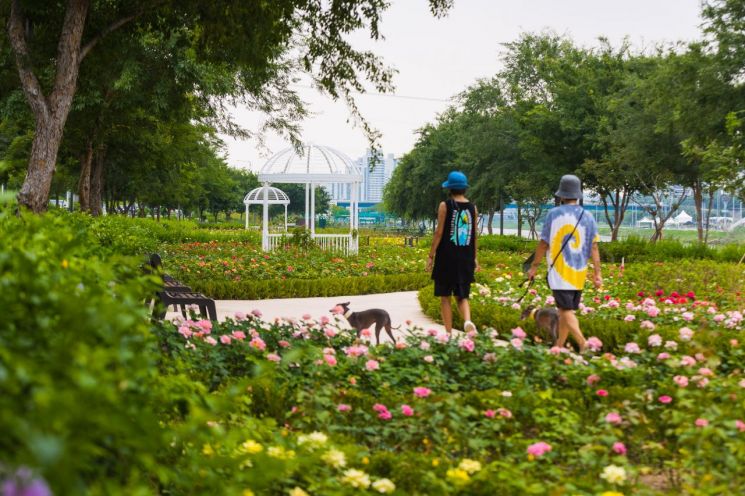
[Asia Economy Reporter Park Jong-il] Gwangjin-gu (Mayor Kim Kyung-ho) has created the ‘Gwangjin Rose Garden’ along the banks of Jungnangcheon Stream, which can be enjoyed throughout all four seasons.
The ‘Gwangjin Rose Garden’ was developed to enhance the quality of life by providing residents with green spaces and places to relax. The site, previously a flowerbed area for sowing located at Junggok 3-dong 503-17, a 4,890㎡ vacant lot along the Jungnangcheon Stream embankment, has been transformed into a garden awaiting residents.
Since 2021, over two years, the district planted 30 varieties of four-season roses totaling 30,631 plants, 12,700 boxwoods along the boundary, as well as golden euonymus, three-colored spirea, and common privet along a 256-meter section.
The ‘Gwangjin Rose Garden’ features a walking path shaped like a waterway themed around the waterfront city of Gwangjin. Four-season roses are planted along this path, and symbolic boat sculptures representing Gwangjin (廣津, Gwangnaru), along with a rotunda and trellis, have been installed to serve as photo zones. Additionally, seating walls and benches have been provided on the boat sculptures to offer residents places to rest, enriching the garden’s atmosphere.
Kim Kyung-ho, Mayor of Gwangjin-gu, said, “The Gwangjin Rose Garden has been created as a garden that can be enjoyed year-round. I hope this garden becomes a space that adds vitality to your daily lives.”
The ‘Gwangjin Rose Garden,’ along with the recently opened water playground and park golf course, provides residents with more attractions and relaxation spaces, creating a healing environment. Next year, the district plans to develop specialized gardens along the embankment walking path.
Guro-gu (Mayor Moon Heon-il) has begun improving lighting and children’s playground facilities within parks to enhance safety and convenience for park visitors.
First, Guro-gu is conducting a park lighting facility improvement project.
To alleviate visitors’ concerns and prevent safety accidents, 40 LED park light fixtures will be replaced at Gaewoongsan Park, 6 LED fixtures at Gyenam Park in Gocheok-dong, and 8 additional park lights will be installed at Gocheok Park. Fifteen old park light poles at Gung-dong Ecological Park will be replaced, and in the dark sections of the footpath at Jatjeol Park in Gaebong-dong, 2 LED park lights and 22 LED landscape lights will be newly installed.
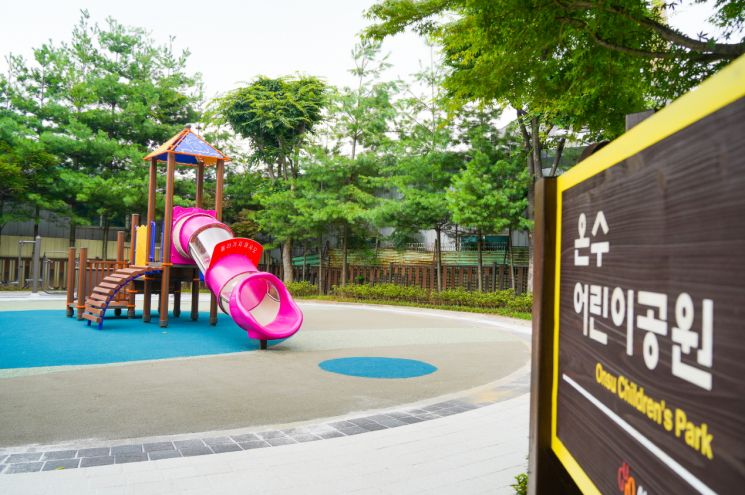
Additionally, Guro-gu has completed maintenance of aging facilities in children’s parks to ensure children can use them comfortably and safely. Somakgeo Children’s Park in Gaebong 3-dong and Onsu Children’s Park in Onsu-dong had long-standing facility deterioration issues, leading to continuous complaints.
Since April, construction has been underway to lay elastic rubber chips on the floor of Somakgeo Children’s Park and install new playground equipment. One side was paved with artificial granite blocks and exercise equipment was placed. Trees were pruned, and azaleas and liriope were planted. Benches, information signs, and stairs were also replaced.
Onsu Children’s Park also received elastic rubber chip flooring, a combination playground set, rocking toys, and seesaws. Trees, signs, and benches were maintained as well.
Facility improvements for Hwawon Children’s Park in Guro 2-dong and Odongnamu Children’s Park in Oryu-dong are expected to be completed within next month.
A Guro-gu official said, “We expect residents to be able to use brighter and safer parks. We will continue to strive to create parks where people can relax comfortably.”
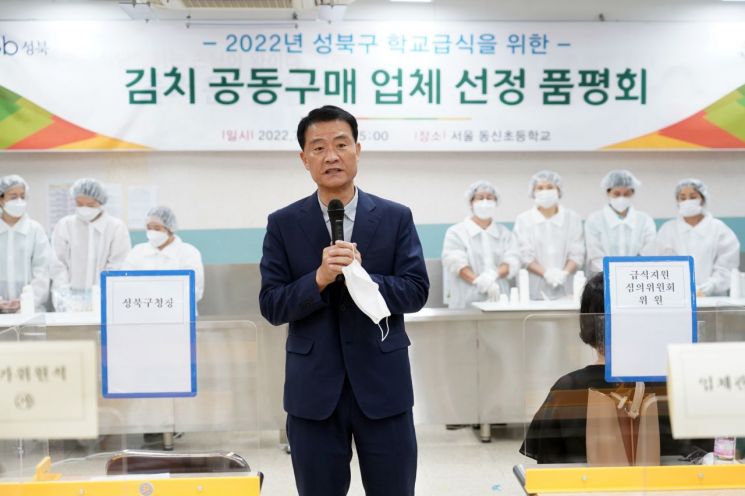
Seongbuk-gu (Mayor Lee Seung-ro) held a tasting event on the 13th at Seoul Dongsin Elementary School’s cafeteria to select a supplier for kimchi joint purchasing for school meals.
Seongbuk-gu has been promoting the kimchi joint purchasing project since 2011. Because school meals are directly linked to the health of local children and adolescents, the supplier selection is conducted strictly through a tasting event. This year marks the sixth such event.
Before the 2022 tasting event, Seongbuk-gu recruited participating companies in May. The meal support review committee rigorously conducted document screening and on-site inspections of the applicants. As a result, eight companies earned the opportunity to participate in the tasting event.
Each company had only two minutes to promote their kimchi, ranging from those with over 30 years of manufacturing experience to suppliers for five-star hotels. Then, 80 evaluators tasted and scored eight kimchis labeled only by number.
Through the tasting event, five companies?Seoan-dong Nonghyup, Segwang Food, Seondo Nonghyup, Nongga Food, and Korea Nonghyup?were selected. They will sign business agreements with Seongbuk-gu in August and supply kimchi to schools in the district for one year starting in September through individual contracts between schools and companies.
Lee Seung-ro, Mayor of Seongbuk-gu, known as a master of ‘apron administration’ with over 1,000 kimchi-making experiences and meticulous care for kimchi events for low-income groups despite his busy schedule, also carefully evaluated the kimchi.
The mayor said, “Having attended so many kimchi-making events, I have developed a deeper touch than my wife, so I carefully compared the food for future generations. As Seongbuk-gu was the first in Korea to receive UNICEF’s child-friendly city certification, we will not neglect administrative efforts to ensure safe food and healthy lives for children and adolescents.”
By promoting joint purchasing of kimchi for schools in the area, Seongbuk-gu has achieved not only securing safe food but also saving about 400 million won in budget.
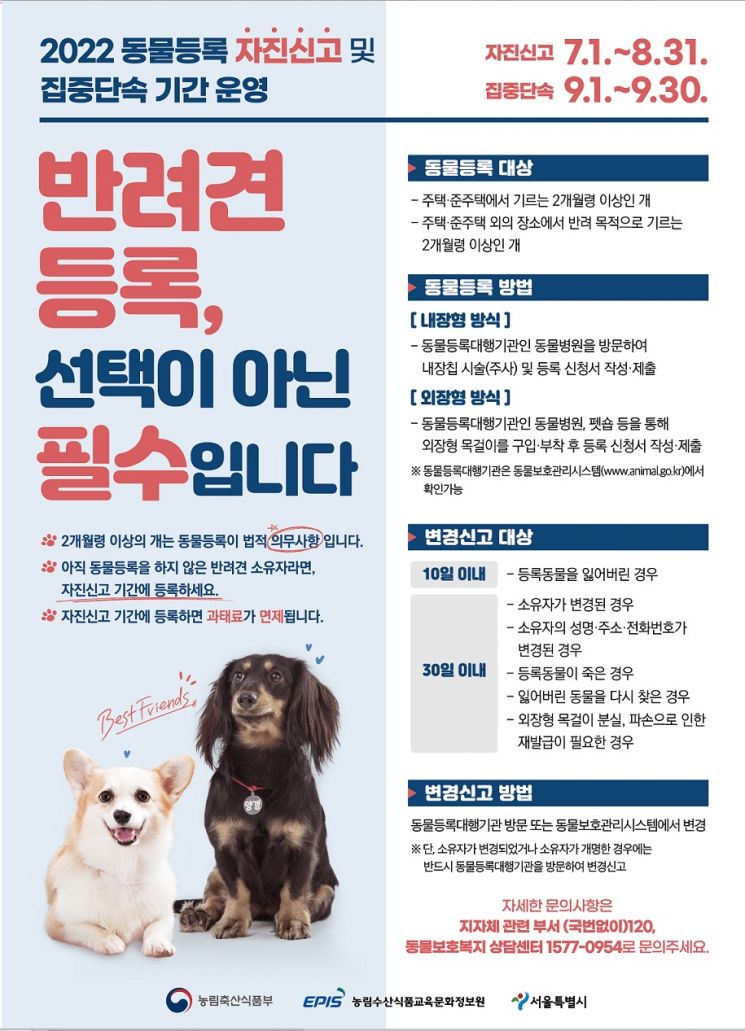
Songpa-gu (Mayor Seo Gang-seok) is operating a voluntary animal registration period to lead the establishment of an advanced companion animal culture for the 15 million pet owners.
Animal registration for dogs over two months old is a legal obligation, but many unregistered dogs exist due to lack of awareness or personal circumstances, according to district officials. Accordingly, from July 1 to August 31, the district is running a voluntary registration period, promoting benefits such as exemption from fines, aiming to register all dogs by the end of next month.
The animals subject to registration are dogs over two months old kept at houses or semi-houses, or kept for companionship outside such residences.
The voluntary registration process is very simple. Owners visit a nearby animal hospital, an animal registration agency, to have a microchip implanted or purchase and attach an external collar, then fill out an application form. However, Seoul City and Songpa-gu recommend microchip implantation for effective dog protection and to prevent loss or damage of collars. Currently, 69 animal registration agencies operate in Songpa-gu.
For ongoing management, a change report system is also in place. If an animal is lost, ownership changes, or the external collar is lost or damaged, the owner must report changes within 10 days; if the pet dies, within 30 days. Detailed information is available on the Animal Protection Management System website of the Animal and Plant Quarantine Agency.
After the voluntary registration period ends, a one-month intensive crackdown will be conducted starting in September. Violations may result in fines ranging from 200,000 to 600,000 won.
Oh Yong-hwan, Director of the Culture and Sports Department, emphasized, “For a society where people and animals coexist, it is essential for pet owners to comply with the law. We will actively inform residents about the necessity of animal registration and strive to establish an advanced companion animal culture.”
© The Asia Business Daily(www.asiae.co.kr). All rights reserved.
![Clutching a Stolen Dior Bag, Saying "I Hate Being Poor but Real"... The Grotesque Con of a "Human Knockoff" [Slate]](https://cwcontent.asiae.co.kr/asiaresize/183/2026021902243444107_1771435474.jpg)


















