[New Interest Rate Nomad③]
Each Financial Company Actively Engages in 'Special Offer' Marketing
But Without Hard-to-Meet Preferential Conditions, Special Offer Names Lose Meaning
 On the 7th, a scene at a bank counter in downtown Seoul shows major commercial banks lowering loan interest rates while raising interest rates on regular savings and installment savings products./Photo by Kang Jin-hyung aymsdream@
[Asia Economy=Reporter Yoo Je-hoon] # Office worker Lee Seol-ah (33, pseudonym) recently received a promotional text message from a mutual finance institution she had been dealing with, announcing the launch of a savings product with an 8% interest rate, and signed up for the product. Although the monthly deposit limit was capped at 200,000 KRW, the only requirement was to issue a new credit card and meet the usage performance, without any other preferential conditions. However, after seeing that the card company recently ran a cashback event offering 160,000 KRW?more than the interest on the savings?she cannot shake the feeling of having been 'deceived.'
As the interest rate hike period begins, financial companies are actively engaging in 'special promotion' marketing. The aim is to secure premium customers through high-interest products. However, many products require meeting several stringent preferential conditions, and due to the 'short-term multiple financial account restriction' system?which blocks opening new accounts at other institutions for 20 days after opening one account?more consumers are experiencing inconvenience.
◆ Without preferential conditions, "Is it really a special promotion?" Consumer confusion
Although high-interest products offering 3-4% for deposits and 6-7% for installment savings are being launched one after another, most require meeting specific preferential conditions, leading to considerable consumer dissatisfaction. Financial consumers may face situations where the cost outweighs the benefit.
Recently, office worker Lee Ji-yeon (34, pseudonym), who visited a financial institution branch to sign up for a 6% installment savings product, said, "I was told that in-person registration was the only option, so I took time off to visit, only to find that joining a mutual aid plan was a mandatory condition." She added, "It was cumbersome, and since other institutions offer products with around 5% interest, I just had a consultation and left."
In fact, a regular installment savings product from a commercial bank offering an annual interest rate of 6% provides up to 4.5% as a preferential rate. The structure adds 0.2 percentage points (p) for marketing consent, 0.3 p for new card issuance, and up to 4.0% based on card usage performance. The base interest rate is only 1.50% per annum. Some mutual finance institutions also require joining mutual aid products as a prerequisite when launching high-interest products.
A representative from a mutual finance institution said, "No matter how much it is a bait product, an interest rate of 6-7% means the financial institution is losing money after deducting various costs." He added, "Therefore, it is natural to attach several conditions either to create a lock-in effect or to secure profitability."
◆ "Competitive deposit attraction could poison financial market stability"
Concerns have also been raised that interest rate competition among financial institutions could lead to an increase in loan interest rates. The Cost of Funds Index (COFIX), which serves as the benchmark for mortgage loan rates at commercial banks, is the weighted average interest rate of funds raised by eight domestic banks and is linked to the interest rates of deposit products such as savings and installment savings actually handled by banks. A representative from a commercial bank pointed out, "When deposit interest rates rise, loan interest rates increase in the mid- to long-term. It's a kind of balloon effect."
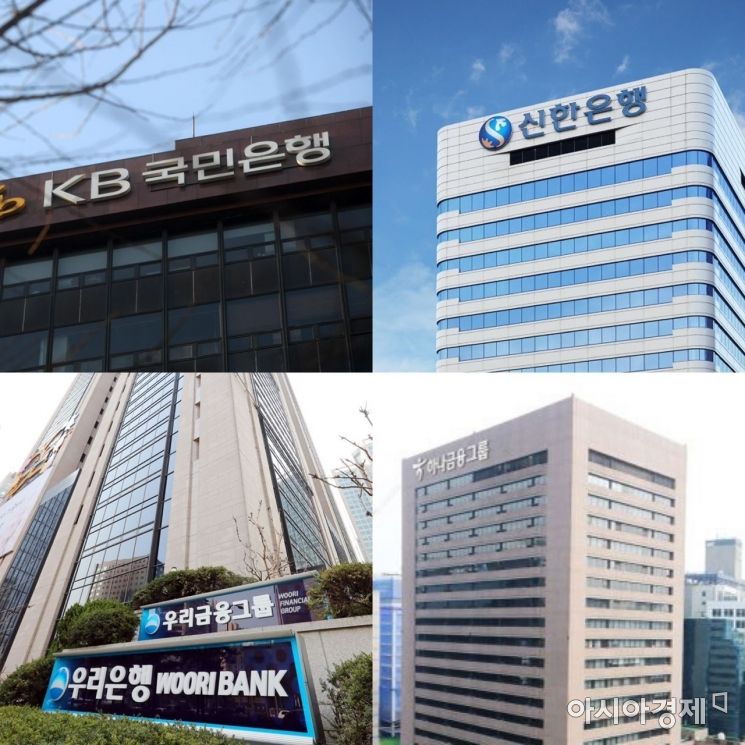
There are also voices warning that interest rate competition among financial institutions could undermine overall market stability. Commercial banks are raising deposit interest rates due to low-cost deposit outflows and pressure from financial authorities against 'interest profiteering.' If this continues, secondary financial institutions may face funding pressure. Seo Young-soo, director at Kiwoom Securities, noted in a recent report, "Since commercial banks hold most of the market funds, relatively disadvantaged sectors such as savings banks and mutual finance institutions may face difficulties securing liquidity." He added, "This will lead to worsening funding conditions for non-bank financial institutions and credit card companies, increasing the risk of insolvency in relatively vulnerable real estate project financing (PF) and other real estate finance sectors."
© The Asia Business Daily(www.asiae.co.kr). All rights reserved.


















