573 Clinical Trials Approved by MFDS from January to June
Yangji Hospital Accounts for 34.7% of Pure Phase 1 Trials
Continued Investment in Clinical Strengthening at Various Hospitals
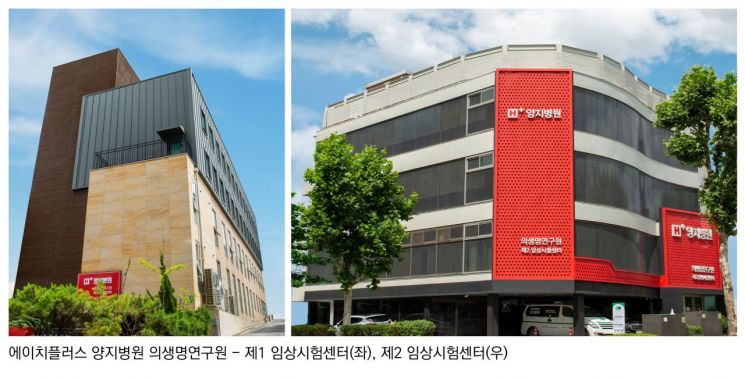
[Asia Economy Reporter Lee Gwan-joo] As efforts to develop new drugs continue in the domestic pharmaceutical and bio industries, an analysis of clinical trial institutions in the first half of this year revealed that early-stage clinical trials prior to Phase 1 were mainly conducted by H Plus (H+) Yangji Hospital, while late-stage clinical trials such as Phases 2 and 3 were primarily carried out by the Seoul 'Big 5' hospitals.
According to the Ministry of Food and Drug Safety's Drug Safety Korea on the 13th, a total of 573 clinical trials were approved by the MFDS from January to June this year. By clinical phase, pure Phase 1 trials numbered 319, the highest, followed by 82 Phase 3 trials and 46 Phase 2 trials. Investigator-initiated trials also reached 58, indicating that new drug development has been actively progressing even amid the Omicron variant pandemic.
The institution that conducted the most early-stage clinical trials was H Plus Yangji Hospital. It performed 111 pure Phase 1 trials, accounting for 34.7% of all Phase 1 trials. The hospital's Clinical Research Center (Biomedical Research Institute) is composed of 110 specialized personnel including dedicated doctors and nurses, with the largest capacity in the country at 326 beds. In bioequivalence studies alone, it conducted 1,500 trials last year, making it the hospital with the most early-stage clinical trials in Korea. A hospital official stated, "We have long-standing experience and know-how in conducting clinical trials," adding, "Even during the COVID-19 situation, we have taken meticulous safety measures such as allowing only those who test negative through a separate walk-through test to be admitted."
Alongside Yangji Hospital, Bumin Hospital and Metro Hospital are also considered strong players in early-stage clinical trials. These two hospitals conducted 62 and 33 pure Phase 1 trials respectively in the first half of this year. Since early-stage clinical trials mainly evaluate drug safety, there is a strong tendency to prefer hospitals with suitable infrastructure and experience rather than simply large hospitals.
As clinical trials progress to Phases 2 and 3, which involve actual therapeutic exploration, multi-center trials become more common. Especially for Phase 3 trials, which involve administering drugs to many patients, they are mainly concentrated in large hospitals with a high patient volume. Looking at pure Phase 3 trials, Seoul National University Hospital (39 trials), Severance Hospital (35 trials), Seoul Asan Hospital (34 trials), Samsung Seoul Hospital (31 trials), Seoul St. Mary's Hospital (22 trials), and Bundang Seoul National University Hospital (21 trials) accounted for a large share.
Whether a hospital conducts clinical trials is one of the measures to gauge the hospital's level. Active clinical trials indicate that the hospital has established a high level of medical staff and infrastructure. A pharmaceutical industry official explained, "When searching for new drug clinical trial institutions, pharmaceutical companies consider various factors," adding, "As trials progress to late stages, increasing the number of clinical participants becomes crucial, and hospitals with renowned medical staff for specific diseases tend to have more related patients."
Hospitals are also continuously investing to enhance their clinical trial capabilities. Central University Gwangmyeong Hospital, which officially opened on the 30th of last month, is equipped with a smart clinical trial center and is steadily strengthening its clinical capabilities. Bumin Hospital, specialized in spine and joint fields, is reportedly planning to enhance its clinical trial center facilities focusing on musculoskeletal regenerative treatment.
© The Asia Business Daily(www.asiae.co.kr). All rights reserved.
![Clutching a Stolen Dior Bag, Saying "I Hate Being Poor but Real"... The Grotesque Con of a "Human Knockoff" [Slate]](https://cwcontent.asiae.co.kr/asiaresize/183/2026021902243444107_1771435474.jpg)
















