Striving to Earn Additional Income Beyond Salary
Actively Utilizing Platforms Like Blogs and YouTube
Increasing Ad Revenue by Turning Know-How into Content
 More office workers are increasing their 'income pipelines' by expanding additional revenue sources such as platform advertising income.
[Asia Economy Reporter Yoon Seul-gi] As we enter an unprecedented era of high inflation, more office workers are securing 'import pipelines' to generate additional income. They aim to increase their total earnings by creating more channels for supplementary income beyond their regular salaries.
Recently, a worker in their 20s, Mr. A, received approval for 'AdSense,' a service that allows generating revenue through ads brokered by the global information technology (IT) company Google. To get AdSense approval, one must meet Google's stringent content quality requirements, and Mr. A barely cleared this hurdle.
He said, "I post book summaries, movie reviews, and 'Naedonnaesan' (products I bought with my own money) reviews on my blog," adding, "You can receive payments once ad revenue exceeds $100, but since my blog's view count is not very high, it might take some time to generate income." Mr. A continued, "Prices keep rising, but my salary remains the same this year," and expressed, "I hope to earn about 100,000 to 200,000 KRW per month in additional income."
According to recent statistics released by the Korea National Statistical Office, consumer prices in June rose 6.0% compared to the previous year. This is the highest increase in 23 years and 7 months since November 1998 (6.8%) during the foreign exchange crisis. Inflation has been steadily rising this year: 3.6% in January, 3.7% in February, 4.1% in March, 4.8% in April, and 5.4% in May.
In particular, consumers' perceived inflation has risen sharply. The living cost index, which mainly consists of frequently purchased items and is closely related to perceived inflation, increased by 7.4%. This is the largest rise since November 1998 (10.4%).
As a result, the burden on ordinary citizens due to rising prices has also increased significantly. On the 5th, the Korea Economic Research Institute (KERI), under the Federation of Korean Industries, announced that the National Pain Index reached 10.6 in the first quarter of this year, marking the highest level since the related statistics began. The National Pain Index measures the economic distress of citizens based on inflation and unemployment rates; the higher the index, the lower the quality of life perceived by the public.
Given this situation, office workers are engaging in multiple jobs (N-jobs) to expand their supplementary income beyond their salaries. Recently, side jobs through platforms such as social networking services (SNS) and applications (apps) have become popular. People sell unused items through secondhand trading apps, find part-time jobs, or engage in plant investment (Siktekeu, a combination of 'plant' and 'investment') by growing rare plants to sell. Blogging and YouTube, where individuals create content based on their professional knowledge or know-how and generate advertising revenue, remain popular types of N-jobs.
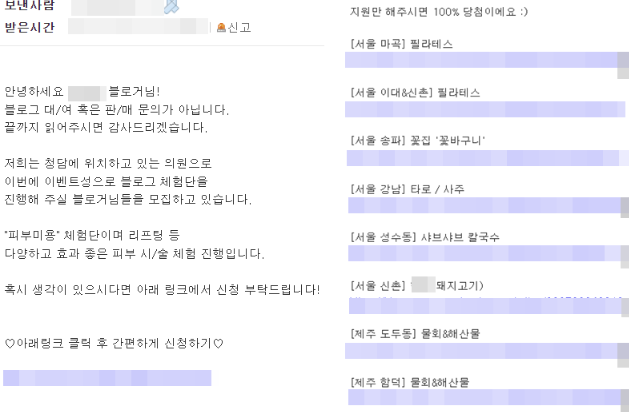
Mr. B (31), a blogger with four years of experience, earns income through blogging about almost every field, from cosmetics and daily necessities to fashion, travel, medical care, and cultural activities. Mr. B said, "I run a small blog with an average of about 100 visits per day and a total of around 280,000 views," adding, "Even though it's a small blog, I receive many inquiries from companies such as plastic surgery clinics and travel agencies." He said, "I initially started with reviews of restaurants and cafes, and it has greatly helped me enjoy leisure activities for free."
Experts explain that the main reason office workers take on side jobs by dividing their time is that salaries are not increasing. Professor Kim Sang-bong of Hansung University’s Department of Economics said, "There have always been many office workers who take on side jobs due to insufficient salaries," adding, "Recently, with technological advancements and the development of platforms like YouTube that can generate income, it has become easier to find side jobs."
© The Asia Business Daily(www.asiae.co.kr). All rights reserved.


















