Government to Reduce Total Workforce by 5% Over 5 Years
New Administration Reports 'Personnel Management Plan' at Cabinet Meeting...Government-wide Organizational Diagnosis to be Conducted
Local Governments to Maintain Current Levels for Next 5 Years
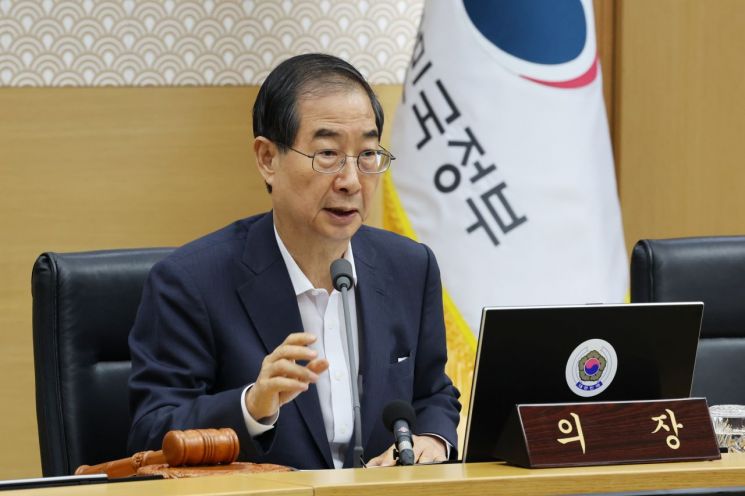
[Asia Economy Reporter Lim Cheol-young] The government has decided to reduce the national civil servant workforce by 1% annually per ministry, totaling 5% over five years. Currently, the total civil servant workforce is about 1,163,000, with approximately 750,000 in national positions and 380,000 in local positions. A 1% annual reduction equates to about 7,500 personnel, resulting in a total reduction of 37,500 over five years. The reduced workforce will be reallocated to necessary ministries based on policy priorities. For local civil servants, the plan is to maintain the current baseline workforce over the next five years while reallocating 1% annually, totaling 5% over five years.
On the 12th, the Ministry of the Interior and Safety reported this plan, titled "Government Workforce Operation Plan," to the Cabinet meeting. The number of civil servants increased from about 978,000 during the Roh Moo-hyun administration to 990,000 under the Lee Myung-bak administration, then to 1,032,000 during the Park Geun-hye administration, and surged to 1,163,000 under the Moon Jae-in administration. The Yoon Suk-yeol administration has noted various issues such as significant burdens on the national budget and administrative inefficiencies, and thus decided to promote workforce efficiency across all government sectors, including general administration, police, education, and local government.
According to the plan, all central ministries will undergo a cross-ministerial organizational diagnosis to assess the appropriateness of government functions and workforce in response to environmental changes and to improve inefficiencies. Additionally, a "Integrated Utilization Workforce System" will be introduced at the government-wide level, managing and utilizing workforce quotas as a shared pool. Each ministry will reduce its workforce by 1% annually, and the reduced workforce will be allocated to necessary ministries based on policy priorities. For example, if Ministry A (10 personnel), Agency B (15 personnel), and Committee C (5 personnel) reduce a total of 30 personnel due to regulatory reforms or function decline, these personnel will be reassigned to areas such as semiconductor development (20 personnel across 4 ministries) and COVID-19 small business support (10 personnel across 3 ministries).
For the police, when new workforce demands arise, priority will be given to adjusting and reallocating existing personnel rather than increasing staff. For educators, workforce management will be conducted efficiently according to a mid- to long-term teacher supply and demand plan established government-wide.
At the local government level, joint public-private organizational diagnosis teams will be formed to conduct self-assessments, identify unnecessary functions and personnel, and promote organizational restructuring. Through a reallocation target management system, each local government will annually reallocate 1% of its local civil servant workforce (totaling 5% over five years) to meet new demands for regional development and frontline public services related to citizens' welfare and safety.
To implement the responsible minister system and actively support the achievement of key projects in each agency, measures to expand organizational operation autonomy for each ministry will also be pursued. A "Ministerial Autonomous Organization System" will be introduced, allowing ministers discretion to establish and operate necessary organizations for national tasks and core issues. Within the current organizational scale, plans will be implemented to enhance autonomous functional adjustments between departments and divisions, expand the scope of workforce increases and rank adjustments through personnel cost savings, and overall increase organizational management autonomy for each ministry.
Minister of the Interior and Safety Lee Sang-min stated, "Considering the global economic crisis and changes in the administrative environment, it is necessary to reflect on and review the current status of government functions and workforce operations." He added, "Based on systematic organizational diagnosis, we will manage government organizations and personnel efficiently and stably."
© The Asia Business Daily(www.asiae.co.kr). All rights reserved.

















