Rising Inflation Rate Increases Burden on Ordinary People
Youth Dining Spots and Exam Fees Also Rise... 'Yolo' Is a Thing of the Past
Saving Methods Like 'No-Spending Challenge' and 'Saving Vlog' Gain Popularity
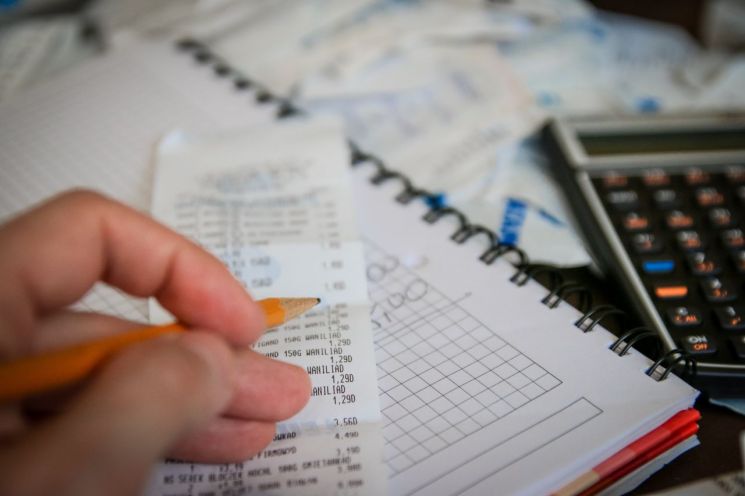 Last month, the consumer price index rose by 6.0% compared to the same month last year, marking the highest level in 23 years and 7 months. Meanwhile, among people in their 20s and 30s, practices such as "No-Spending Day," where they spend zero won in a day, have become a survival strategy.
 [Image source=Pixabay]
[Asia Economy Reporter Kim Jung-wan] #. Kim Hee-joo (35), an office worker living in Geumcheon-gu, Seoul, writes a no-spending ledger and posts it on social networking services (SNS) to keep at least five 'no-spending days' per month. She defines no-spending days as days with zero expenditure, and if unavoidable expenses occur, she records the amount spent and the reason. Kim said, "After keeping a no-spending diary for the past three months, my living expenses have noticeably decreased," adding, "Since there is no sign of prices dropping anytime soon, I am thinking of gradually increasing my no-spending days to save more."
Due to financial burdens in this era of high inflation, more people in their 20s and 30s, who were once characterized by 'YOLO' (You Only Live Once), are seeking self-help measures such as the 'no-spending challenge.' As prices for daily necessities like meals, transportation, and electricity rise across the board, they are trying to reduce even fixed expenses to ease their financial burdens. The 'no-spending challenge' differs from 'saving' in that its original purpose is 'no consumption,' aiming to cut unnecessary spending.
Last month, the consumer price index rose 6.0% year-on-year, marking the highest increase in 23 years and 7 months. According to Statistics Korea's 'June Consumer Price Trends,' the price index reached 108.22, hitting a 6% increase rate. This is the highest inflation rate since November 1998 (6.8%) during the foreign exchange crisis. The consumer price inflation rate had been in the 3% range from October last year to February this year, then rose to 4.1% in March and 4.8% in April, and continued to increase to 5.4% in May.
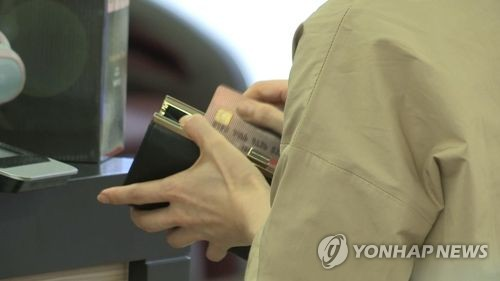 The cost of living, including food, transportation, and electricity, has risen across the board, increasing the burden on young people who are relatively economically vulnerable.
 [Image source=Yonhap News]
As a result of this price increase, the cost of living, including meals, transportation, and electricity, has generally risen, increasing the burden on ordinary citizens. The living price index for 144 frequently purchased items such as rice and ramen also rose 7.4%, showing the highest increase since November 1998 (10.4%). By expenditure category, year-on-year increases were △Transportation (16.8%) △Food and accommodation (7.9%) △Foodstuffs and non-alcoholic beverages (6.5%).
Given this situation, prices have also risen at youth eateries like the cup rice shops where young people used to line up for affordable meals. A civil service exam candidate, Mr. A (24), said the price of cup rice at a frequently visited Noryangjin cup rice shop rose from 3,500 won to 4,000 won, expressing, "I never thought I would feel the impact of inflation even while just preparing for employment." He added, "I used cup rice to reduce essential fixed expenses like food costs, but even that price has gone up, which is frustrating," and said, "I'm considering taking on another part-time job."
Exam fees for various tests required for employment and job changes have also increased. From the 2nd of this month, the TOEIC Speaking test fee rose 9.0% from 77,000 won to 84,000 won. Additionally, the HSK IBT test fee for level 5 increased 15.7% from 95,000 won to 110,000 won starting in March, and the IELTS general test fee rose 3% from 268,000 won to 273,000 won starting in April.
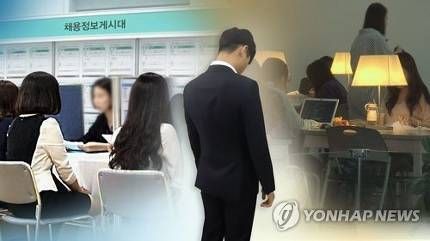 As expenses such as youth meal prices and exam fees have increased, more people are seeking measures to reduce their spending.
 [Image source=Yonhap News]
Accordingly, among the relatively economically vulnerable youth, some are seeking self-help measures. Online, sharing 'no-spending' certification photos, 'saving vlogs,' and 'one-week no-spending challenge' videos are gaining popularity, making 'frugal consumption methods' a trend. They introduce and practice saving methods such as 'packing lunch boxes,' 'eating up the fridge,' and 'app tech' to reduce expenses.
Yoon (28), a job seeker living in Gangseo-gu, said, "At first, I wondered if no-spending was possible, but as I continued, I think I developed a conscious habit of saving, which is good," adding, "I try to keep no-spending days twice a week." He also said, "Especially by developing the habit of packing lunch boxes, I was able to break the habit of piling up ingredients in the fridge, which is good."
Meanwhile, a gloomy forecast suggests that prices may rise further in the second half of this year. Eo Un-seon, Economic Trend Statistics Officer at Statistics Korea, said, "Considering the 0.7% price increase in June compared to the previous month, a 7% inflation rate cannot be ruled out." The Bank of Korea also predicted, "There is a possibility of intensified domestic price increases due to global supply disruptions." In this regard, the Ministry of Economy and Finance stated, "We will continue to seek additional measures to minimize the burden on people's livelihoods."
© The Asia Business Daily(www.asiae.co.kr). All rights reserved.
![Clutching a Stolen Dior Bag, Saying "I Hate Being Poor but Real"... The Grotesque Con of a "Human Knockoff" [Slate]](https://cwcontent.asiae.co.kr/asiaresize/183/2026021902243444107_1771435474.jpg)

















