Interest Rates, Stock Market, and Protection of Vulnerable Groups Amid Kim Joo-hyun Administration's Turbulence
Financial Services Commission Chairman to Assume Office Without Hearing After 34 Days Due to Delayed Organization
Expected to Visit Political Circles and Financial Sector for Opinion Gathering
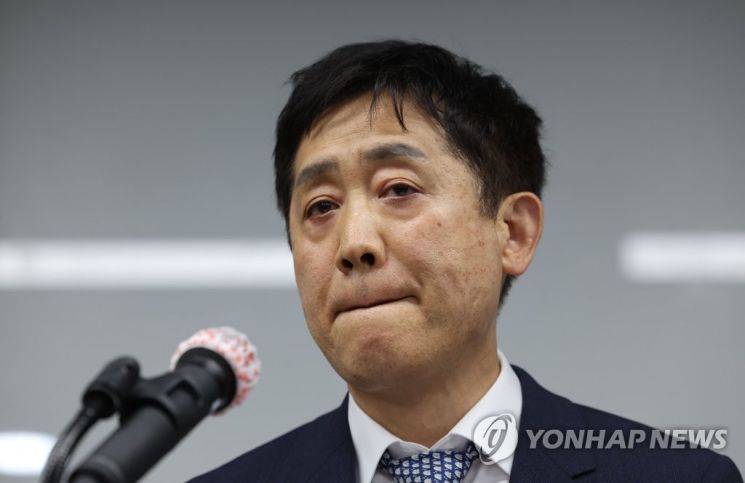
[Asia Economy Reporter Sim Nayoung] Kim Juhyun, the nominee for the Financial Services Commission (FSC) Chairman, will begin his duties on the 11th. The FSC plans to hold Kim's inauguration ceremony on the morning of that day as soon as President Yoon Seok-yeol approves Kim’s appointment. It has been 34 days since Kim was nominated as the FSC Chairman on the 7th of last month. Although Kim immediately began preparing for the confirmation hearing after his nomination, the hearing itself could not be held due to delays in the National Assembly’s organization. With the deadline for resubmitting the confirmation hearing report having expired on the 8th, Kim will assume the position without a confirmation hearing.
With inflation and interest rates rising, the instability of South Korea’s financial market has recently intensified, leaving Kim with numerous pressing issues. Right after his inauguration, he is expected to visit Yeouido to seek cooperation from the National Assembly by meeting with key figures from both ruling and opposition parties. Afterwards, he plans to meet with representatives from major financial sectors such as banks, securities firms, and fintech companies to listen to their on-site concerns.
Above all, stabilizing loan interest rates and protecting financially vulnerable groups such as small business owners are urgent matters. The key issue is how much commercial bank interest rates will fluctuate immediately following the Bank of Korea’s ‘Big Step’ (a 0.5 percentage point increase in the base interest rate) on the 13th. The political sphere has pressured banks to control loan interest rates, and the FSC announced a ‘loan-deposit interest rate spread disclosure’ system last week. Further expansion of the interest rate spread is becoming increasingly unacceptable. However, the problem is that after the Big Step, the interest rates on bank bonds, which banks use to raise funds, could rise sharply. If these rates are reflected in loan interest rates, the interest rate spread could widen even more.
It is also important to ensure the smooth implementation of protection measures for financially vulnerable groups starting in September. As concerns grow that the debts of these groups, which increased rapidly during the COVID-19 pandemic, could become non-performing due to the recent sharp rise in market interest rates, authorities have prepared protection measures. Representative among these is refinancing loans that allow switching from high-interest non-bank loans to loans with interest rates below 7%. The plan also includes a grace period of up to three years, long-term and installment repayments for up to 20 years, and principal reductions of up to 90%. Kim’s mission is to swiftly implement these measures without causing moral hazard. With the won-to-dollar exchange rate surpassing 1,300 won and continued outflows of foreign stock investment funds, volatility in the domestic stock market has also increased. Assessing related risks and preparing for an economic downturn are also considered important tasks.
A more long-term challenge is the ‘easing of the separation between finance and industry.’ This refers to relaxing regulations that prohibit financial capital and industrial capital from owning or controlling companies in each other’s sectors. While the Moon Jae-in administration promoted internet banks and fintech as part of its innovation finance agenda, the Yoon Seok-yeol administration aims to provide new financial services to the public by expanding banks’ ‘non-financial’ areas.
Accordingly, Kim stated at a press briefing immediately after his nomination on the 7th of last month, “If overseas financial companies are conducting certain businesses but our banks cannot, we will remove any unjustifiable reasons for this,” and “From the perspective of existing financial companies, we will also lift regulations that have no valid reasons for banks not being able to do what big tech companies are doing.”
Within the financial sector, attention is focused on whether Article 37 of the Bank Act, which states that “a bank may not own more than 15% of the voting shares of another company,” will be amended. Removing this regulation is seen as crucial for financial companies to acquire fintech firms and offer services that combine financial and non-financial sectors.
© The Asia Business Daily(www.asiae.co.kr). All rights reserved.
![Clutching a Stolen Dior Bag, Saying "I Hate Being Poor but Real"... The Grotesque Con of a "Human Knockoff" [Slate]](https://cwcontent.asiae.co.kr/asiaresize/183/2026021902243444107_1771435474.jpg)
















