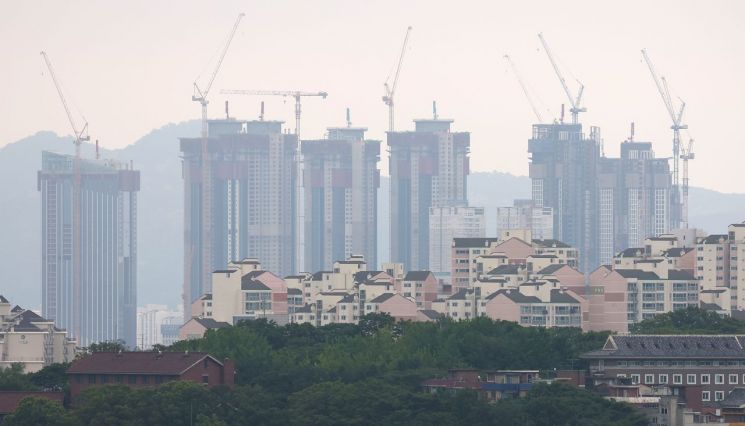
As raw material prices rise, the number of groundbreaking projects at construction sites nationwide has noticeably decreased, and concerns are emerging that construction activity will further contract in the second half of the year due to the impact of interest rate hikes and rising labor costs.
According to the construction industry and Statistics Korea on the 11th, prices of non-metallic materials such as cement and ready-mixed concrete (Remicon) surged significantly in the first half of this year, reaching the highest level in 20 years. Cement, Remicon, and asphalt concrete (Ascon) have shown a marked upward trend since March this year, with cement prices rising by more than 20% in March alone, and Ascon prices increasing by over 30%.
Metal materials like rebar tend to be adjusted sharply depending on demand. In contrast, once prices of cement and Ascon rise, it takes time for them to fall. Considering this, the burden caused by rising non-metallic material prices is likely to be prolonged.
The bigger issue is that the shocks from material shortages, interest rate hikes, and wage increases are expected to intensify in the second half of the year. Although the Bank of Korea has already raised the base interest rate five times since last year, further rate hikes are anticipated given the global inflation situation. The construction labor shortage has yet to find a breakthrough as foreign workers' entry has been restricted due to COVID-19. In particular, the pressure on labor costs due to rising prices is higher than ever.
The Rebar Concrete Users Union of Seoul, Gyeonggi, and Incheon decided on this day to halt 60 construction sites operated by 32 contractors who have been uncooperative regarding construction cost increases related to inflation. The union, composed of major rebar and concrete specialized construction companies nationwide, claims that "due to the rapid increase in material and labor costs, it is difficult to maintain sites with the previously contracted construction costs." They explained that the sharp rise in material and labor costs since last year was at a level unforeseeable at the time of contract. The union warned of a tough response, stating, "Since November last year, we have repeatedly requested the prime contractors to increase construction costs, but many contractors remain uncooperative, leaving us no choice but to stop the sites."
Park Cheolhan, a research fellow at the Korea Construction Industry Research Institute, said, "In the first half of the year, we experienced various labor union strikes due to rising raw material prices including oil, but in the second half, disputes related to labor cost increases are expected to rise, making construction progress even more difficult." He added, "The government needs to focus its policy capabilities to minimize the damage to private construction companies caused by rising material prices and financial costs in the second half."
© The Asia Business Daily(www.asiae.co.kr). All rights reserved.

















