US Interior Department Announces New Environmental Impact Assessment
Daily Production of 180,000 Barrels, Environmental Pollution Inevitable
NYT "Biden's Dilemma Ahead of Midterm Elections"
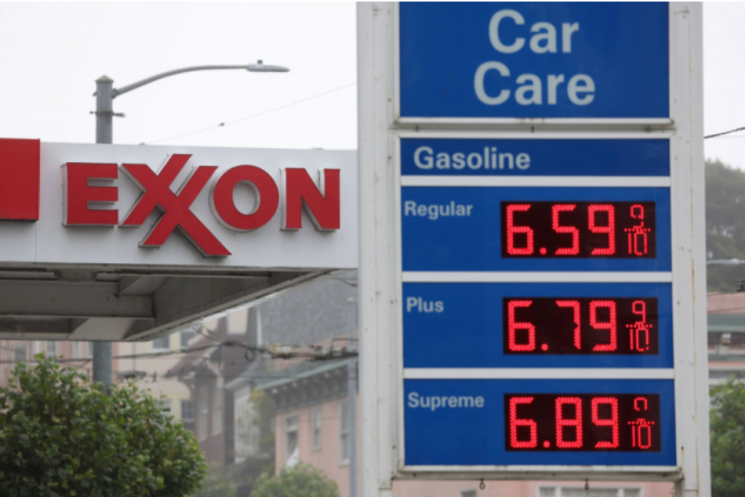 One of the regions with the highest gas prices in the United States, gas stations in California [Image source=Yonhap News]
[Asia Economy Intern Reporter Kim Nayeon] The Biden administration has restarted the North Slope oil drilling project in the northern oil field area of Alaska. Environmental groups have opposed the move, saying the new environmental impact assessment appears to support oil field development.
According to The New York Times (NYT), on the 8th (local time), the U.S. Department of the Interior announced the results of a new environmental impact assessment for the oil field development plan promoted by oil company ConocoPhillips under the name "Willow Project."
The Willow Project is ConocoPhillips' ambitious oil field development project to produce $6 billion (about 7.8 trillion KRW) worth of oil and gas by developing oil fields within the Alaska National Petroleum Reserve (NPR). It was approved during the Donald Trump administration but was halted by a court ruling last year.
Although the plan was on the verge of being scrapped, the Biden administration is considered to have taken an important step toward re-approval by announcing the new environmental impact assessment results on this day.
According to the environmental impact assessment, if the project is developed to its maximum capacity, it is estimated to produce 180,000 barrels of oil per day and emit 278 million tons of carbon dioxide over the next 30 years.
The Department of the Interior explained that since the environmental impact assessment calculated the environmental effects based on various development scenarios, it has not made a final decision on the Willow Project. However, environmental groups strongly opposed the government, saying that the mere announcement of the environmental impact assessment shows support for the project.
The Democratic Party also joined the opposition. Kristy Goldfuss, Senior Vice President for Energy and Environmental Policy at the Center for American Progress (CAP), a Democratic think tank, wrote on Twitter, "I am outraged that the Department of the Interior has taken one step closer to approving ConocoPhillips' Willow Project."
Alaska has been warming more than twice as fast as other parts of the United States over the past 60 years. As a result, sea ice is disappearing, permafrost is melting, sea levels are rising, and the Arctic ecosystem is being disrupted.
In particular, the permafrost is melting to the extent that ConocoPhillips has planned to deploy special equipment to lower underground temperatures to stabilize drilling equipment, NYT reported.
The resumption of oil development projects in Alaska, where global warming is progressing most rapidly, reveals President Biden's dilemma. Biden made climate change response a major campaign pledge during his presidential run.
After being elected, he advocated strong environmental policies, such as ending federal subsidies for fossil fuel companies and not allowing new drilling on federally owned lands.
However, with international oil prices soaring due to Russia's invasion of Ukraine, the Biden administration, under pressure, has resumed fossil fuel investments citing energy security, putting carbon neutrality pledges on the back burner.
NYT interpreted this environmental impact assessment as a measure to show voters ahead of the November midterm elections that the government is working to increase domestic oil supply.
Environmental activists said that if President Biden allows oil development in Alaska, his campaign pledges will become a laughingstock. NYT forecasted that the Department of the Interior will make a final decision by the end of this year after a 45-day public comment period.
Meanwhile, the Department of the Interior deleted the environmental impact assessment document from its official website just hours after posting it on the same day. The department said, "The document was removed due to an error and will be reposted as soon as possible," but foreign media reported that it did not disclose what the error was.
© The Asia Business Daily(www.asiae.co.kr). All rights reserved.

















