Monkeypox "A Horrible Experience You Absolutely Don't Need to Go Through"
"Complete Eradication of Monkeypox May Be Difficult Due to US Bureaucratic Health System"
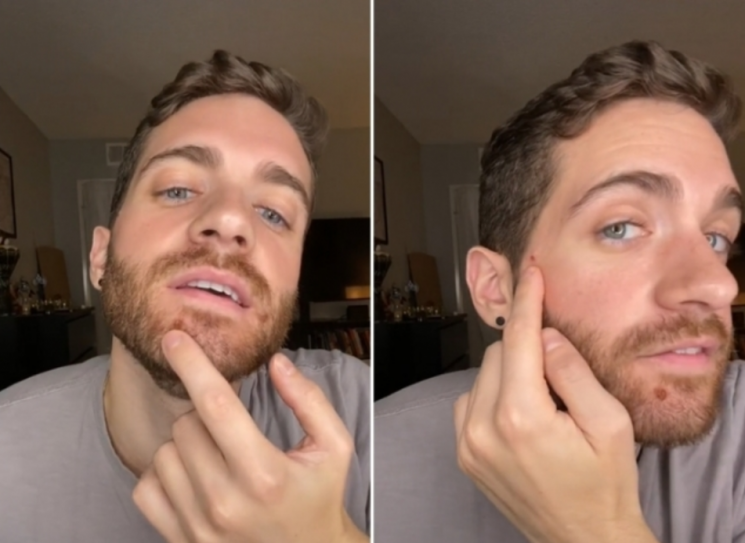
[Asia Economy Intern Reporter Kim Nayeon] A regional actor in Southern California, USA, has drawn attention by sharing his experience of contracting monkeypox.
According to recent ABC reports, Matt Ford (30), an actor active in California, introduced his detailed experience with monkeypox on TikTok.
Ford explained the reason for filming the video, saying, "The purpose is to accurately inform people about the symptoms of monkeypox and to urge them to get vaccinated for prevention."
He is the first public figure to reveal on TikTok that he contracted monkeypox, and the approximately 2-minute 20-second video detailing his experience with the disease has been viewed over 300,000 times on TikTok.
Ford first noticed a rash on his body on June 17. At that time, he thought it was acne and did not suspect monkeypox. However, after hearing about monkeypox from an acquaintance, Ford visited a hospital and was diagnosed with monkeypox.
Ford explained, "I suffered flu-like symptoms such as fever, cough, sore throat, body aches, and chills for almost a week," and said he had 25 rashes all over his body. The rashes spread to various areas including his face, arms, and abdomen.
According to Ford, the rash lasted about a week, and he had to undergo a two-week quarantine. He is currently reported to be in recovery.
Ford also showed scars left on his skin through the video. He complained, "It was basically itchy and stinging, and at its worst, it was extremely painful," adding, "I couldn't sleep at night."
He continued, "Some rashes were so painful that I had to take painkillers to barely get any sleep. Although the painkillers helped relieve the pain, I couldn't completely avoid feeling it."
Ford stated that the reason he shared his symptoms directly on social media was due to people's perceptions of the virus.
He said, "There is a perception that monkeypox is mainly transmitted through sexual contact among male homosexuals," and "People infected with monkeypox are ashamed to admit they have it."
He added, "After posting the video, some people thanked me for providing related information, which encouraged me," and "I hope my video helps reduce prejudice against monkeypox infection."
Ford explained, "Monkeypox can be transmitted in various ways, but the most important is skin-to-skin contact," and "It spreads much more easily than COVID-19 through kissing, sexual intercourse, or touching lesions."
In fact, according to the WHO, monkeypox poses the highest infection risk to people who have close contact with infected individuals regardless of sexual orientation. The WHO also emphasized that it is not a disease limited to men who have sex with men and that stigmatizing homosexuals is inappropriate.
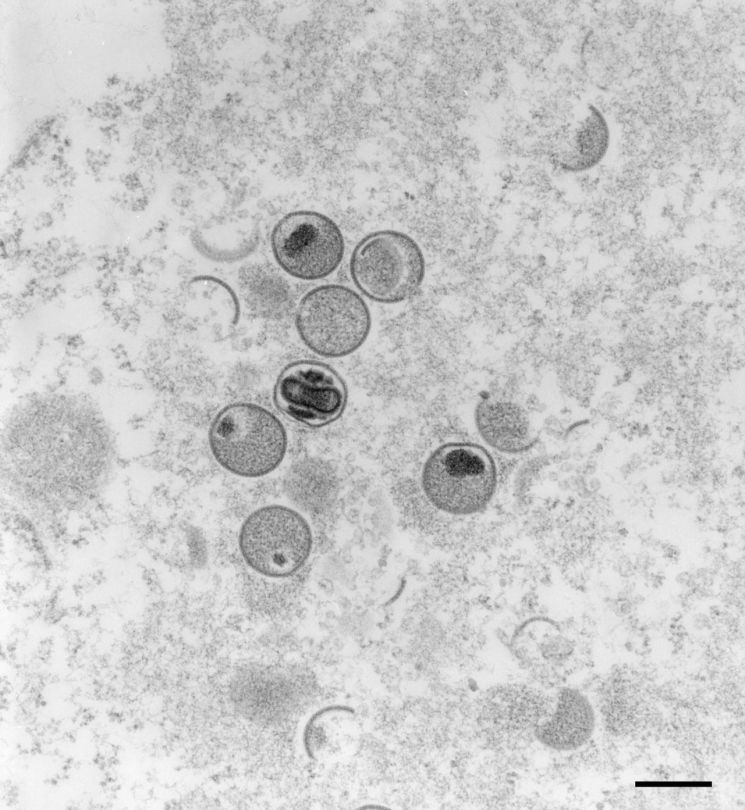
Meanwhile, concerns are rising in the United States that the response to monkeypox has been too lax, potentially allowing this disease, originally an African endemic, to establish itself as a form of sexually transmitted disease in the U.S.
The American media outlet The New York Times (NYT) recently reported that although it has been two months since monkeypox was first identified, the bureaucratic response of the government health system recalls the early mishandling of COVID-19.
NYT pointed out that initially, the monkeypox virus was not easily transmitted without close contact, and testing systems and vaccines had already been prepared long ago, so it could have been properly managed.
However, the U.S. government’s overly passive initial response may allow monkeypox to become 'established' in the U.S., risking losing the fight against it.
The first confirmed case of monkeypox in the U.S. appeared in May, but even nearly two months later, testing capacity remains insufficient and vaccine distribution is not smooth, according to ongoing criticisms.
A major failure of the U.S. government is cited as the limited testing system.
Initially, the Centers for Disease Control and Prevention (CDC) 'Laboratory Response Network' (LRN) conducted tests, and then the CDC took over to confirm positive cases, severely limiting testing capacity and causing significant delays.
However, the problem is that contact tracing and management of infected individuals only begin after confirmation, which could allow community transmission to spread.
In response to these ongoing issues, the U.S. government only expanded testing to private facilities at the end of last month.
As of this date, 791 confirmed cases have been officially recorded in the U.S., but experts worry the actual number may be much higher.
Experts point out that the obstacles to epidemic response are not specific individuals or institutions but systemic problems throughout the government.
Although the COVID-19 pandemic has entered its third year, the U.S. public health system remains bureaucratic, lacking swift and strong measures.
NYT noted that these problems have persisted over decades through multiple U.S. administrations.
© The Asia Business Daily(www.asiae.co.kr). All rights reserved.
!["The Woman Who Threw Herself into the Water Clutching a Stolen Dior Bag"...A Grotesque Success Story That Shakes the Korean Psyche [Slate]](https://cwcontent.asiae.co.kr/asiaresize/183/2026021902243444107_1771435474.jpg)

















