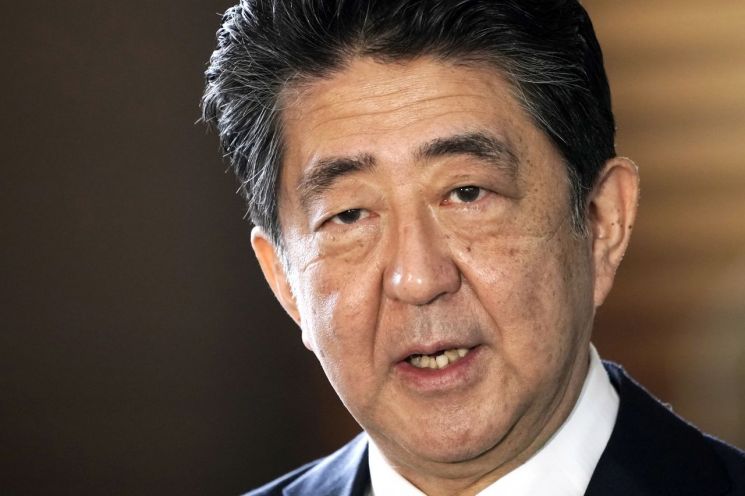
[Asia Economy Reporter Jeong Hyunjin] With the death of former Prime Minister Abe Shinzo, who led Japanese politics, local foreign media report that the ruling Liberal Democratic Party (LDP) as well as Prime Minister Kishida Fumio's administration are expected to be significantly affected. As the leader of the largest faction within the ruling LDP and Japan's longest-serving prime minister, his death is anticipated to have a major impact on the political sphere.
On the 10th, the House of Councillors (upper house) election will proceed as scheduled in Japan. Local media such as Nihon Keizai Shimbun predict that the ruling LDP and its coalition partner Komeito will comfortably maintain a majority of seats. It is also expected that the pro-constitutional amendment forces will retain the two-thirds threshold required to propose constitutional amendments. Ahead of this election, which serves as a midterm evaluation of Prime Minister Kishida, the assassination and death of former Prime Minister Abe has drawn attention to how it might influence not only the election but also the political landscape.
Former Prime Minister Abe led the LDP's largest faction, the Seiwa Policy Research Council (Abe faction, formerly Hosoda faction, with 94 members). Currently, within the LDP, the Aso faction, Motegi faction, and Kishida faction follow the Abe faction in size. After stepping down from the prime ministership in September 2020 due to health reasons, Abe returned as the head of the Abe faction in November last year and had been expanding his influence within the LDP.
In particular, in May, Abe held a political fundraising meeting for the Abe faction, during which Motegi Toshimitsu, the faction secretary-general, remarked that "it felt like a party convention was taking place." Even Prime Minister Kishida attended the Abe faction meeting, praising it as "the largest and strongest policy group in our party." In response, Abe reassured by saying, "As the largest policy group, we will support the Kishida administration."
According to Mainichi Shimbun on the 8th, "Based on his record as the longest-serving prime minister in constitutional history, he maintained significant influence within the LDP as the chairman of the largest faction, the 'Abe faction,' even after retirement." Asahi Shimbun reported on the 9th that "Given Abe's prominent status in the political world, it is inevitable that his death will affect future government operations."
Asahi evaluated that "During his tenure as prime minister, Abe secured the election of many LDP lawmakers and led the largest faction within the party, making him one of the most influential figures in the ruling party." It added, "He placed talented individuals from his faction into key government and ruling party positions such as Chief Cabinet Secretary, Minister of Economy, Trade and Industry, Minister of Defense, General Council Chairman, and Diet Strategy Committee Chairman. Prime Minister Kishida also consistently consulted Abe when making major political decisions."
Within Japanese politics, attention is focused on the fact that there is no successor to former Prime Minister Abe within the LDP's Abe faction. Yomiuri Shimbun stated, "The Abe faction has been organized around Abe himself, and currently there is no successor. If the largest faction becomes unstable, the internal dynamics of the party are expected to change significantly." Jiji Press predicted, "With no candidate for party president within the Abe faction, if the largest faction wavers, it could also affect cabinet personnel decisions that the party president will consider after the House of Councillors election."
Foreign media also anticipate that the administration of Prime Minister Kishida, who came to power with Abe's support, will be affected. Since Abe's lifelong mission included constitutional revision and his representative economic policy 'Abenomics,' and given his significant influence on Japan's diplomatic and economic policies, there may be changes in future discussions and operational methods.
Yomiuri reported, "Three documents, including the National Security Strategy, are scheduled for revision by the end of the year. Discussions are expected to intensify after the House of Councillors election, but Abe's death seems likely to influence the direction of these discussions." It added that a senior LDP official expressed concern, saying, "Although there were criticisms of differences in policy lines between Prime Minister Kishida and Abe, with Abe present, things were wrapped up well. There may be confusion within the party regarding defense spending and fiscal policy." Asahi conveyed the atmosphere within the LDP, noting, "There are opinions that if Prime Minister Kishida wins the House of Councillors election, he will feel compelled to proceed with constitutional revision."
© The Asia Business Daily(www.asiae.co.kr). All rights reserved.

















