Ruling and Opposition Parties Emphasize "Will Not Yield to Terrorism" in Street Protests
Security and Protection Tightened... Metal Detectors Deployed
Ruling Party Expected to Secure Majority Seats Smoothly with Sympathy Votes
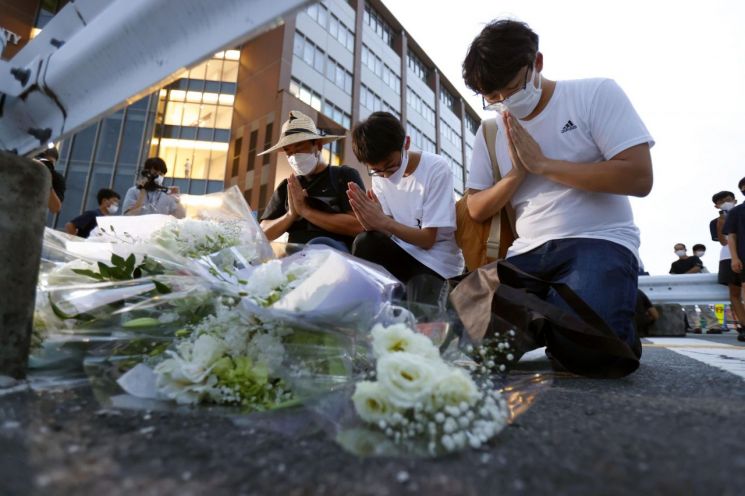
[Asia Economy Reporter Kim Hyunjung] Following the assassination of former Japanese Prime Minister Shinzo Abe during a street speech, the slogans for the July 10 Upper House election have changed. Both ruling and opposition parties appealed for support on the streets, shouting "We will not yield to terrorism" and "We will protect democracy."
According to the Nihon Keizai Shimbun on the 10th, the Liberal Democratic Party (LDP), Constitutional Democratic Party, Komeito, Japan Innovation Party, Communist Party, and other parties fully resumed party leader speeches on the previous day after partially suspending them due to Abe's death on the 8th.
◆Ruling and Opposition Parties Alike: "We Will Protect Democracy" = Regardless of party affiliation, they emphasized one after another, "We will not yield or be shaken by violence." Some voices suggested caution in street speeches due to the risk of copycat crimes, but according to Nihon Keizai Shimbun, they chose to appeal directly to voters. In particular, they urged voters to "understand policies and vote" while stating they would not yield to the incident in which a politician was assassinated during the election period, the foundation of democracy.
The Japanese National Police Agency ordered all party executives to further strengthen security and protection measures both in writing and verbally after the incident on the 8th.
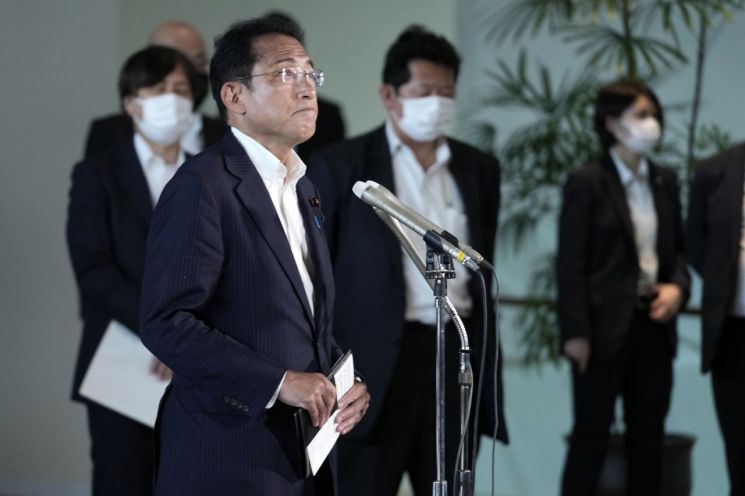
At the speech venue in Fujiyoshida City, Yamanashi Prefecture, where LDP President and Prime Minister Fumio Kishida spoke, metal detector inspections were also conducted. A certain distance was maintained from the audience, and police officers monitored the event.
Prime Minister Kishida's speech on the 9th shifted focus to "making this election one that shows the importance of democracy and elections," emphasizing Abe's legacy and the significance of the election. In Niigata, he stressed, "We must clearly show that our democracy and elections will not be defeated by violence," appealing that "democracy is protected by each and every one of you."
Kenta Izumi, leader of the Constitutional Democratic Party, shouted in Fukushima, "We must not yield to terrorism," and in Kyoto, he emphasized, "Let's protect democracy and a peaceful society together." He mentioned having spoken at the same location as former Prime Minister Abe and opened his speech by condemning the incident.
Natsuo Yamaguchi, leader of Komeito, also filled much of his speech in Yokohama with references to Abe, stating, "I have been convinced that appealing (speaking) until the end is the way to honor Abe, who fell to a bullet." In Kawasaki, he added, "The attempt to rebuild the economy through Abenomics is correct."
Ichiro Matsui, leader of the Japan Innovation Party, raised his voice in Kyoto, saying, "Elections are the foundation of democracy," and vowed not to succumb to acts of violence and terrorism.
◆Sympathy Votes Expected to Help Ruling Party Secure Majority = The 26th Upper House election is being held from 7 a.m. to 8 p.m. on this day. The Upper House has 248 seats with a six-year term. Half of the members are elected every three years. This time, 125 members (including one by-election) will be elected.
Local media and major foreign news outlets forecast that the ruling coalition of the LDP and Komeito will smoothly secure a majority of seats. Even before the shooting incident involving former Prime Minister Abe, opinion polls indicated that this coalition could secure a majority. Since its founding in 1955, the LDP has maintained its ruling party status except in the 1993 and 2009 general elections.
Yoichi Masuzoe, an international political scientist and former Minister of Health, Labour and Welfare in Abe's first cabinet, told the Tokyo Shimbun, "There is a possibility that sympathy votes will flow to the ruling party. Even those who took an anti-Abe stance have found it difficult to express such positions."
Bloomberg News also noted, "In Japan, where gun incidents are rare, this event is likely to lead to sympathy voting," and suggested, "Prime Minister Kishida, who served as foreign minister during Abe's administration, may gain support."
© The Asia Business Daily(www.asiae.co.kr). All rights reserved.
![Clutching a Stolen Dior Bag, Saying "I Hate Being Poor but Real"... The Grotesque Con of a "Human Knockoff" [Slate]](https://cwcontent.asiae.co.kr/asiaresize/183/2026021902243444107_1771435474.jpg)

















