When Landlords Default on National Taxes, Deposits Are Subordinated
Tears Over Soaring Jeonse Prices and Jeonse Fraud
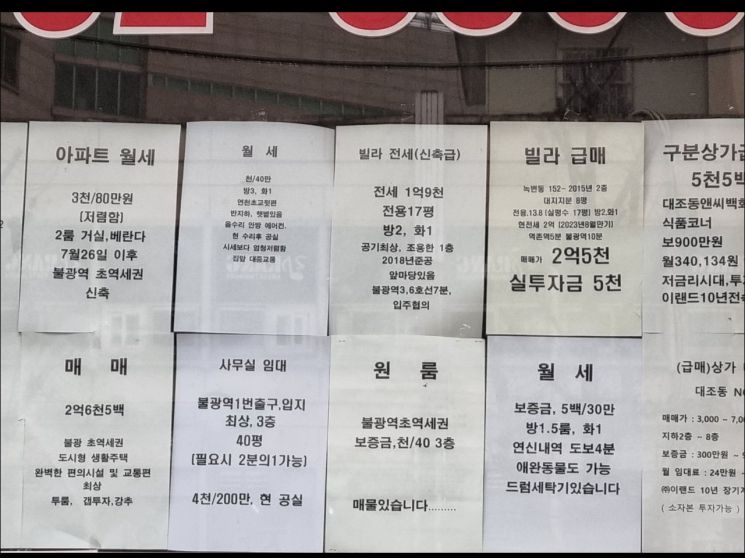
A (34), who works in the Magok district of Gangseo-gu, Seoul, signed a villa jeonse (long-term lease) contract for 240 million KRW when moving to Hwagok-dong, Gangseo-gu in early 2020. Less than six months after moving in, the landlord changed, but since A had completed the moving-in and fixed date registration and there were no issues on the registry, there was no particular concern. Later, when A planned to terminate the contract as scheduled to prepare a newlywed home and requested the deposit refund, the landlord said, "I won't ask for more deposit, so let's renew the contract." Then the landlord added, "I cannot return the deposit on that day." After checking the market price, A realized that he was a victim of the so-called ‘Kkangtong Jeonse’ (a situation where the jeonse price is higher than the sale price). Since the jeonse price was almost the same as the sale price, it was impossible to find a new tenant.
As in A’s case, ‘Kkangtong Jeonse’ is the most representative type of jeonse fraud. The landlord minimizes their own capital by using the tenant’s jeonse deposit and acquires the property with a high debt ratio. However, when the jeonse price approaches or exceeds the sale price, it is difficult to find a subsequent tenant. Eventually, the landlord maliciously refuses to return the deposit, claiming inability to repay.
There are also many fraud cases exploiting tenants’ unfamiliarity with the lease contract law. After signing a jeonse or monthly rent contract, the ownership is transferred to a third party on the day of moving in, and the deposit is embezzled. This exploits the fact that under the Housing Lease Protection Act, the tenant’s right to assert claims and priority repayment rights arise not on the day of moving in but the day after. In other words, before the tenant’s rights arise on the moving-in registration day, the property is sold to someone who cannot return the deposit. Therefore, even if the new tenant claims the deposit, the ownership has changed before the rights arose, so there is no way to recover the money.
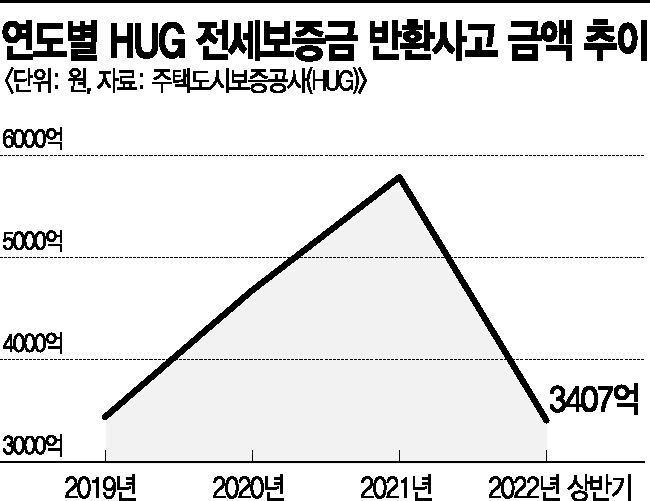
There are also absurd cases where tenants end up effectively paying the landlord’s overdue taxes with their own deposit. If the landlord hides overdue taxes such as comprehensive real estate tax and proceeds with the lease contract, and the property goes to public auction, the tenant may not receive part or all of the deposit. Even if the tenant has completed moving-in registration and obtained a fixed date, if there are prior overdue taxes, the tenant’s priority is pushed down. According to the Framework Act on National Taxes, national taxes take precedence over other claims. Although the current standard contract recommends landlords disclose overdue taxes, it is a ‘recommendation’ rather than an ‘obligation,’ so most landlords do not inform tenants of such facts.
These three types are cited as major rapidly increasing jeonse fraud types by both the real estate market and the Ministry of Land, Infrastructure and Transport and HUG. Experts advise that to prevent jeonse fraud, one must put in as much effort in ‘handwork’ (research and verification) as in ‘footwork’ (visiting places). This means carefully reviewing documents and researching fraud types in advance to approach cautiously.
To prevent Kkangtong Jeonse, it is essential to frequently check the registry and promptly complete fixed date and moving-in registrations. Subscribing to jeonse deposit return guarantee insurance is also fundamental. If you subscribe to guarantees from HUG or SGI Seoul Guarantee, you can recover the deposit if problems arise later. These institutions also review documents during the contract process, providing a cross-checking effect for registry issues.
To prevent guarantee accidents related to overdue taxes, request the landlord’s national tax payment certificate and local tax payment certificate when making the jeonse transaction. Although the landlord is not obligated to show these certificates to the tenant, if such a situation arises, it is better to look for other properties. Also, note that tax arrears are disclosed on the registry 2?3 months late. Even if the registry appears clean now, do not rely solely on it. It is advisable to insert various special clauses into the contract in agreement with the landlord. For example, ‘If the landlord’s name changes, the jeonse contract is terminated,’ or ‘If the deposit guarantee is rejected, the contract is considered null.’
© The Asia Business Daily(www.asiae.co.kr). All rights reserved.
![Clutching a Stolen Dior Bag, Saying "I Hate Being Poor but Real"... The Grotesque Con of a "Human Knockoff" [Slate]](https://cwcontent.asiae.co.kr/asiaresize/183/2026021902243444107_1771435474.jpg)












