Joint Use of Specialized Beds Between Adjacent Regions During Surge in Special Treatment Demand
Emergency Rooms Revised to Allow Treatment of Confirmed Patients in General Isolation Beds
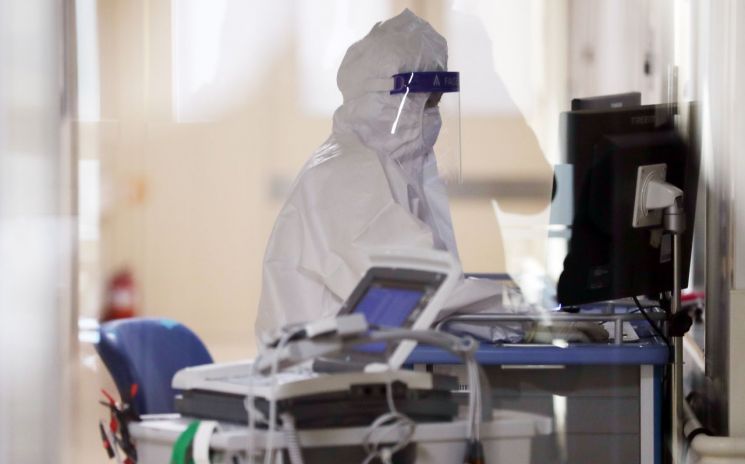
[Asia Economy Reporter Kim Young-won] The government is revising guidelines to maintain the scale of special beds in preparation for the resurgence of COVID-19 and to enable treatment of confirmed patients in general isolation beds within emergency rooms.
Lee Sang-min, the 2nd Deputy Head of the Central Disaster and Safety Countermeasures Headquarters (Minister of the Ministry of the Interior and Safety), stated on the 6th, "The government is preparing to ensure that the medical and quarantine response system can be immediately activated through securing beds and strengthening quarantine inspections in preparation for the spread of COVID-19."
First, the scale of special beds for confirmed patients who require delivery, dialysis, or are pediatric will be maintained so that treatment can proceed smoothly even in the event of a resurgence. This includes special treatment beds at base dedicated hospitals and general beds to meet regional demand. As of the 4th, the number of dialysis beds at base dedicated hospitals is 199, delivery beds 217, and pediatric beds 141.
The government will also establish an operational system to allow joint use of special beds in adjacent regions in case of a sudden surge in demand for special treatment during a resurgence. Related guidelines will be revised to enable rapid transfer to hospitals where special patients such as children or mothers can be admitted, and criteria will be set to allow self-admission without separate bed allocation procedures to minimize the time required for bed assignment.
The emergency room guidelines titled 'Recommendations for Emergency Room Operation during Infectious Disease Outbreaks' will be revised within this month to allow treatment of confirmed patients not only in negative pressure isolation beds but also in general isolation beds. Additionally, in emergency situations, the Central Emergency Medical Center will support hospital selection and transfer operations to enable swift response.
Park Hyang, head of the quarantine task force at the Central Accident Response Headquarters, said, "Before Omicron, some emergency rooms had to close while urgently securing beds," adding, "Now, emergency room functions have been restored to their original state."
Furthermore, starting today, on-site inspections have begun targeting workplaces employing vulnerable foreign workers and construction sites. Until the 29th, local employment and labor offices will conduct focused quarantine inspections at approximately 500 foreign employment workplaces and construction sites nationwide.
Employers authorized to hire foreign workers will be requested to conduct voluntary inspections of quarantine rules, and workplace and personal quarantine guidelines will be provided through foreign communities and diplomatic missions in Korea. To encourage voluntary compliance with quarantine rules, workplaces will be encouraged to conduct self-inspections, and promotion and guidance on workplace quarantine rules will be strengthened.
Meanwhile, the government plans to prepare measures for the resurgence. Deputy Head Lee said, "We will prepare comprehensive measures for resurgence through consultations with related ministries and experts," and added, "Vaccination is important to wisely overcome the wave of re-spread, and especially high-risk groups are urged to complete their vaccinations."
© The Asia Business Daily(www.asiae.co.kr). All rights reserved.
![Clutching a Stolen Dior Bag, Saying "I Hate Being Poor but Real"... The Grotesque Con of a "Human Knockoff" [Slate]](https://cwcontent.asiae.co.kr/asiaresize/183/2026021902243444107_1771435474.jpg)
















