First 10,000 Pre-Orders for Electric Vehicle's Initial Model Begin... Price Estimated Around 200,000 Yuan
Even if Hengda's Electric Vehicle Succeeds, Financial Crisis Likely to Persist
[Asia Economy Beijing=Special Correspondent Jo Young-shin] Facing the threat of group dissolution, Chinese real estate company Hengda is starting to sell electric vehicles. The Chinese Ministry of Industry and Information Technology approved the sale of Hengda electric cars last March.
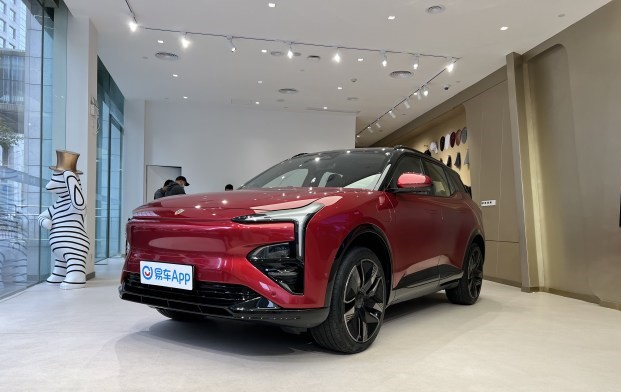
Hengda Auto, a subsidiary of Hengda Group, announced that it will begin accepting pre-orders for the pure electric compact sport utility vehicle (SUV) 'Hertz 5' from 8 p.m. on the 6th. The pre-order quantity is 10,000 units, and the vehicles will be delivered sequentially starting from October 1.
Hengda Auto did not disclose the sales price, but industry insiders estimate it will be around 200,000 yuan (approximately 38.9 million KRW). The price of comparable Chinese brand vehicles ranges from 240,000 to 300,000 yuan.
Chinese media such as Pengpai reported that the Hertz 5 model is equipped with a high-efficiency motor with a maximum output of 150 kW and maximum torque of 345 N·m. It also features a lithium iron phosphate battery (LFP) with a capacity of 72.8 kWh, according to Chinese media. The maximum driving range on a full charge is 602 km, and the zero to 100 km/h acceleration time is 7.8 seconds, they added.
Hengda Group entered the electric vehicle market in 2019 with an investment of 2 billion dollars. To this end, it acquired Chinese electric vehicle company FF in 2018 and Swedish electric vehicle company NEVS in 2019. It is known that Hengda has invested a total of 7.07 billion dollars (approximately 9.244 trillion KRW) in the electric vehicle business so far.
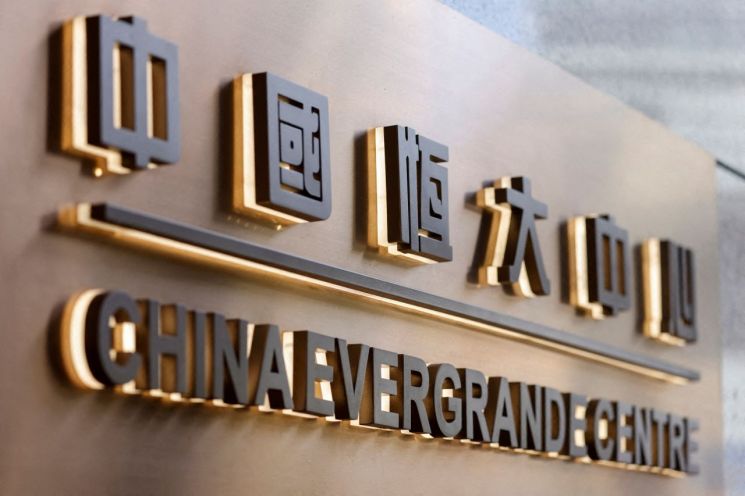
Some in China suspect that Hengda Group entered the electric vehicle business to invest in real estate. In fact, from 2019 to 2020, Hengda Group purchased 11.33 million square meters (3.43 million pyeong) of land across China for electric vehicle factory sites. Of this, 52% is factory land, 35% is residential, and 13% is mixed-use land for offices and commercial buildings.
The Chinese government has relaxed regulations to allow local governments to sell residential land to new energy vehicle companies as part of fostering new industries. Additionally, various benefits such as tax reductions are provided when purchasing factory land. There is suspicion that Hengda exploited these institutional loopholes to enter the electric vehicle business.
Chinese media predict that regardless of the success of Hengda Auto’s electric vehicles, it will be difficult for Hengda Group to escape its financial crisis.
Wu Shuocheng, a Chinese automotive expert, said in an interview with Global Times, "From the perspective of future development, Hengda’s entry into the electric vehicle industry is the right direction, but it is hard to say that the electric vehicle sector will help solve the group’s debt crisis." He added, "Due to difficulties in the industry and supply chain, raw material and component prices will continue to rise," forecasting that this will affect Hengda Auto’s price competitiveness.
Hengda Group has set a goal to produce and sell more than 1 million electric vehicles annually by 2025 and more than 5 million annually by 2035.
© The Asia Business Daily(www.asiae.co.kr). All rights reserved.
![Clutching a Stolen Dior Bag, Saying "I Hate Being Poor but Real"... The Grotesque Con of a "Human Knockoff" [Slate]](https://cwcontent.asiae.co.kr/asiaresize/183/2026021902243444107_1771435474.jpg)












