"Industrial Restructuring for Transition to a War Economy"
Russian Defense Minister: "Operations Will Continue Until Goals Are Achieved"
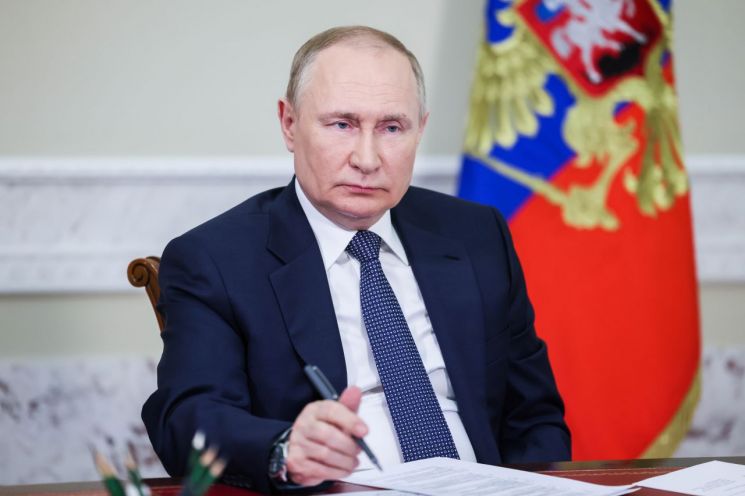
[Asia Economy Reporter Lee Hyun-woo] The Russian State Duma unanimously passed the first vote on a bill that allows the government to forcibly mobilize domestic companies for wartime production. This is being seen as the establishment of the first legal foundation for transitioning to a wartime economy. As a result, expectations for an early ceasefire negotiation raised by some in the West have diminished, raising concerns that Russia is entering a prolonged conflict in earnest.
According to Russian news agency TASS on the 5th (local time), the Russian State Duma held the first vote on the "Overseas Military Operation Support Act," which allows the government to forcibly mobilize companies to produce military supplies. This bill grants the Russian government the authority to compel domestic companies to produce military supplies, cooperate with defense contractors, and repair weapons and military equipment as needed.
Additionally, Russian companies and legal entities have no right to refuse the compulsory mobilization obligations imposed by the government, and employees of mobilized companies may have their overtime, night shifts, holiday work, and vacation days restricted by the government. This bill is regarded as a stringent control measure equivalent to a total wartime mobilization order for companies.
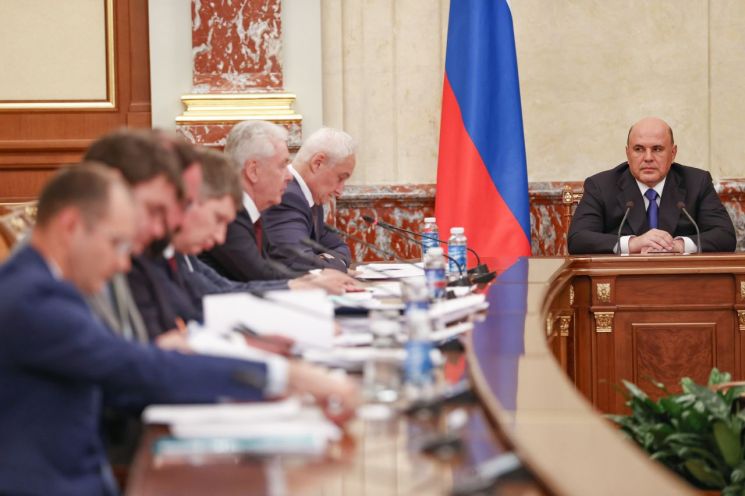
Russian Deputy Prime Minister Yuri Borisov said in a speech to the State Duma that "these measures were taken due to the necessity of supporting the military amid the massive sanctions pressure from the West on the Russian economy," emphasizing that "the burden on defense industry companies has greatly increased, and to ensure the supply of weapons and ammunition, it is necessary to optimize the operations of companies cooperating with the military-industrial complex."
The bill passed unanimously in the first vote and is expected to swiftly pass the second and third votes. After passing the third vote, it will be officially enacted once signed by Russian President Vladimir Putin.
This is the first time since the invasion of Ukraine that the Russian parliament has introduced and voted on a wartime mobilization-type bill. Since the start of the conflict in February, the Russian government has referred to the invasion of Ukraine as a "special military operation" in the Donbas region and has not issued an official declaration of war against Ukraine. The bill is named the Overseas Military Operation Support Act rather than a wartime mobilization order, which is interpreted as the Russian government not having officially declared a full-scale war yet.
This move is seen as an indication that Russia is seriously transitioning to a wartime economy. CNN pointed out, "The Russian government continues to call the invasion of Ukraine a special military operation to downplay its significance, but the new bill reorganizes industry to establish a wartime mobilization system."
Along with this bill, control over anti-war protests within Russia is also being tightened. The Russian State Duma passed the first vote on a bill banning assemblies, protests, and street marches in front of major public institutions, public places, public transportation, and cultural facilities.
Consequently, concerns are growing that Russia is preparing for a prolonged conflict, contrary to the early ceasefire negotiation hopes raised by some in the West. Previously, foreign media such as CNN reported that Russia's successful control of Luhansk Oblast, securing over 75% of the Donbas region, meant that the special military operation's objectives in Donbas were near completion, increasing the likelihood of Russia entering ceasefire negotiations soon.
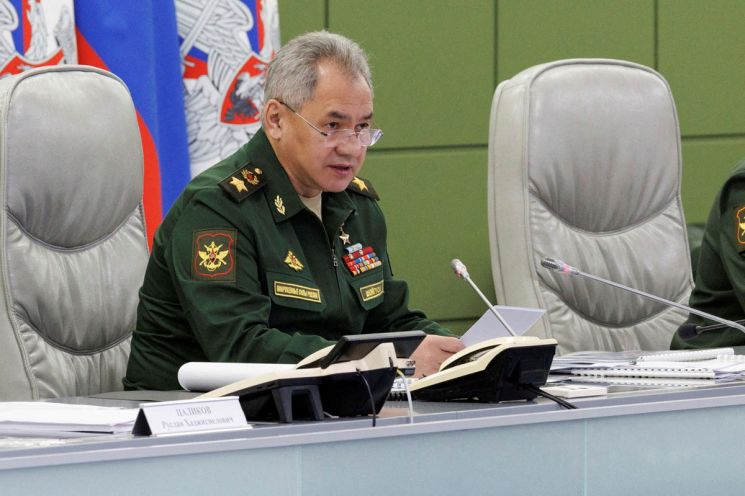
The Russian Ministry of Defense also expressed its intention to continue the war. Russian Defense Minister Sergey Shoigu stated at a Defense Ministry meeting that "the special military operation will not stop even after Luhansk is completely liberated," emphasizing that "it will continue until the goals set by Supreme Commander President Putin are fully achieved."
© The Asia Business Daily(www.asiae.co.kr). All rights reserved.
![Clutching a Stolen Dior Bag, Saying "I Hate Being Poor but Real"... The Grotesque Con of a "Human Knockoff" [Slate]](https://cwcontent.asiae.co.kr/asiaresize/183/2026021902243444107_1771435474.jpg)


















