Even 'Ghost Gas Stations' Due to High Demolition Cost Burden
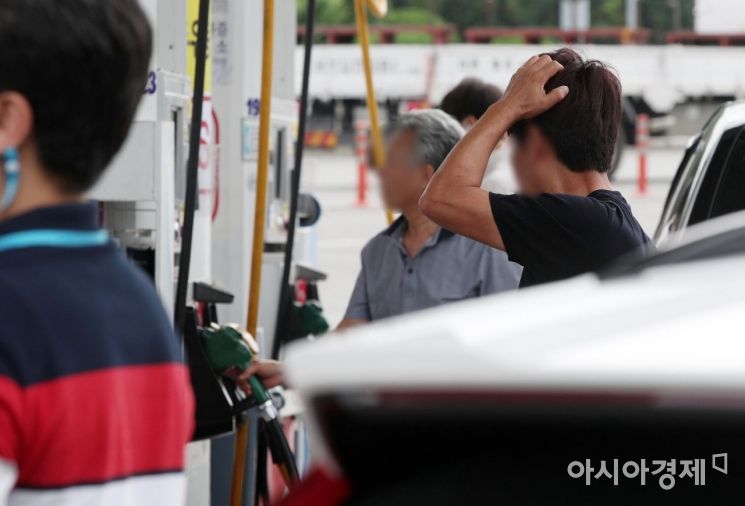 On the 6th, citizens are refueling their vehicles at the budget gas station in Mannam Square Rest Area, Seocho-gu, Seoul. Although the fuel tax reduction rate was increased from 30% to 37% starting this month, the decrease in fuel prices has been minimal, so consumers do not feel the impact. According to Opinet, the oil price information site of the Korea National Oil Corporation, the average nationwide gasoline price at gas stations on the afternoon of the 5th was 2,117.18 KRW per liter, down 3.40 KRW from the previous day, and the diesel price was 2,150.78 KRW, down 2.30 KRW from the previous day. Photo by Kim Hyun-min kimhyun81@
[Asia Economy Reporter Oh Hyung-gil] Jo Sang-hyun (62, pseudonym), who operates a gas station in Giheung, Yongin-si, Gyeonggi-do, put his gas station up for sale last month. Although it was located in an area with two golf courses and a large shopping mall nearby, resulting in heavy vehicle traffic even on weekdays, customers suddenly stopped coming due to the recent rise in fuel prices. He considered closing the business but decided to sell after hearing that the land purification work alone would cost over 200 million won. However, he has been distressed as there have been no purchase inquiries for over a month.
As fuel prices soar, gas station closures are occurring one after another. With fuel prices rising overnight, drivers are searching for gas stations that are even 10 won cheaper, causing stations with higher prices than their surroundings to lose customers.
The number of ‘ghost gas stations’ that have temporarily closed due to the burden of expensive demolition costs is also increasing. Unable to bear closure costs of up to around 300 million won, these stations are left abandoned. Although criticized for ‘brazen operations’ by selling expensive fuel during high oil price periods, some gas stations are being pushed to the brink.
According to the Korea Gas Station Association on the 6th, the number of gas stations nationwide stood at 11,064 as of May. From 12,594 in 2017, 1,530 stations have closed over five years. Following 213 closures last year, 122 gas stations nationwide have shut down from the beginning of this year through May.
Industry insiders say that closures increase proportionally as fuel prices rise. A gas station industry official said, "As interest in fuel prices grows, drivers tend to flock to cheaper gas stations, inevitably leading to cutthroat competition among stations. With rising labor and logistics costs and card fees, it becomes difficult to turn a profit."
The number of gas stations available for lease is also on the rise. A broker specializing in gas station leases explained, "Outside the metropolitan area, lease prices have recently dropped to below 1 million won per month with a deposit of 5 million won for about 300 pyeong (approximately 991 square meters). In situations where temporary closure or shutdown is difficult, more stations are being leased out."
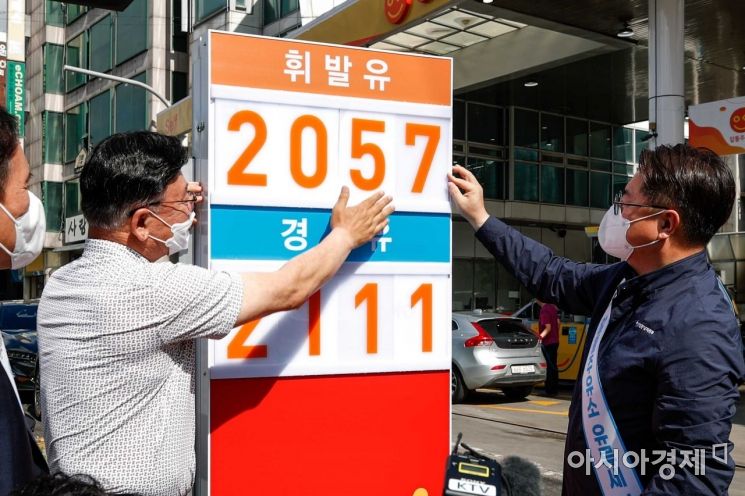 On the 1st, Park Il-jun, the 2nd Vice Minister of the Ministry of Trade, Industry and Energy, visited Mokhwa Altteul Gas Station in Gangseo-gu, Seoul, where the fuel tax reduction rate was expanded from 30% to 37%, and together with the gas station owner, changed the prices to the reduced fuel prices. Photo by Kang Jin-hyung aymsdream@
As profits decline, some are tempted to illegally distribute counterfeit petroleum, taking advantage of high oil prices. During the first special inspection conducted by the Korea Petroleum Quality Management Institute from March 15 to April 30, 43 retailers distributing counterfeit petroleum were caught. The institute plans to conduct a second inspection targeting gas stations nationwide by the end of August, when summer vacations peak.
However, from the consumer perspective, dissatisfaction is growing as fuel prices are not lowered promptly, unlike international oil price cuts or fuel tax reductions. Despite an additional fuel tax cut on the 1st, 6 to 7 out of 10 gas stations nationwide did not reduce prices. According to the Energy and Petroleum Market Monitoring Group, among 10,976 gas stations nationwide, 6,798 stations (61.9%) did not change their gasoline prices compared to the previous day on the 1st.
An official from the refining industry said, "There is a time lag due to the depletion of existing inventory, but prices will drop as competition intensifies," adding, "Since most price information such as international oil prices and taxes is publicly available, it would be appreciated if people understand that it is not easy for gas stations to make excessive profits."
© The Asia Business Daily(www.asiae.co.kr). All rights reserved.
![Clutching a Stolen Dior Bag, Saying "I Hate Being Poor but Real"... The Grotesque Con of a "Human Knockoff" [Slate]](https://cwcontent.asiae.co.kr/asiaresize/183/2026021902243444107_1771435474.jpg)

















