Turkey Inflation Soars 78.6% Year-on-Year
President Erdogan Says "High Interest Rates Cause High Inflation," Sticks to 'Low Interest Rates'
Housing Prices Skyrocket... Istanbul Up 122% Annually
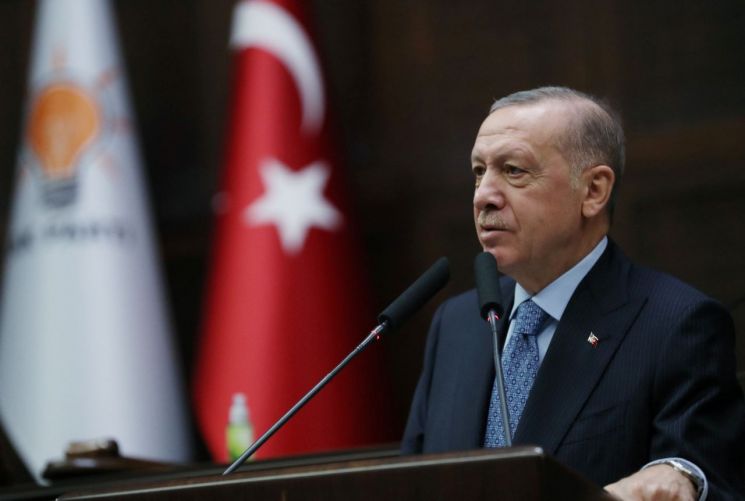
[Asia Economy Reporter Yoon Seul-gi] Turkey's inflation rate surged by about 79% year-on-year last month, marking the highest level in 24 years, while real estate prices also skyrocketed, making life increasingly difficult for ordinary citizens. Criticism is mounting that President Recep Tayyip Erdo?an of Turkey is causing an economic crisis by maintaining a low interest rate policy.
On the 4th (local time), according to TurkStat, Turkey's official statistical agency, inflation last month rose by 78.6% compared to the same month last year.
By category, transportation costs increased by 123.37%, food and beverage costs by 93.93%, and furniture and household goods costs by 81.14%. Categories with relatively smaller increases included communication costs (23.74%), clothing and footwear purchases (26.99%), education expenses (27.76%), and healthcare costs (39.34%).
Turkey, which has been experiencing chronic high inflation, raised the minimum wage by 50% in January this year and consecutively increased various public utility fees such as gas, electricity, road tolls, and bus fares, intensifying inflationary pressures. Additionally, the economic crisis caused by the COVID-19 pandemic and the surge in energy and grain prices following Russia's invasion of Ukraine have compounded the negative factors.
Unlike Western central banks that are raising interest rates to counter inflationary pressures, the Central Bank of Turkey has maintained a policy of lowering the benchmark interest rate, which appears to have influenced the inflation increase. Typically, central banks raise benchmark interest rates to counter inflationary pressures, but President Erdo?an has publicly demanded the central bank lower rates, arguing that high interest rates cause high inflation.
With low interest rates, demand for housing investment as an inflation hedge has increased, causing house prices in Istanbul, Turkey, to rise by about 10% each month. According to real estate information firm Knight Frank, a survey of housing prices in 150 major cities worldwide in the first quarter showed that Istanbul ranked first in annual house price growth, rising 122% year-on-year.
Generally, in hyperinflation situations, governments raise interest rates, which leads to economic recession and falling housing prices, making Turkey's case unusual.
According to AFP, Nureddin Nebati, Turkey's Minister of Finance, concerned about public dissatisfaction due to high inflation, emphasized, "From December, inflation will turn downward." Economists, however, stressed that measures such as raising interest rates to restrict spending are necessary to overcome the economic crisis.
© The Asia Business Daily(www.asiae.co.kr). All rights reserved.

















