[Asia Economy Reporter Choi Dae-yeol] There has been a call to boost economic vitality by lowering the top inheritance tax rate to around 25%, which is less than half of the current rate, and to ease the deduction requirements for business succession.
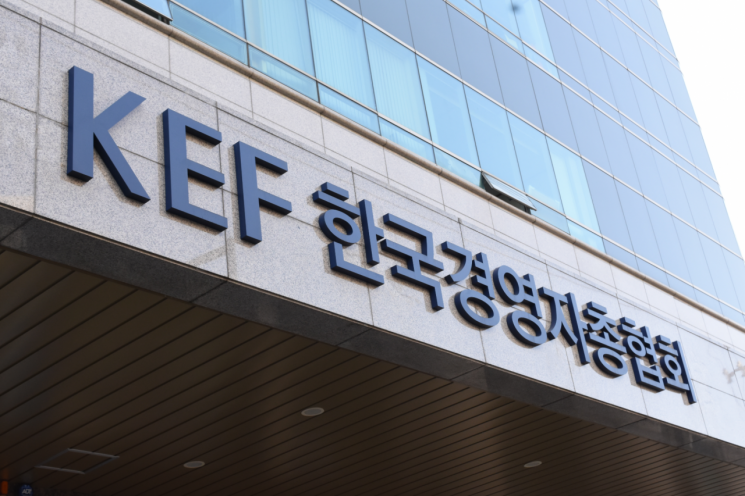
The Korea Employers Federation (KEF) announced on the 3rd that it submitted a tax reform proposal containing these points to the Ministry of Economy and Finance earlier this month. Although the government included similar measures in its economic policy direction announced in mid-last month, KEF submitted a separate proposal to urge more bold improvements ahead of the government's tax reform plan scheduled for release at the end of this month.
KEF first argued that the top inheritance tax rate, currently the highest among OECD countries, should be lowered to the OECD average of 25%. The intention is to support the succession of accumulated management know-how and traditions in family businesses to the next generation and to ensure business continuity. Since additional burdens are imposed on inheritance tax through a 20% premium on shares held by major shareholders, KEF also proposed abolishing this uniform major shareholder share premium evaluation, which is applied only in Korea among OECD countries.
KEF stated, "In Korea, the top inheritance tax rate on business succession to children is as high as 60% (50% top rate plus 20% major shareholder share premium for non-small and medium enterprises), and the actual tax burden is among the highest in the world," adding, "The high inheritance tax burden compared to advanced countries can undermine business continuity and negatively affect economic growth and investment."
KEF also requested further easing of deduction requirements, including removing limits on business succession deduction amounts and restrictions on business type changes, shortening the mandatory management period before and after succession (from 10 years or more to 5 years or more), and relaxing post-succession conditions such as employment maintenance (maintaining 80% of the average employment or total wages over 5 years). Additionally, KEF proposed switching the inheritance tax system to an estate acquisition tax system and raising the taxable income brackets and uniform deduction limits.
KEF argued that since the proportion of corporate tax in total tax revenue is rapidly increasing and tax support should be strengthened to prepare for future new industries, these measures are necessary. According to KEF, as of 2020, the share of corporate tax in total tax revenue was 19.6%, ranking 5th among 38 OECD countries, and it is expected to rise to the top this year.
KEF emphasized, "It is necessary to promptly overcome the current complex crisis and implement supplementary measures to create a more competitive investment environment than advanced countries," adding, "Tax support across industries should be increased and disadvantages from global corporate tax reforms minimized."
Specifically, this includes a general increase in the integrated investment tax credit rate, raising research and development expenses for large corporations, and increasing the deduction limit for carryforward losses for large corporations. Furthermore, KEF stressed the need to rationally adjust income tax brackets to reflect economic conditions since 2008 and highlighted the necessity of improving the earned income tax system.
© The Asia Business Daily(www.asiae.co.kr). All rights reserved.
![Clutching a Stolen Dior Bag, Saying "I Hate Being Poor but Real"... The Grotesque Con of a "Human Knockoff" [Slate]](https://cwcontent.asiae.co.kr/asiaresize/183/2026021902243444107_1771435474.jpg)
















