Fair Trade Commission, 5 Companies Caught Colluding on Manhole Covers
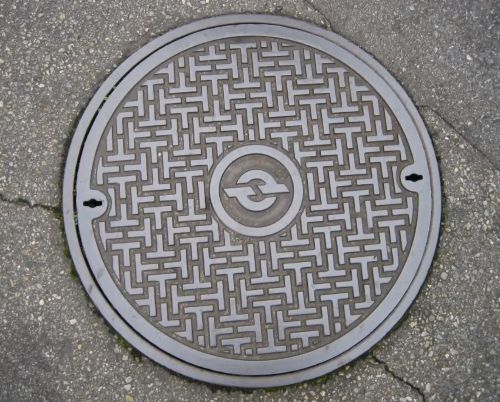 Manhole cover. The photo is unrelated to specific expressions in the article.
 Photo by Asia Economy DB
[Asia Economy Sejong=Reporter Lee Junhyung] Five companies, including Segye Juchul and Hanguk Jujo, were fined over 2 billion KRW for colluding in more than 1,000 manhole cover bids over a period of 10 years. The Fair Trade Commission plans to continuously monitor collusion in the public procurement market.
On the 3rd, the Fair Trade Commission announced that it imposed corrective orders and fines totaling 2.135 billion KRW on five foundry companies that colluded in advance on the expected winning bidders in manhole cover bids issued by the Public Procurement Service and Korea Electric Power Corporation (KEPCO). The five companies caught by the Fair Trade Commission?Segye Juchul, Ilsan Geumsok, Daegwang Juchul, Hanguk Jujo, and Jeongwon Juchul?colluded in manhole cover bids worth 40 billion KRW.
According to the Fair Trade Commission’s investigation, these companies colluded in 1,016 manhole cover purchase bids from September 2011 to January 2020. The five companies agreed in advance on the expected winning bidders and accomplices so that the cumulative winning quantities would be identical or similar in bids issued by the Public Procurement Service and KEPCO, citing mutual growth among manhole cover manufacturers. They agreed on the expected winners and even the bid prices through phone calls and other means, winning 997 out of the 1,016 manhole cover purchase bids.
The background of the manhole cover collusion lies in changes to the bidding systems of the Public Procurement Service and KEPCO. The manhole cover purchasing method changed in August 2010 from the existing group negotiated contracts and annual unit price contracts to multiple supplier contracts and competitive bidding. Along with this change in the bidding system, competition among manhole cover manufacturers reportedly intensified.
It is also analyzed that KEPCO’s significant increase in orders for interlocking-type manhole covers since 2011 influenced the collusion. Manufacturers who previously produced anti-theft manhole covers entered the interlocking-type manhole cover market following KEPCO’s order volume, intensifying competition. According to the Fair Trade Commission, KEPCO’s orders for interlocking-type manhole covers increased more than sixfold from 905 units in 2010 to 5,681 units in 2012.
The Fair Trade Commission detected this collusion through the ‘Bid Collusion Sign Analysis System.’ This system quantitatively analyzes bid information from 16 public institutions, including the Public Procurement Service, which is transmitted online, to detect signs of collusion and utilize them in investigations. The Fair Trade Commission initially established an early-stage bid collusion sign analysis system in 2006 and completed its advancement in 2018. The commission regularly analyzes bid information and conducts ex officio investigations on items with high signs of collusion.
A Fair Trade Commission official said, “This action is significant in that it detected and sanctioned collusion that had been secretly maintained in the public institution procurement sector through the commission’s own system,” adding, “We will continue to monitor and respond swiftly to the public procurement bidding market using the bid collusion sign analysis system.”
© The Asia Business Daily(www.asiae.co.kr). All rights reserved.
![Clutching a Stolen Dior Bag, Saying "I Hate Being Poor but Real"... The Grotesque Con of a "Human Knockoff" [Slate]](https://cwcontent.asiae.co.kr/asiaresize/183/2026021902243444107_1771435474.jpg)
















