Seoul Metropolitan Area and Sejong Maintained, Only Some Areas Like Daegu Suseong-gu Lifted Restrictions
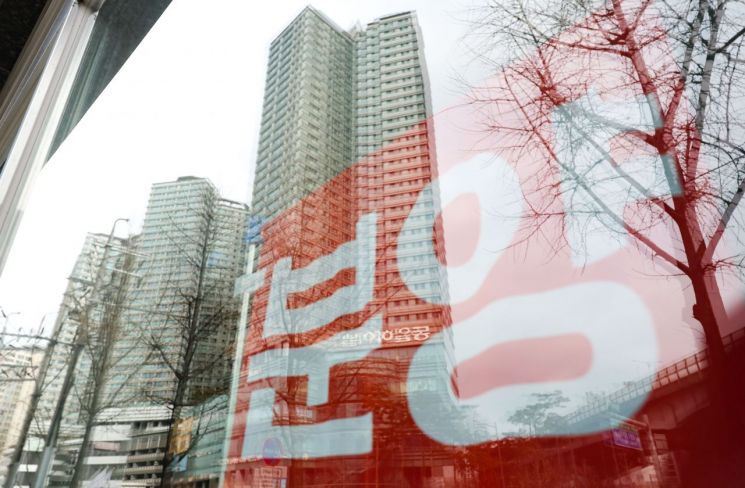
[Asia Economy Reporter Kim Min-young] The key phrase for this round of deregulation is 'pinpoint' adjustment. While maintaining regulatory zones in areas where housing prices could overheat, such as the Seoul metropolitan area and Haeundae in Busan, the government has eased restrictions in some local cities with stagnant real estate markets, such as Suseong-gu in Daegu and Yuseong-gu in Daejeon, providing some breathing room for transactions. Although the market is receiving signals of regulatory easing, the government’s intention to thoroughly block any housing price stimulation caused by deregulation is evident. Since only a few areas have had regulations lifted, the impact on the real estate market is expected to be limited.
The Ministry of Land, Infrastructure and Transport announced on the 30th that it held the ‘2nd Residential Policy Deliberation Committee Meeting of 2022’ and reviewed and approved the ‘Adjustment Plan for Speculative Overheated Districts and Regulated Areas.’
At the meeting, private committee members judged that considering factors such as interest rate hikes stabilizing the housing market and an increase in unsold properties in local areas, it was necessary to lift the designation of six speculative overheated districts in local regions. Accordingly, six areas including Suseong-gu in Daegu, Dong-gu, Jung-gu, Seo-gu, and Yuseong-gu in Daejeon, and Changwon and Uichang-gun in Gyeongnam were removed from the speculative overheated district designation.
Previously, in December last year, the Ministry of Land, Infrastructure and Transport also held a residential policy deliberation committee meeting to discuss lifting regulations in Daegu and Changwon in Gyeongnam, but due to concerns about a ‘balloon effect’ from deregulation, all 161 regulated areas were maintained.
They also agreed to lift the regulated area designation for local cities and counties where both short- and long-term housing prices have consistently stabilized. As a result, 11 areas including Dong-gu, Seo-gu, Nam-gu, Buk-gu, Jung-gu, Dalseo-gu, and Dalseong-gun in Daegu, Gyeongsan-si in Gyeongbuk, and Yeosu-si, Suncheon-si, and Gwangyang-si in Jeonnam will be removed from the regulated area list.
In the case of Sejong City, where housing prices have been declining since last year, the regulatory designation will be maintained. Although the recent downward trend in housing prices continues, the high competition rate for subscription indicates that potential buying demand remains.
In the Seoul metropolitan area, some areas of Ansan and Hwaseong, which were designated as regulated areas despite being island regions without apartments during past district-level regulatory designations, will have their speculative overheated district and regulated area status lifted. The targeted areas include Daebudong-dong, Daebunam-dong, Daebubuk-dong, Seongam-dong, and Pungdo-dong in Danwon-gu, Ansan, which were part of the speculative overheated district. These areas, along with Seosin-myeon in Hwaseong, will be removed from the regulated area list.
As a result of this review, there are now 101 regulated areas and 43 speculative overheated districts. The approved adjustment plan for speculative overheated districts and regulated areas will take effect from 0:00 on July 5, after its publication in the official gazette.
Experts believe the impact of this deregulation on the market will be minimal. This is because the easing was limited to ‘pinpoint deregulation’ in certain areas such as Suseong-gu in Daegu and Yuseong-gu in Daejeon, rather than a comprehensive deregulation including the Seoul metropolitan area. The government has thus calibrated the level of deregulation to avoid stimulating housing prices.
Ham Young-jin, head of the Zigbang Big Data Lab, analyzed, "This was a limited deregulation focused on local areas, considering the mixed trends of housing price declines and rises in the market and the volatility in housing prices due to the expected economic downturn."
Experts also note that in areas like Daegu, which have been deregulated this time, the increase in housing supply has materialized the burden of supply, making it unlikely to expect a short-term increase in transactions or additional home purchases by multi-homeowners.
Ham Young-jin added, "From the buyer’s perspective, the willingness to purchase due to deregulation is not expected to be high. The deregulation of regulated areas is concentrated in local regions rather than the Seoul metropolitan area, and considering the stagnation in housing price increases and the high interest burden on housing loans, it will not be easy to purchase homes."
Yoon Ji-hae, senior researcher at Real Estate R114, said, "Although some demand may revive for unsold and stagnant properties in the areas removed from regulation this time, it will not be a driving force strong enough to reverse the market."
Lee Eun-hyung, research fellow at the Korea Institute of Construction Policy, said, "The impact of this regulatory adjustment on the market is expected to be limited. The biggest factor is that areas of public interest such as Seoul, the metropolitan area, and Sejong were excluded from the adjustment."
He added, "Some have raised concerns that deregulation might lead to higher pre-sale prices, but this is not a problem. If the higher pre-sale prices lead to quick sales, the market judges the price as low; if there are unsold units, it means the set price is too high. The government’s policy direction is to leave it to the market."
© The Asia Business Daily(www.asiae.co.kr). All rights reserved.
![Clutching a Stolen Dior Bag, Saying "I Hate Being Poor but Real"... The Grotesque Con of a "Human Knockoff" [Slate]](https://cwcontent.asiae.co.kr/asiaresize/183/2026021902243444107_1771435474.jpg)











