Korea Philip Morris Expects Reduced Harm from Switching to Heated Tobacco Products
Carbon Monoxide Detected in E-Cigarette Users' Exhaled Breath at Levels Similar to Non-Smokers
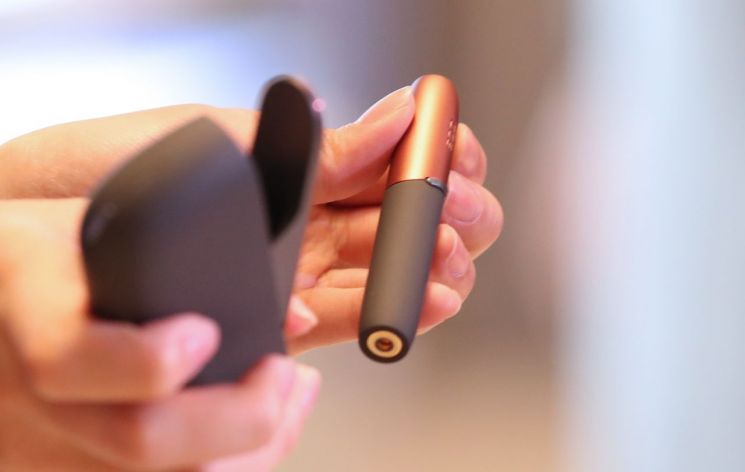
[Asia Economy Reporter Jo In-kyung] A study has found that smokers who use non-combustible tobacco products such as heated tobacco devices have a 23% lower risk of cardiovascular disease compared to those who smoke conventional cigarettes. The carbon monoxide levels detected in the exhaled breath of smokers using heated tobacco devices were also similar to those of non-smokers.
On the 29th, Korea Philip Morris held a seminar titled "Research on Tobacco Harm Reduction and User Studies by Tobacco Product" and announced these research findings.
Kim Ki-hwa, Executive Director of Korea Philip Morris, stated, "Quitting smoking is essential for health, but many studies show that choosing heated tobacco products over conventional cigarettes can reduce harmful substances. Adult smokers who cannot quit due to nicotine dependence need to fully switch to non-combustible alternatives," he argued.
According to research introduced at the event by Professor Lee Ki-heon’s team from Bundang Seoul National University Hospital last year, smokers who switched from conventional cigarettes to non-combustible tobacco products and used them for more than five years had a 23% lower risk of cardiovascular disease compared to those who continued smoking conventional cigarettes. The risk was reduced by 37% for those who completely quit smoking. This analysis was based on medical data from over 5 million people collected by the National Health Insurance Service.
The "Study on Volatile Organic Compound Concentrations in the Exhaled Breath of Smokers" conducted by the Korea Disease Control and Prevention Agency found that about 92% of heated tobacco device users had carbon monoxide levels of 4 ppm or less. This is comparable to the non-smoker group, where 100% of subjects had carbon monoxide levels of 4 ppm or less in their exhaled breath. However, about 55% of conventional cigarette smokers had carbon monoxide levels between 5 and 10 ppm, and the remaining 45% had levels above 10 ppm in their exhaled breath.

Giselle Baker, Vice President of Science at Philip Morris International, explained changes in hospitalization rates of chronic obstructive pulmonary disease (COPD) patients based on Japanese medical data. In Japan, the hospitalization rate of COPD patients with a long history of smoking shifted from an increasing trend to a decreasing trend starting in 2017. This coincides with the introduction of non-combustible electronic cigarettes, including IQOS, to the Japanese market. Vice President Baker said, "More countries are recognizing, based on empirical evidence, that non-combustible alternatives are better for health compared to conventional cigarettes," adding, "Tobacco harm reduction policies based on scientific facts should be actively utilized to contribute to public health improvement."
Professor Kim Dae-young of the Hematology Department at Uijeongbu Eulji University Hospital said, "COPD is a bronchial disease caused by the accumulation of various harmful substances such as infections, smoking, and pneumoconiosis in the lungs, and there is currently no revolutionary treatment for it. While quitting smoking is the best choice, heated tobacco products, which are less harmful than conventional cigarettes, could be an alternative for patients who find it difficult to quit."
Meanwhile, Philip Morris is leading the development and commercialization of non-combustible products, which are better alternatives to conventional cigarettes that burn tobacco, under the vision of a "smoke-free future." The U.S. Food and Drug Administration (FDA) has authorized marketing of Philip Morris’s heated tobacco device IQOS as a "Modified Risk Tobacco Product (MRTP)" in the United States, recognizing that reduced exposure to harmful substances from IQOS can help improve public health.
© The Asia Business Daily(www.asiae.co.kr). All rights reserved.


















