[Asia Economy Yeongnam Reporting Headquarters Reporter Hwang Dooyul] It has been revealed that local import companies are facing difficulties as profitability deteriorates due to increased import costs caused by the rise in the won-dollar exchange rate and raw material prices, but they are unable to raise product prices.
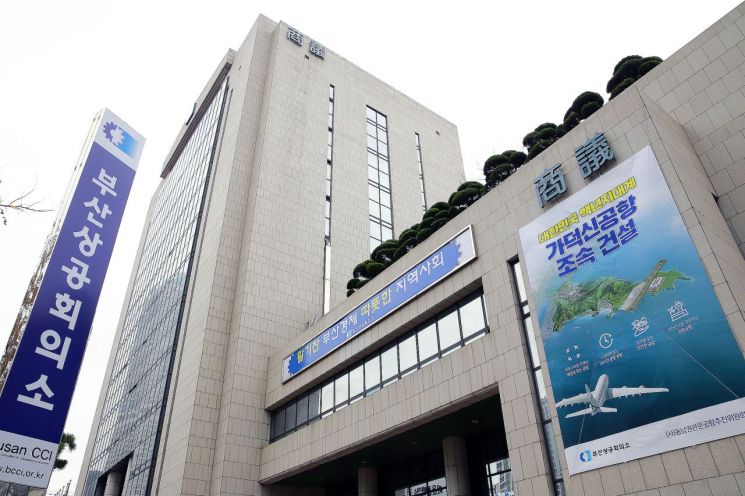
On the 29th, the Busan Chamber of Commerce and Industry announced the results of an urgent monitoring of the impact and damage situation regarding exchange rates and raw material price increases targeting local companies with a high import ratio.
Since the COVID-19 pandemic, global supply chain disruptions have continued, and with the prolonged Russia-Ukraine war, international raw material prices are recording a steep upward trend.
Accordingly, as the U.S. and major countries' central banks accelerate interest rate hikes to defend against inflation, the demand for the safe-haven dollar has expanded, causing the won-dollar exchange rate to surge, deepening the concerns of local import companies.
According to the survey, local companies importing raw materials such as steel, chemicals, and textiles are already facing deteriorating profitability due to high raw material prices. Additionally, the variable of rising exchange rates is adversely affecting costs, raising serious concerns that price competitiveness will be severely weakened.
Food distribution company A said, “With the rise in the exchange rate, the cost of importing products is increasing while sales prices are fixed, so foreign exchange losses are continuously occurring,” adding, “Although we use foreign exchange hedging products, due to the nature of the products, the risks are high and it is difficult to respond effectively to exchange rate fluctuations, so educational support on complex foreign exchange-related products is needed.”
Steel manufacturer B also stated, “We use dollars for transaction payments and recently anticipated the exchange rate increase, so we used dollar futures for foreign exchange hedging as a company-level measure. However, having exhausted all held dollar futures, the rising cost burden makes a sales impact inevitable.”
As in the previous cases, there is practically no response that local companies can take against rising raw material prices and exchange rates due to physical and financial limitations, leaving them no choice but to bear the damage.
Reflecting increased costs in delivery and product prices could be a temporary solution, but from the perspective of partner companies, requesting delivery price increases is unrealistic due to trading practices, and raising product prices is also difficult to pursue easily due to concerns over decreased sales volume.
Food manufacturer C said, “Compared to last year, raw material prices have risen by nearly 40%, but since large companies have not yet raised prices, we cannot increase product prices,” adding, “Even if product prices are raised, sales competitiveness may decline, so it is a sensitive issue.”
Some chemical companies and large-scale steel importers have reflected the current supply chain risks, raw material price increases, and exchange rate issues in prices to some extent since the beginning of the year.
However, due to additional energy price hikes and rising logistics costs, which are complex factors worsening profitability, a deterioration in profitability is expected to be inevitable.
A representative from the Busan Chamber of Commerce and Industry’s Economic Trend Analysis Center said, “Since individual companies cannot establish countermeasures against raw material price increase risks, to restore competitiveness, it is necessary to strengthen effective government support measures such as corporate tax reductions, export-import logistics cost support, and financial support, as well as actively develop foreign exchange hedging products that small and medium-sized enterprises can easily utilize.”
© The Asia Business Daily(www.asiae.co.kr). All rights reserved.

















