1Q, $97 Billion Increase from Last Year-End... Largest Growth and Total in 10 Years
Supply Shortages and Consumer Slowdown Signal Recession Warning
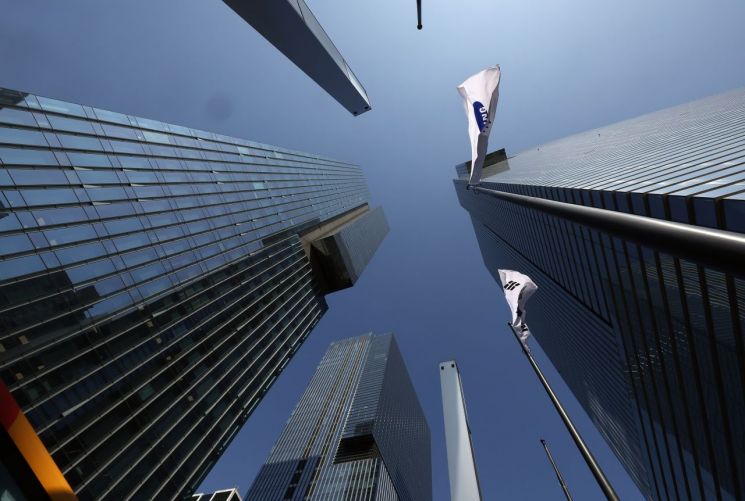
[Asia Economy Reporter Jeong Hyunjin] Global manufacturing inventories recorded the highest increase in both scale and total amount in the first quarter (January to March) of this year in a decade. In particular, Samsung Electronics showed the largest increase in inventory. This is attributed to supply chain disruptions and a slowdown in consumption. Excess inventory can shrink corporate production activities, thus being regarded as a precursor to an economic recession.
On the 29th, Japan's Nihon Keizai Shimbun analyzed the inventories of 2,349 listed manufacturing companies worldwide by compiling data from market research firms QUICK and FactSet. It found that inventories at the end of the first quarter this year totaled $1.8696 trillion, an increase of about $97 billion (approximately 125.3 trillion KRW) compared to the end of last year. Nihon Keizai reported that both the amount and total inventory increase in the first quarter were the largest in 10 years, attributing this to raw materials being stockpiled and products not shipped due to supply chain disruptions accumulating as inventory.
The $97 billion surpasses the $83 billion increase in the first quarter of 2018, when inventories surged amid escalating US-China trade tensions. The inventory growth rate was 5.5%, slightly lower than the 6.1% at that time. The inventory turnover days, which indicate the time taken for inventory to convert into sales, extended by 3.6 days to 81.1 days in the first quarter compared to the fourth quarter of last year. All 12 manufacturing sectors saw significant inventory increases. Especially, the electrical, automotive, and machinery sectors accounted for 61% of the total inventory increase.
Among manufacturers, Samsung Electronics showed the largest inventory increase. In US dollar terms, Samsung Electronics’ inventory rose by $4.4 billion (13%) in the first quarter to $39.2 billion. Nihon Keizai analyzed that the main cause was stockpiling of raw materials due to supply chain disruptions. The reduction in electronics consumption amid inflation and recession concerns also contributed. Samsung Electronics’ inventory is expected to increase in the second quarter as well. Recently, market research firm Display Supply Chain Consultants (DSCC) reported that Samsung Electronics’ inventory turnover days in the second quarter of this year averaged 94 days, about two weeks longer than usual, marking a record high.
Additionally, Taiwan’s ASUS also saw an 18% inventory increase in the first quarter. This was due to expanded procurement of electronic components and reduced European sales caused by the Ukraine crisis. The entire electronics sector’s inventory increased by $26.7 billion, a 6% rise compared to the end of the previous year. In the automotive industry, US-based Ford’s inventory rose 21% in the first quarter to $14.6 billion, the highest in 25 years. German Mercedes-Benz also saw a 9% increase in inventory compared to the previous quarter.
Such a sharp rise in inventory can result in excess stock if consumption slows due to high inflation and other factors. In this case, companies adjust production volumes to manage inventory, which leads to an economic downturn. In fact, recent Purchasing Managers’ Indexes (PMI) in the US and Europe continue to decline. According to S&P Global, the US manufacturing and services composite PMI fell from 53.6 in the previous month to 51.2 in June. The Eurozone’s June PMI recorded 51.9, the lowest in 16 months. A PMI below 50 indicates economic contraction.
Meanwhile, sales of about 2,300 manufacturing companies in the first quarter of this year decreased by 3% compared to the fourth quarter of last year. However, Nihon Keizai noted that “the cash holdings of these 2,300 manufacturing companies stood at a high level of $2.1738 trillion at the end of the first quarter, so there is little immediate concern about worsening financing conditions.”
© The Asia Business Daily(www.asiae.co.kr). All rights reserved.

















