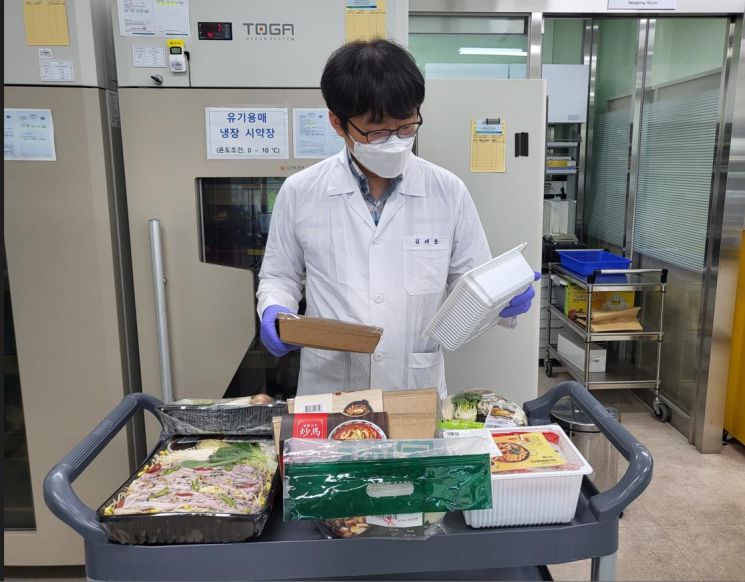
 Daejeon Health and Environment Research Institute plans to strengthen safety inspections of ready-to-eat meal products distributed in the market. Photo by Daejeon City
[Asia Economy (Daejeon) Reporter Jeong Il-woong] The Daejeon City Health and Environment Research Institute is strengthening safety inspections of home meal kits and other ready-to-eat meals. This measure reflects the surge in demand due to the increase in single-person households and the impact of COVID-19.
According to the city’s Health and Environment Research Institute on the 29th, the ready-to-eat meal market grew from 1.9 trillion won in 2015 to 3.5 trillion won in 2019, and the market size is expected to reach 5 trillion won this year.
Furthermore, this growth trend is expected to continue, with the ready-to-eat meal market projected to reach 7 trillion won by 2024.
In particular, Daejeon has the highest proportion of single-person households in the country at 36.3%, and the use of home meal kits and other ready-to-eat meals is also frequent.
According to a survey by the Daejeon Sejong Research Institute last year, the percentage of single-person households in the Daejeon area purchasing ready-to-eat meals at least once a week surged from 7.9% in 2016 to 54.8% in 2020.
As ready-to-eat meals become more popular and widely used, ensuring their safety has become an important issue.
Accordingly, the city’s Health and Environment Research Institute plans to investigate the use of food additives in about 100 items of ready-to-eat meals supplied through large supermarkets, unmanned stores, online sales, and dawn delivery to ensure the safety of citizens’ food.
Nam Soong-woo, director of the city’s Health and Environment Research Institute, said, “We will conduct proactive harmful substance inspections of food in line with social and environmental changes to meet citizens’ demands for food safety.”
© The Asia Business Daily(www.asiae.co.kr). All rights reserved.

















