High-Intensity Tightening by Major Countries and Soaring Inflation
Emerging Markets with Heavy Debt Face Crisis... Difficulties in Fundraising Due to Investment Avoidance
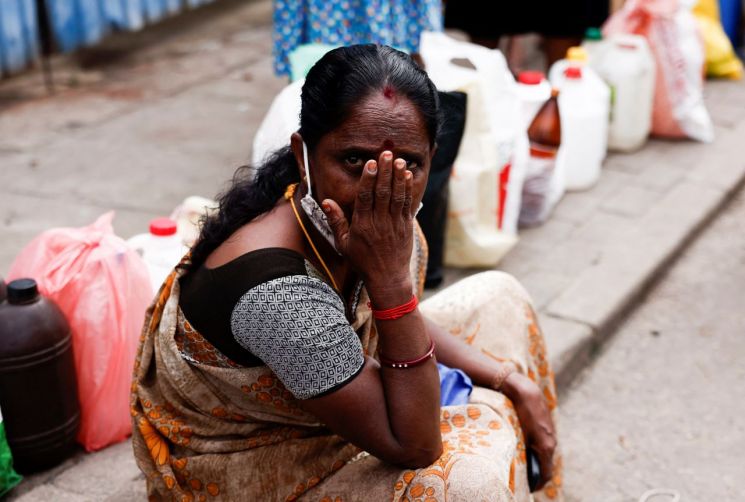
[Asia Economy Reporter Kim Hyunjung] Sri Lanka, which has fallen into a state of national default, is on the brink of national collapse due to fuel supply suspension. The impact of high-intensity tightening by major countries and soaring inflation is hitting emerging markets, raising alarm bells for a domino effect of national defaults.
According to Bloomberg News on the 27th (local time), government spokesperson Bandula Gunawardena announced that schools in Sri Lanka will be closed starting from the 28th, and all fuel sales will be suspended until the 10th. He also urged the private sector to work from home. While fuel for essential services such as public transportation may be sold, inter-regional public transportation could be suspended.
Spokesperson Gunawardena stated, "Ports, medical services, and food transportation will be provided with gasoline and diesel," and asked people to refrain from going out otherwise. He emphasized, "Our country is facing an unprecedented fiscal and foreign exchange crisis."
Ranil Wickremesinghe, Sri Lanka’s Prime Minister and Finance Minister, warned last week of a complete national collapse, stating that shortages of essentials and electricity have worsened to the point where fuel cannot be purchased with cash. Authorities have been in discussions with the International Monetary Fund (IMF) and bilateral creditors such as India and China for new funds to pay for imports after defaulting on dollar bond debt and a decline in foreign exchange reserves earlier this year.
The spokesperson said that foreign companies will be allowed to distribute fuel while most economic activities are halted. Local public schools in Sri Lanka are already closed, and public officials are working from home, avoiding the use of public transportation. Roads inside and outside the capital Colombo are empty, and gas stations are similarly deserted, the news agency reported.
This crisis situation is not limited to Sri Lanka. After more than two years since the outbreak of COVID-19, the financial conditions of emerging markets have rapidly deteriorated. The Institute of International Finance estimates that the total public and private debt of 32 emerging markets (excluding Sri Lanka) has increased by 20 percentage points, reaching 248% of their gross domestic product (GDP).
In particular, low-income countries that had been leveraging ultra-low interest rates in major countries are now facing fiscal pressure due to the rapid global tightening movement. Investors who had bet on the high growth and high risk of emerging markets have begun to avoid risks, making it impossible for emerging markets to borrow through bond issuance and other means.
Pakistan is following a similar path to Sri Lanka. Pakistan’s debt has ballooned to $130 billion (about 168 trillion won) as of the fourth quarter of last year due to large-scale infrastructure investments such as China’s Belt and Road Initiative. Since the new government took office in April, Pakistan has been discussing the resumption of IMF bailout support.
As the economic crisis worsened, on the 24th, Pakistan began crisis management by receiving about 15 billion yuan (about 2.9 trillion won) in funding from China. On the 23rd, the central bank raised the benchmark interest rate by 1.5 percentage points from 12.25% to 13.75%. Over the past two months, Pakistan has raised the benchmark interest rate by 4.0 percentage points.
In addition, countries such as Sri Lanka, Zambia, and Lebanon are facing crises and are negotiating international support plans with the IMF and others, including loan provision or debt restructuring.
The World Bank (WB) lowered its economic growth forecast for developing countries this year from 4.6% to 3.4%, citing U.S. interest rate hikes and soaring food and energy prices. It explained, "In the early 1980s Latin American debt crisis and other previous cases, interest rate increases in advanced countries including the U.S. led to emerging market crises." According to WB estimates, foreign loan debt of low- and middle-income countries increased by an average of 6.9% in 2021 to $9.3 trillion. This exceeds the 5.3% growth rate in 2020. Most of the debt was owed by the top 10 borrowers including China, India, and Brazil. India’s debt increased by 9%, Egypt by 13%, Peru by 22%, and Pakistan by 23%, respectively.
© The Asia Business Daily(www.asiae.co.kr). All rights reserved.

















